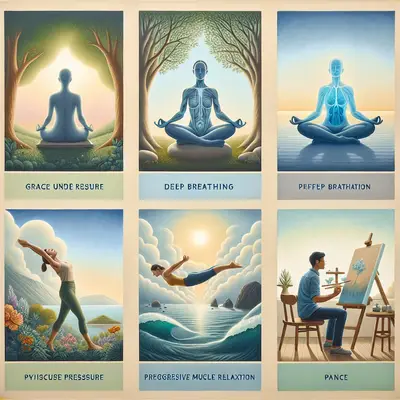
Stress is no longer a fleeting visitor in modern life; it is the ambient noise beneath our days. For a discerning mind, the objective is not merely to “cope,” but to curate an inner environment where composure, clarity, and subtle pleasure coexist—even under pressure. This is stress relief elevated: less about escape, more about refinement. What follows are five exclusive insights designed for those who approach mental wellness with intention, discrimination, and a taste for the quietly exceptional.
Stress Relief as an Aesthetic, Not an Emergency
Most stress advice arrives in crisis mode—tools for when you are already unraveling. A more cultivated approach treats stress relief as an ongoing aesthetic choice, much like curating your wardrobe or designing your home.
Begin by considering: What does a “mentally elegant” day feel like for you? Perhaps it includes unrushed transitions, an absence of frantic multitasking, or a particular kind of silence at certain hours. From there, you can design micro-rituals that act as anchors: a slow, deliberate tea ritual mid-morning; a two-minute pause between meetings where you simply breathe and stand by a window; a device-free final hour of the evening.
Research in psychophysiology shows that repeated, predictable calming routines signal safety to the nervous system, reducing sympathetic arousal over time. When you treat these practices as part of your personal aesthetic—not as optional extras—you shift from reacting to stress toward architecting a baseline of quiet resilience.
Insight 1: Precision Calm—Regulating Stress by Tuning Your Sensory Palette
Many people treat their senses passively, letting the world dictate their inputs. A more sophisticated approach to stress relief is sensory curation: deliberately choosing what your eyes, ears, skin, and palate encounter throughout the day.
Visuals: Swap visual clutter for a restrained palette in the spaces where you think and rest. Neutral tones, a single piece of art you genuinely love, and clear surfaces can reduce cognitive load; the brain has fewer “open loops” to process. Studies suggest that ordered environments can improve focus and reduce perceived stress.
Sound: Move beyond generic “relaxing music” and identify your personal acoustics of calm. For some, it’s soft piano; for others, low-frequency ambient sound or carefully mixed nature recordings. Consider a daily “sound cleanse”: 10–15 minutes with noise-canceling headphones and a chosen track that your nervous system comes to recognize as a signal for decompression.
Touch: Textures are underestimated in stress management. Luxurious, weighty textiles, a substantial mug, or a cool stone held in the palm can anchor you in the present moment. Somatic therapies underscore how tactile grounding—feeling the weight, temperature, and texture of an object—can interrupt spirals of anxious thought.
Taste: Instead of stress eating, cultivate stress savoring: a small, deliberate moment of taste. A square of high-quality dark chocolate, a thoughtfully brewed herbal infusion, or mineral water in a thin-rimmed glass. The key is singular focus—one taste, one moment, full attention. This subtle act of presence helps shift you out of mental overdrive into sensory here-and-now.
By editing your sensory inputs with the same care you might give to a gallery or a well-designed room, you convert your daily environment from a source of low-grade stress into a quiet collaborator in your mental ease.
Insight 2: Strategic Micro-Withdrawal—The Art of Leaving Before You’re Depleted
Burnout often begins with a single habit: staying too long. Too long in conversations, in digital spaces, in obligations that feel subtly draining. True refinement in stress management lies in the artful exit—leaving a situation before your system is exhausted, not after.
Consider integrating three forms of micro-withdrawal into your day:
- Temporal Boundaries: Decide in advance how long you will be available for high-demand tasks, social media, or emotionally taxing conversations. Set discreet timers if needed, not as rigid rules but as elegant reminders to check in with yourself.
- Spatial Pauses: Step briefly away from environments that intensify stress—even 60 seconds outside, a walk to the end of a corridor, or a brief pause in a different room resets your nervous system’s assessment of threat and safety.
- Relational Edges: Practice the refined “soft no”: gracious, brief, and unambiguous. For example: “That timeline doesn’t allow me to do this well; here’s what I can offer instead,” or “I’m at capacity today, but I can revisit this on Thursday.” This protects your energy without sacrificing courtesy.
Research on recovery from work stress highlights the importance of psychological detachment—mentally and emotionally stepping away from stressors. Micro-withdrawals are elegant, repeatable forms of that detachment. Instead of waiting for an annual vacation to rescue you, you embed small, dignified exits throughout your day, preserving your clarity and composure.
Insight 3: Cognitive Minimalism—Editing Your Mental Load with Curated Complexity
Not all complexity is harmful; some of it is exquisitely stimulating. The problem is uncurated complexity—too many tasks, inputs, and decisions jostling for your attention. Cognitive minimalism is not about having a “simple” life; it is about having a selectively complex one.
Begin by classifying your cognitive load into three categories:
- Nourishing Complexity: Deep work, meaningful conversations, intellectual challenges that engage you rather than deplete you.
- Neutral Necessities: Administrative tasks, logistics, routine obligations.
- Noise: Redundant meetings, habitual scrolling, performative obligations you no longer believe in.
Your goal is to reallocate mental bandwidth from Noise and some Neutral Necessities to Nourishing Complexity.
Practical applications:
- Designate dedicated windows for necessary but uninspiring tasks, and protect your clearest hours for what truly matters.
- Use a “thought capture” system—a notebook or minimalist app—to empty your mind of floating to-dos. Externalizing these tasks reduces working memory strain and perceived stress.
- Be selective in what you consume: fewer feeds, fewer newsletters, fewer chat threads—but of higher caliber. Psychological research consistently shows that overload of information, especially digital, increases stress and decreases satisfaction.
Over time, this cognitive editing cultivates a mental landscape with deliberate openings and fewer mental background processes. The experience is not emptiness; it is spaciousness.
Insight 4: Elegant Recovery—Rituals That Restore the Nervous System, Not Just Distract It
Many “stress relief” habits are actually mild forms of distraction—scrolling, streaming, or numbing. Elegant recovery aims higher: it soothes the nervous system while restoring a sense of dignity, presence, and self-respect.
You can think of this as designing your own personal recovery repertoire:
- Recovery in Motion: Slow, deliberate movement practices—such as walking at a measured pace without your phone, gentle stretching with attention to breath, or restorative-style yoga. Evidence shows that low- to moderate-intensity movement supports stress reduction and mood regulation by modulating hormones like cortisol and endorphins.
- Recovery in Stillness: Instead of forcing meditation, consider contemplative stillness: sitting quietly with a notebook, gazing out a window, or listening to a single piece of music with eyes closed. The intention is not spiritual perfection but physiological ease: slower breath, softened muscles, and lowered mental speed.
- Recovery in Creation: Engaging in low-pressure creative acts—sketching, arranging flowers, cooking a simple but beautiful meal—can induce a flow state, which research links to reduced stress and increased well-being.
The key is that recovery experiences should feel both calming and quietly elevating. When your nervous system associates stress relief with practices that feel refined rather than escapist, you are more likely to return to them consistently, and less likely to feel guilt or ambivalence afterward.
Insight 5: Composed Ambition—Pursuing Excellence Without Self-Erosion
For many high-functioning individuals, stress is not just a by-product of life; it is braided into their sense of ambition. The hidden belief: to maintain high standards, one must also tolerate high internal chaos. Composed ambition offers a different paradigm—one where drive and calm coexist.
This begins with interrogating your inner metric of success. Are you orienting toward outcomes only (titles, numbers, accolades), or toward qualities of process (depth, integrity, sustained curiosity)? The former tends to generate chronic stress, as results are often beyond full control. The latter allows you to anchor your self-respect in what you can consistently influence: how you show up.
To practice composed ambition:
- Replace “How much did I get done?” with “How did I conduct myself while doing it?” as a daily reflection question.
- Identify non-negotiable boundaries around sleep, recovery, and focus, and regard them as part of your performance infrastructure, not luxuries.
- Build in “clarity checkpoints” before major commitments: brief pauses where you ask, “Does this align with who I am becoming?” Saying no early is an act of protection against future stress.
Emerging research on self-compassion and performance suggests that those who treat themselves with firm kindness—high standards, but humane self-talk—experience less stress and burnout while still achieving at a high level. Composed ambition is, in effect, performance with poise.
Conclusion
Stress will never fully disappear from a life that is engaged, ambitious, and deeply felt. But it can be refined—transformed from a constant abrasion into an occasional, manageable edge. By curating your sensory world, mastering the art of elegant withdrawal, simplifying your cognitive load, privileging true recovery over distraction, and redefining ambition itself, you are not just “managing” stress. You are designing a more cultivated inner life—one in which calm is not a rare event but a quietly consistent undertone.
In an era that glorifies urgency, choosing composure is a radical, almost luxurious act. Let your approach to stress reflect the same discernment you bring to every other meaningful aspect of your life.
Sources
- [American Psychological Association – Stress and Health](https://www.apa.org/topics/stress) – Overview of how stress affects the body and mind, with references to current psychological research
- [National Institute of Mental Health – 5 Things You Should Know About Stress](https://www.nimh.nih.gov/health/publications/stress) – Evidence-based explanation of stress, its impact, and strategies for management
- [Harvard Health Publishing – The Importance of Recovery After Exercise](https://www.health.harvard.edu/staying-healthy/the-importance-of-recovery-after-exercise) – Discusses recovery and its physiological role, relevant to understanding restorative practices
- [Mayo Clinic – Stress Management](https://www.mayoclinic.org/healthy-lifestyle/stress-management/basics/stress-basics/hlv-20049495) – Practical, research-informed guidance on stress, its symptoms, and coping strategies
- [Greater Good Science Center, UC Berkeley – What Is Flow?](https://greatergood.berkeley.edu/article/item/what_is_flow) – Explores the flow state and its relationship to stress reduction and well-being
Key Takeaway
The most important thing to remember from this article is that this information can change how you think about Stress Relief.