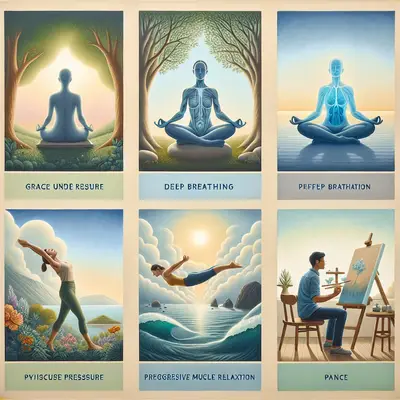
Stress in modern life is rarely loud; more often, it is an elegant veneer pulled taut over a fraying interior. For a discerning mind, the goal is not the absence of demands, but the ability to move through them with poise—unhurried, clear, and quietly assured. Stress relief, at its most refined, is less about escape and more about subtle recalibration: of environment, of physiology, of thought, and of pace.
What follows is an exploration of five exclusive, nuanced insights into stress relief designed for those who prize depth over trend and precision over noise.
The Luxury of Cognitive Space: Editing Your Mental Landscape
One of the most understated forms of luxury is cognitive spaciousness—the sense that your mind is not crowded, even when your calendar is. Rather than adding yet another ritual, begin by editing what has clandestinely taken residence in your mental landscape.
This means treating your attention as a curated gallery rather than a public noticeboard. Emails, messages, and notifications are not neutral; they are micro-demands on your cognitive bandwidth. To relieve stress at a refined level, you create firm, elegant boundaries: dedicated windows for digital correspondence, silent hours where no one expects a response, and intentional “white space” in your schedule that is not a reward but a non-negotiable design element of your day.
By narrowing what has guaranteed access to you—both digitally and socially—you reduce ambient cognitive load. This is not minimalism as an aesthetic; it is minimalism as a nervous-system imperative. The result is a mind that has room to process, to integrate, and to anticipate, rather than one that is perpetually reacting. The relief here is not dramatic; it is the quiet awareness that your thoughts now move with more oxygen and less urgency.
Somatic Precision: Training the Body to Signal Safety
Stress is often discussed as a mental burden, yet it is primarily a physiological event—a full-body signal of perceived threat. For a sophisticated approach to stress relief, you work with the body not as an afterthought, but as an equal partner in calm.
Begin by cultivating a few highly specific “physiological anchors” you can activate discreetly in any environment. One such method is intentional, extended exhalation: breathing in gently through the nose, then doubling the length of the exhale through pursed lips or softly parted teeth. This longer exhalation recruits the parasympathetic nervous system—the branch responsible for rest and recovery—and sends a subtle “all is well” message to the body.
Another refined approach is micro-tension scanning: during meetings, while commuting, or between tasks, bring your attention to your jaw, shoulders, abdomen, and hands. These areas often hold silent stress. Releasing them deliberately, even by a few degrees, has a cumulative effect on your baseline tension. Over time, your body begins to recognize softness as standard rather than occasional. The elegance lies not in dramatic rituals, but in precise, repeatable cues that teach your nervous system to return to equilibrium more rapidly.
Emotional Granularity: Upgrading From “Stressed” to Specific
Language is a powerful regulator of experience. Describing everything as “stress” flattens emotional nuance and can inadvertently amplify distress. A more refined method is to cultivate emotional granularity—the ability to identify your internal state with greater precision.
Instead of “I’m stressed,” you might discover that you are, in fact, mentally overloaded, subtly resentful, anticipatory, under-challenged, or overstimulated. Each state calls for a distinctly different remedy. Mental overload may require simplification and delegation. Resentment may need renegotiated boundaries. Anticipation might be calmed by structured planning. Overstimulation could invite sensory quiet and digital reduction.
This shift from broad to precise transforms stress management from a blunt instrument into a tailored intervention. You are no longer attempting to treat an amorphous experience; you are engaging with a clearly identified state. As your emotional vocabulary becomes more nuanced, your responses grow more intelligent and effective. The sophistication of your calm begins with the sophistication of your self-description.
Curated Input: Designing a Nervous-System-Friendly Aesthetic
What surrounds you is not superficial; it is biochemical. Visual clutter, harsh lighting, and jarring soundscapes keep the nervous system in a state of low-grade alert. A premium approach to stress relief involves curating the sensory aesthetic of your environment so that simply existing within it becomes calming.
Consider lighting first: wherever possible, favor warmer, indirect light in the evening and natural light exposure in the morning. Morning light helps regulate circadian rhythm and cortisol timing, while softer evening light signals the body to gently decelerate. In your workspace, neutral or harmonious color palettes, thoughtfully chosen textures, and a restrained number of visible objects can reduce perceptual fatigue.
Equally critical is your informational environment. The emotional tone of the media you consume—news, social feeds, conversations—modulates your baseline anxiety. Curating this input does not require isolation; it requires discrimination. You can remain informed while limiting sensational, repetitive, or emotionally dysregulating content. Over time, your nervous system begins to trust that your world is not relentlessly chaotic, even if it is complex. The atmosphere around you becomes a daily, silent remedy.
Rituals of Transition: Elevating the In-Between Moments
While many people focus on morning or evening routines, the true pressure points of stress often occur in the transitions: between tasks, roles, and environments. How you cross these thresholds has a disproportionate influence on how stressed—or settled—you feel.
Introduce brief, deliberate transition rituals that act as elegant “bookends” between segments of your day. After finishing deep work, you might close all open tabs, clear your workspace, and take 60 seconds to catalog what you accomplished and what will be handled tomorrow. Before shifting from work mode to personal life, you might employ a consistent, sensory cue: changing your clothing, washing your hands with a particular aromatic soap, or stepping outside for three unhurried breaths of fresh air.
These rituals signal to the nervous system that a chapter has closed and a new one has begun, preventing the emotional and cognitive “spillover” that so often fuels chronic stress. What emerges is a life that feels more segmented in a healthy, intentional way—each sphere given its own container, rather than everything bleeding into everything else. The refinement is not in the length of the ritual, but in its consistency and meaning.
Conclusion
Stress relief, at its most elevated, is not a dramatic intervention but a series of quiet, intelligent adjustments: editing the demands on your attention, training the body to recognize safety, naming your inner state with precision, curating your sensory and informational world, and honoring the transitions that stitch your day together.
When practiced consistently, these refined strategies do not merely reduce stress; they alter the texture of your inner life. Your days may remain full, but they no longer feel frayed. The mind moves with greater clarity, the body holds less tension, and the self experiences a steadier, more unhurried presence. In that subtle, sustained shift lies a truly luxurious form of calm.
Sources
- [National Institute of Mental Health – 5 Things You Should Know About Stress](https://www.nimh.nih.gov/health/publications/stress) - Overview of how stress affects the body and mind, including symptoms and management basics
- [American Psychological Association – Stress Effects on the Body](https://www.apa.org/topics/stress/body) - Detailed explanation of the physiological impact of stress and the role of the nervous system
- [Harvard Health Publishing – Understanding the Stress Response](https://www.health.harvard.edu/staying-healthy/understanding-the-stress-response) - Explores the biology of the stress response and strategies to engage the relaxation response
- [Cleveland Clinic – Diaphragmatic Breathing for Health](https://my.clevelandclinic.org/health/articles/9445-diaphragmatic-breathing) - Describes breathing techniques that support parasympathetic activation and stress reduction
- [Greater Good Science Center, UC Berkeley – How Naming Emotions Quiets the Mind](https://greatergood.berkeley.edu/article/item/how_naming_emotions_quiets_the_mind) - Discusses emotional granularity and why labeling feelings reduces emotional intensity
Key Takeaway
The most important thing to remember from this article is that this information can change how you think about Stress Relief.