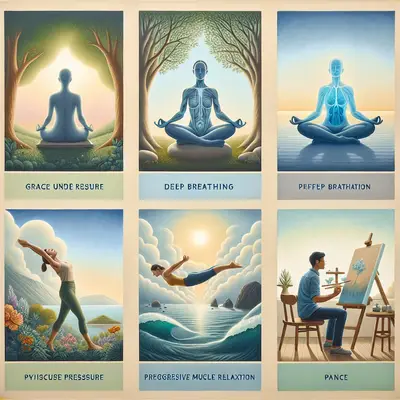
Stress today is less an event and more a constant ambience—quiet, continuous, and often misread as “just how life is.” For discerning minds, relief is no longer about collapse at the end of the day, but about engineering a life that prevents fraying in the first place. This is not escapism; it is precision. When you treat stress relief as a refined, intentional practice, you stop negotiating with burnout and start curating your nervous system as carefully as you curate the rest of your life.
Below are five exclusive, elevated insights for those who want their mental wellness to feel less like self-help and more like quiet mastery.
Insight 1: Regulating the Nervous System Is the New Time Management
Most people still try to solve stress with scheduling. They buy planners, rearrange calendars, and install new productivity apps—while ignoring the very system that experiences stress: the nervous system itself.
A regulated nervous system quietly alters everything: your email tone, your appetite, your ability to say “no” without apology. Instead of asking, “How can I fit more in?” a more sophisticated question is, “How can I design my day so my nervous system rarely leaves its optimal zone?”
This means thinking in terms of nervous system load, not just workload. Back-to-back video calls, high-stimulation environments, constant notifications, and emotional labor (even subtle, like “being the calm one” in the room) all count. Two people can have the same schedule but vastly different nervous system strain.
Refined regulation practices are minimalist, not theatrical: a three-minute exhale-focused breathing sequence between meetings, a phone on permanent reduced notifications, walking calls instead of seated ones, or five minutes of eyes-closed stillness after a dense conversation. These micro-interventions are not accessories; they are the new infrastructure. When you care for your nervous system as meticulously as your calendar, stress stops feeling inevitable and starts feeling adjustable.
Insight 2: Your Environment Is a Co-Therapist—Curate It Like One
Stress is often framed as purely internal, but your surroundings are in constant, subtle dialogue with your nervous system. Visual noise, harsh lighting, low-grade clutter, and constant device glow all register as micro-threats, keeping the body slightly on alert.
Instead of thinking of your space as “nice to have,” consider it part of your mental hygiene protocol. A refined approach does not require a complete redesign; it asks for deliberate edits. Warm, indirect lighting in the evening tells your brain it is safe to downshift. A single, thoughtfully chosen scent—cedar, bergamot, sandalwood—used only during restoration rituals becomes a cue for the body to soften. A clear, intentionally unproductive surface (no laptop, no mail, no chargers) can exist solely as the place you do nothing but breathe, read, or think.
Even subtle soundscapes matter. Replacing random background noise with a consistent auditory texture—soft instrumental music, a low-volume “brown noise,” or gentle nature sounds—reduces the cognitive demand of constant audio novelty. Over time, these environmental decisions become an invisible support structure. Your space stops mirroring your stress and starts correcting it.
Insight 3: High-Functioning Anxiety Requires a Different Kind of Rest
For many ambitious, high-capacity individuals, stress doesn’t look like collapse; it looks like impeccable performance paired with private depletion. This “high-functioning anxiety” often remains undetected because life on the surface looks composed—and is frequently rewarded.
Traditional advice about rest—“do less,” “take a day off,” “binge a show”—often fails this group. Passive rest can feel agitating, even guilt-inducing, because the nervous system is used to a higher baseline of stimulation. The result: they never experience deep restoration, only different versions of effort.
What works better is structured restoration: activities with gentle containment and direction but without metrics. Examples include a slow, deliberate walk with a single constraint (no phone, no podcast), a simple stretching sequence with precise attention to breath, or a solo coffee ritual in silence with no multitasking allowed. These are still “activities,” but they do not demand achievement.
The key is to move from output to presence. Instead of trying to outperform your stress with more optimization, you create experiences where nothing is asked of you beyond existing in the moment. Over time, this teaches the body that value is not exclusively tied to productivity—a subtly radical recalibration for high-functioning minds.
Insight 4: Emotional Clutter Is as Draining as Physical Clutter
Unresolved conversations, unsent emails you mentally compose every morning, obligations you intend to decline but never do—all of these live as open loops in your psyche. The brain treats these as unfinished tasks, quietly consuming cognitive and emotional energy in the background.
Emotional decluttering is a sophisticated form of stress relief because it addresses strain at its source, not its symptoms. Instead of only adding soothing rituals, you subtract what is silently draining you. This can look like:
- Choosing two lingering conversations per week to resolve or release.
- Writing a short, honest “no” to one misaligned commitment instead of carrying the dread.
- Closing a self-imposed project you no longer want, and allowing it to remain unfinished without self-criticism.
A simple but elevated practice: once a week, list “mental tabs” that have been open for more than a month—conversations, decisions, repairs, requests, apologies, clarifications. Then choose one to move forward, even minimally. The aim is not to clear everything instantly, but to signal to your nervous system that you are not indefinitely postponing your own relief.
Where typical stress advice focuses on coping, emotional decluttering quietly alters the landscape so there is less to cope with in the first place.
Insight 5: Precision Recovery Beats Occasional Escapism
Many people treat stress relief as an occasional escape—a weekend away, an annual retreat, a rare spa day. These experiences can be exquisite, but if your daily life remains unchanged, they function more like elegant bandages than true repair.
Precision recovery asks: What specific stressors am I counterbalancing, and what exact practice addresses each one? For example:
- If your days are cognitively dense (strategy, analysis, decision-making), your recovery might emphasize embodied experiences: slow movement, somatic practices, or tactile hobbies that require hands more than intellect.
- If your stress is relational (conflict, emotional caretaking, constant availability), your recovery might prioritize protected solitude with firm boundaries around access—no notifications, no emotional labor, no small talk.
- If your strain is sensory (noise, crowds, screens), your recovery might center on sensory minimalism: darkness, quiet, simplicity, or nature.
This is not about doing more; it is about doing the right few things with clarity. A five-minute, well-chosen recalibration practice you perform twice a day is more powerful than an elaborate ritual you manage once a month.
You begin to think like an artisan of your own nervous system: What is overloaded? What is undernourished? What would create balance, not just distraction? When stress relief becomes this precise, your life starts to feel less like something you recover from and more like something you are steadily refining.
Conclusion
Stress, at its core, is the story your body tells itself about safety, demand, and capacity. When you approach stress relief as a precision practice—regulating your nervous system, curating your environment, honoring the nuance of high-functioning anxiety, clearing emotional clutter, and choosing recovery with intention—you move beyond coping into craftsmanship.
This is not about creating a life without pressure; it is about cultivating an internal landscape that remains composed, even when the external world does not. In that quiet, deliberate refinement, stress stops being your default atmosphere and becomes something far more empowering: a signal you are exquisitely equipped to interpret and elegantly respond to.
Sources
- [National Institute of Mental Health – 5 Things You Should Know About Stress](https://www.nimh.nih.gov/health/publications/stress) - Overview of how stress affects the body and mind, with evidence-based guidance.
- [American Psychological Association – Stress Effects on the Body](https://www.apa.org/topics/stress/body) - Detailed review of the physiological impact of chronic stress.
- [Harvard Health Publishing – Understanding the Stress Response](https://www.health.harvard.edu/staying-healthy/understanding-the-stress-response) - Explains the nervous system’s role in stress and regulation strategies.
- [Cleveland Clinic – High-Functioning Anxiety](https://health.clevelandclinic.org/high-functioning-anxiety) - Describes signs, patterns, and considerations for those who appear composed but feel distressed.
- [Mayo Clinic – Relaxation Techniques: Try These Steps to Reduce Stress](https://www.mayoclinic.org/healthy-lifestyle/stress-management/in-depth/relaxation-technique/art-20045368) - Evidence-based practices such as breathing and progressive relaxation to support nervous system regulation.
Key Takeaway
The most important thing to remember from this article is that this information can change how you think about Stress Relief.