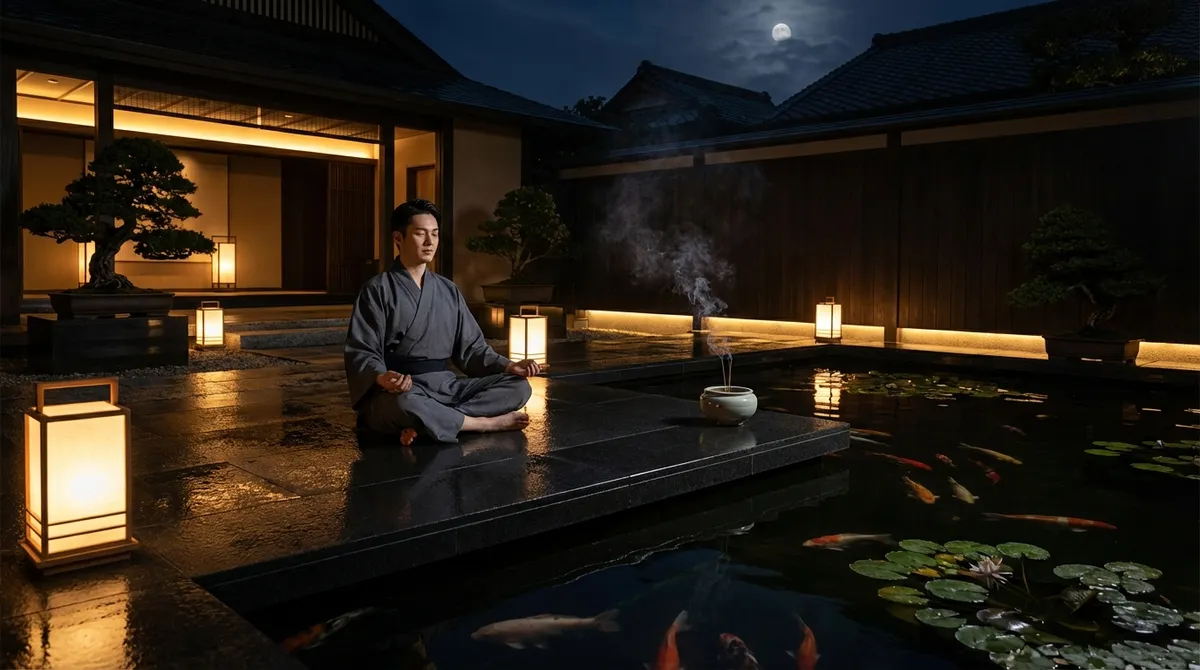
Meditation, when practiced with discernment, becomes less about escape and more about refinement—an elegant, private calibration of how you meet the world. It is not merely a wellness trend or a productivity hack, but a quiet signature you leave on every conversation, decision, and moment of solitude. For a mind inclined toward subtlety and depth, meditation offers something very specific: a way to cultivate an inner standard of clarity and composure that is non-negotiable, regardless of circumstance.
Below are five exclusive, often-overlooked insights into meditation as a refined mental wellness practice—designed for those who don’t simply want calm, but cultivated presence.
Meditation as Curated Attention, Not Empty Mind
The popular image of meditation often suggests a blank mind: no thoughts, no disruptions, only pristine silence. In reality, refined practice is less about erasing thought and more about curating attention with the same care you might bring to a well-appointed space.
Instead of attempting to silence the mind, you begin to select where your attention rests, and for how long. Breath, sound, sensation—these become intentional focal points, chosen not out of obligation but preference. Over time, this develops into a kind of “attentional taste”: you recognize when your focus has been hijacked by noise (internal or external) and learn to withdraw it with quiet confidence. This is profoundly liberating: you cease to be at the mercy of every notification, impulse, or worry. Meditation, then, is the art of editing your inner landscape, not deleting it.
The Luxury of Slowness in a World of Speed
In a culture that prizes acceleration and immediacy, slowness has become a luxury good. Meditation restores that luxury at the level of the nervous system. When you sit, breathe, and deliberately slow your inner tempo, you are sending a different kind of instruction to your body: you are permitted to move at a human pace.
This has sophisticated physiological consequences. Slow, deliberate breathing engages the parasympathetic nervous system—the body’s natural “rest and digest” mode—quietly counteracting chronic low-grade agitation that many have come to accept as normal. Over time, this cultivated slowness becomes portable; it travels with you into negotiations, difficult conversations, and decision-making. You begin to notice micro-pauses—those slim margins of space between stimulus and response—where reactivity might have once taken over. That pause is where your discretion, standards, and values can re-enter the scene.
Designing a Personal Meditation Aesthetic
For the discerning practitioner, the “how” of meditation matters as much as the “what.” The quality of your environment, rituals, and tools can either dilute your practice or elevate it into something that feels inherently worth returning to. This is not about extravagance; it is about coherence.
Perhaps you favor a particular hour—early blue light before the world announces itself, or the deep quiet after dusk. Your seating may be more tailored armchair than floor cushion, your lighting intentionally dim, your scents carefully chosen: a single candle, a resin-based incense, a diffused essential oil. Your phone may be out of the room entirely, not as a rule but as a statement of respect for your inner time. These details are not trivial. They communicate to your nervous system that this is a protected space, a recurring appointment with your own clarity. When the setting feels thoughtfully designed rather than improvised, meditation stops feeling like a chore and begins to feel like a private salon for the mind.
From Self-Improvement to Self-Stewardship
Many arrive at meditation with the subtle pressure to “fix” something: anxiety, distraction, insomnia, or a vague sense of underperformance. Over time, refined practice shifts this narrative from self-improvement to self-stewardship. Instead of asking, “How do I optimize myself?” you begin to ask, “How do I care for this mind so it can support a life of discernment and depth?”
In this frame, you are not a project to be endlessly upgraded but a system to be respectfully maintained. Meditation becomes akin to preventive care for your inner world—like servicing a finely tuned instrument before it goes out of alignment. This shift in attitude often softens self-criticism: a wandering mind is no longer a failure but a cue, a signal that something in your life is calling for rest, boundaries, or recalibration. The practice becomes less punitive, more attuned, and naturally more sustainable.
The Quiet Upgrade: How Subtle Practice Alters Daily Life
The most sophisticated effects of meditation are rarely dramatic; they are incremental, almost understated—yet they accumulate into a form of quiet power. You may notice you are less compelled to fill silence in a conversation, more able to listen without rehearsing your reply. You might find that certain frictions—traffic, delays, minor inconveniences—no longer have the same access to your composure.
Decision-making can become crisper. Because you are more familiar with your own mental weather, you are better able to discern: “Is this a genuine intuition or a stress response?” Sleep may deepen not because you meditated for sleep, but because your mind is less flooded by unattended thoughts at night. Your sense of time may subtly expand; ten minutes feels more spacious, an hour more intentional. This is the quiet upgrade: your outer life may look similar, but the way you inhabit it has changed. You arrive with more presence, respond with more choice, and depart with less residue.
Conclusion
Meditation, approached with refinement, is not a retreat from life but a considered way of inhabiting it. It is an ongoing conversation with your own mind—how you pace it, furnish it, and protect it from excess noise. For those who value discretion over display, depth over drama, and subtlety over spectacle, meditation offers a uniquely elegant discipline: a daily act of private alignment that leaves its mark on everything you touch.
In a world constantly vying for your attention, choosing to sit, breathe, and refine your inner state is a quietly radical gesture. It says, without announcement, that your mind is not a public resource but a carefully tended estate—and you are its most attentive steward.
Sources
- National Center for Complementary and Integrative Health – Meditation: In Depth – Overview of meditation types, potential benefits, and scientific evidence
- Mayo Clinic – Meditation: A Simple, Fast Way to Reduce Stress – Explains how meditation affects stress, emotional health, and daily life
- Harvard Health Publishing – Mindfulness Meditation May Ease Anxiety, Mental Stress – Summarizes research on meditation’s impact on anxiety and stress
- American Psychological Association – Mindfulness Meditation: A Research-Provoked Practice – Discusses psychological mechanisms and clinical research behind meditation and mindfulness
- National Institutes of Health – Stress and Relaxation Techniques – Details how techniques like meditation support the body’s stress response and overall wellness
Key Takeaway
The most important thing to remember from this article is that this information can change how you think about Meditation.