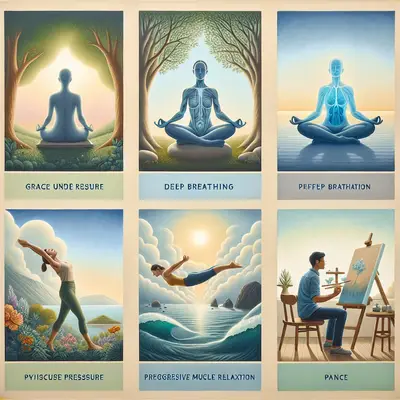
Stress rarely announces itself with fanfare. It arrives in tightened jaws, shallow breaths, and the subtle feeling that life has become something to manage rather than savor. For a discerning mind, relief is not found in quick fixes or noisy distractions, but in curated, intentional practices that restore a refined sense of inner equilibrium.
This article explores stress relief as a series of quiet daily rituals—small, exacting choices that transform the texture of your day. Woven through are five exclusive insights designed for those who view mental wellness not as an emergency repair, but as an ongoing art form.
Reframing Stress as “Cognitive Load” — A Precision Upgrade
Rather than thinking of yourself as “stressed,” consider the idea of “cognitive load”: the volume of information, decisions, and emotions your mind is processing at any given moment. This subtle shift in vocabulary is more than semantics—it reframes your inner state as something measurable, manageable, and open to refinement.
Viewing stress as cognitive load invites a more discerning approach. Instead of asking, “Why am I so stressed?” you begin to ask, “What, precisely, is consuming my mental bandwidth?” Is it digital noise? Emotional labor? Compressed decision-making? This level of specificity allows for tailored interventions, rather than generic self-care.
Exclusive Insight #1: Practice a daily “cognitive audit.” For three minutes at the same time each day, list what is currently occupying your mind—tasks, worries, obligations, unresolved conversations. Do not attempt to fix them during the audit. Simply identify and categorize them (logistical, emotional, creative, social). Over time, you will see patterns in what most heavily taxes your mind, allowing you to design more elegant, targeted forms of relief.
This deliberate precision is deeply calming: it transforms stress from a vague, overpowering force into a set of identifiable, influenceable elements.
The Micro-Intermission: Designing Luxurious Pauses in Plain Sight
A sophisticated approach to stress relief does not rely on rare retreats or long escapes, but on frequent, intentional micro-intermissions woven seamlessly into the day. These are not random breaks; they are deliberately designed intervals in which your senses and nervous system are gently recalibrated.
Rather than “taking a break,” imagine orchestrating a micro-ritual. It might be 90 seconds of standing by an open window, feeling fresh air on your face, and letting your gaze rest on a distant point. It might be the quiet ceremony of preparing tea without your phone nearby, allowing sound, scent, and warmth to occupy your attention fully. The key is to infuse these brief intermissions with care and aesthetic intentionality.
Exclusive Insight #2: Adopt a “one-minute sensory reset” practice. Choose one sense per reset—vision, scent, touch, or hearing—and devote a single minute to elevating it. For instance: adjust your lighting for softer ambience, apply a favorite hand cream slowly, or listen to one carefully chosen piece of music with complete presence. When repeated throughout the day, these micro-resets build a refined buffer against cumulative stress, quietly training your nervous system to return to a calmer baseline.
Micro-intermissions do not remove responsibilities; they restore your capacity to meet them with composure rather than depletion.
Curating Your Input: The Minimalist Diet for the Mind
Stress is not only created by what you must do, but by what you allow into your mental field. Information, opinions, alerts, and background noise all contribute to a subtle mental clutter that raises the floor of your stress levels before the day has even made a proper demand of you.
A premium approach to mental wellness treats attention as a luxury resource to be guarded with unusual care. This means curating what you consume with the same discernment you might apply to art, fragrance, or design.
Exclusive Insight #3: Institute “elegant constraints” on your information intake. Instead of vague rules about “less screen time,” craft specific, refined boundaries: one carefully chosen news source in the morning, no news after a set hour; notifications allowed only from people, not apps; social media accessed in scheduled windows, never impulsively. Consider even curating your digital aesthetics—the colors, fonts, and layouts you most frequently see—to favor calm over stimulation.
By transforming your media environment from haphazard to intentional, you reduce ambient stress and preserve mental clarity for what truly merits your attention.
The Somatic Signature: Teaching the Body What Calm Feels Like
Stress is experienced as much in the body as in the mind: taut muscles, an unsettled stomach, a quickened pulse. Yet many people can describe what anxiety feels like with great detail, while having only a vague understanding of what “calm” actually feels like physically.
To truly relieve stress, it is not enough to wish for calm; the body must be repeatedly guided into it, until calm has a recognizable somatic signature—your own embodied definition of tranquility.
Exclusive Insight #4: Create a personal “calm blueprint” through body mapping. Once a day, preferably when you are relatively at ease, close your eyes and mentally scan your body from forehead to feet. Note, without judgment, where there is softness, where there is comfort, where there is warmth or ease. Mentally label these sensations: “loose in the jaw,” “spacious in the chest,” “steady in the hands.” Over time, you build a precise internal reference library of what calm feels like for you.
Then, when stress rises, you have something tangible to return to. You can deliberately soften your jaw, widen your breath in the chest, or rest your hands in a stable, grounded position. You are not merely “trying to relax”—you are re-instating a familiar bodily state you have practiced and named.
This level of embodied refinement elevates stress relief from a vague aspiration to a repeatable skill.
Ritualized Closure: Ending the Day with Deliberate Elegance
Stress often lingers because the day never truly ends; it simply blurs into night. Emails continue, mental to-do lists loop, and the nervous system never receives a clear signal that it is safe to step down from alert mode.
A sophisticated stress relief practice includes ritualized closure—a consistent, elegant way of marking the transition from “doing” to “being.” This is not a mere habit; it is a symbolic gesture that tells the mind and body, with gentle authority: “We are complete for today.”
Exclusive Insight #5: Design a signature “evening close-down ritual.” This might include three elements:
- Intellectual closure: Write down all pending tasks for tomorrow, so your mind no longer needs to rehearse them.
- Environmental reset: Tidy a small area you see first in the morning—your bedside, a reading chair, or a work surface. This creates visual calm and a sense of stewardship.
- Sensory signal: Introduce a consistent cue that it is now time to unwind—a particular lamp, a specific playlist, or a single soothing scent reserved only for evenings.
Repeating the same closing gestures night after night conditions your nervous system to anticipate rest, making it easier to release the day and enter sleep with greater ease and dignity.
Conclusion
Refined stress relief is not about escaping life; it is about inhabiting it more gracefully. By rethinking stress as cognitive load, weaving micro-intermissions into your day, curating what you allow into your mind, cultivating a somatic signature of calm, and closing each day with deliberate ritual, you transform relief from an occasional intervention into a lived aesthetic.
Stress may be inevitable, but how it lives in you is negotiable. With careful attention, even the most demanding day can be threaded with silken moments of composure, until calm is not an exception, but your quiet, daily standard.
Sources
- American Psychological Association – Stress: The Different Kinds of Stress - Overview of stress types, impacts, and coping strategies
- National Institute of Mental Health – 5 Things You Should Know About Stress - Evidence-based information on stress and its effects on health
- Harvard Health Publishing – Understanding the Stress Response - Explains the physiology of stress and the body’s response
- Mayo Clinic – Relaxation Techniques: Try These Steps to Reduce Stress - Practical guidance on relaxation methods for stress relief
- Cleveland Clinic – The Effects of Stress on Your Body - Detailed look at how stress influences physical and mental health
Key Takeaway
The most important thing to remember from this article is that this information can change how you think about Stress Relief.