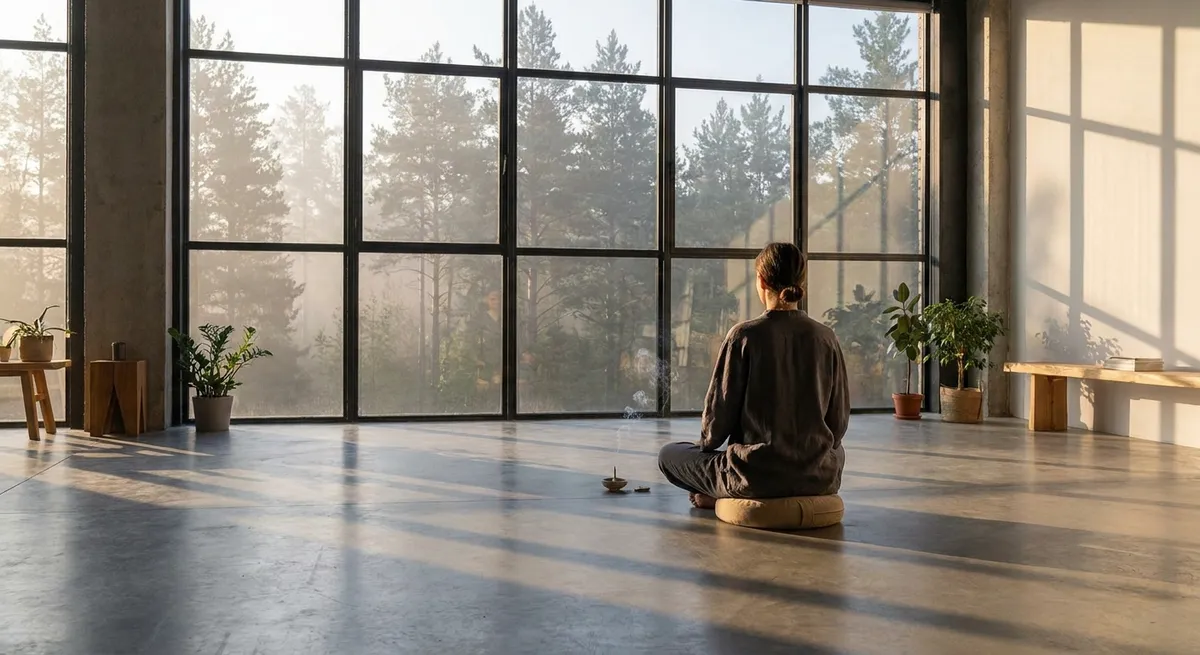
Most people approach meditation as a vague promise of “feeling calmer.” Yet beneath that simple hope is a far more refined possibility: using stillness as a deliberate reset for an overworked nervous system. When practiced with care, meditation becomes less of a trend and more of a quiet technology—a precise way of tuning the mind and body toward clarity, poise, and mental luxury.
This is not about perfect lotus poses or chasing enlightenment. It is about cultivating small, exquisitely intentional intervals of stillness that change how you meet the rest of your life.
Below are five exclusive, lesser-discussed insights that elevate meditation from a generic wellness tip to an elegant daily ritual for genuine mental refinement.
Meditation as a “Luxury Pause” for the Nervous System
Most descriptions of meditation focus on thoughts. Yet physiologically, its most profound effect is on your nervous system—specifically, your ability to shift from stress-driven activation into parasympathetic rest and repair.
Think of a brief meditation session as a luxury pause: you are not merely sitting still, you are permitting your nervous system to downshift. With consistent practice, this becomes a trained capacity, not an occasional accident. Research shows that mindfulness and meditation practices can reduce markers of stress, modulate heart rate variability, and improve emotional regulation—signs that the nervous system is learning a more elegant baseline rather than continuously bracing for impact.
To make this reset tangible, treat the start of your session as a deliberate transition ritual: close a door, put your phone in another room, adjust the lighting, and take three unhurried breaths as though you are arriving at a private sanctuary. The act of creating environmental distinction—however subtle—cues your nervous system that a different mode of being is about to begin.
Over time, the nervous system starts to associate even brief stillness with safety, restoration, and composure. You are not simply “being mindful”; you are re-educating your body in how to relax without collapsing, and focus without strain.
The Art of Micro-Meditation: Designing 90-Second Inner Intermissions
Extended retreats and 30-minute sits are valuable, but for many, they are not where the real transformation begins. The true refinement lies in your ability to weave micro-meditations—90-second inner intermissions—into the existing architecture of your day.
Rather than waiting for the perfect uninterrupted hour, choose three anchor points in your daily routine: after waking, before your main work block, and before your evening unwinding. At each of these points, commit to just 90 seconds of single-tasked presence. No apps, no elaborate setup—just one clear intention: notice the breath, the body, and the overall tone of your mind without needing to fix it.
This micro-format is powerful for two reasons. First, it lowers the psychological barrier to entry; luxury should feel inviting, not burdensome. Second, it trains consistency. The nervous system responds better to frequent, modest doses of calm than to occasional, heroic efforts.
Over weeks, these micro-meditations begin to stitch together into a quiet continuity of awareness. You are no longer someone who “sometimes meditates,” but someone whose days are subtly punctuated by intentional presence. That identity shift is where lasting composure begins.
Moving Meditation: Refinement Through Deliberate Motion
A sophisticated meditation practice does not insist on stillness at all costs. For many people—especially those with high mental load or restlessness—stillness can initially feel like an affront. In these cases, moving meditation can be a more elegant gateway.
Walking meditation, for instance, transforms an ordinary act into a sensory-rich ritual. Instead of striding on autopilot, you let the walk become your focus: the contact of your feet with the ground, the changing textures underfoot, the gentle swing of your arms, and the rhythm of your breath aligning with your pace. You are not trying to accomplish distance; you are cultivating presence in motion.
Similarly, slow, deliberate stretching or gentle yoga can function as embodied meditation. Each movement is paired with a breath; attention remains anchored in sensation, not performance. This approach is especially supportive for those who live predominantly in their thoughts—moving meditation invites them back into the body without demand or drama.
Rather than seeing movement as a compromise, consider it a refinement. You are learning to experience meditation not as an event that requires special conditions, but as a quality of attention that can inhabit the way you move through the world.
Curating an “Inner Aesthetic”: The Subtle Luxury of Mental Tone
A rarely discussed dimension of meditation is its influence on the aesthetic of your inner world—not what you think, but how it feels to be you on an average day. Over time, consistent practice gently upgrades this inner aesthetic from cluttered and reactive to spacious and quietly discerning.
Meditation does not erase difficult thoughts; it alters their prominence. You begin to notice that mental noise no longer monopolizes your attention. There is more space between stimulus and response, more room to choose the tone of your engagement. The inner experience starts to feel less like a crowded public space and more like a well-curated private gallery.
This is not about policing your mind into relentless positivity. Instead, it is about valuing the texture of your awareness: softer edges, fewer abrupt jolts, more continuity between how you feel inside and how you present yourself outside. That congruence is its own form of mental luxury.
To support this, you might add a brief reflective moment at the end of your practice: ask yourself, “What is the tone of my mind right now?” without judging the answer. This small habit trains a refined sensitivity—less about content, more about quality. With repetition, you become the curator of your inner life, not merely its overwhelmed visitor.
Precision Over Perfection: Tailoring Meditation to Your Psychological Style
Sophisticated self-care is never one-size-fits-all, and meditation is no exception. The more precisely you match the style of meditation to your psychological tendencies, the more effortless and effective it becomes.
If your mind tends toward anxious loops, breath-focused practices and body scans can be deeply regulating, anchoring attention in concrete sensation. If you lean toward overanalysis or mental overactivity, practices that emphasize open awareness—observing thoughts as passing events rather than problems to solve—can help loosen the grip of incessant evaluation. For those who feel emotionally blunted or disconnected, compassion-based or heart-centered meditations can reintroduce warmth without forcing it.
The key is to treat your practice like a tailored garment, not a generic uniform. Allow yourself brief experiments: a week of breath-focused sessions, a week of walking meditation, a week of loving-kindness phrases. Notice which practice leaves you feeling not just “calm,” but clear, grounded, and subtly more yourself.
Precision in choosing your style also includes calibrating duration, time of day, and level of guidance. Some flourish with silent sits; others benefit from a trusted teacher’s voice or structured audio. The refined practitioner is not the one with the most austere routine, but the one whose practice is so thoughtfully individualized that it feels sustainable and quietly indispensable.
Conclusion
Meditation, at its most refined, is not a heroic act or a spiritual performance. It is a series of exquisite interruptions in the velocity of your day: 90 seconds of composed breathing, ten minutes of deliberate walking, a single moment of noticing the tone of your inner world before you respond.
By understanding meditation as a luxury pause for the nervous system, embracing micro-practices, incorporating movement, curating your inner aesthetic, and tailoring your style with precision, you transform it from a wellness obligation into a deeply personal art form.
This is the quiet power of a sophisticated meditation practice: not the absence of difficulty, but the presence of a steadier, more composed you—available, responsive, and internally resourced, even when life does not cooperate.
Sources
- National Center for Complementary and Integrative Health – Meditation: In Depth - Overview of meditation types, safety, and evidence-based benefits
- Harvard Health Publishing – Mindfulness Meditation May Ease Anxiety, Mental Stress - Summarizes research on how mindfulness impacts stress and anxiety
- American Psychological Association – Mindfulness Meditation: A Research-Proven Way to Reduce Stress - Explores psychological effects of meditation and mechanisms of action
- Mayo Clinic – Meditation: A Simple, Fast Way to Reduce Stress - Practical overview of meditation’s role in stress reduction and emotional balance
- National Institutes of Health – Meditation and the Mind-Body Connection - Research-focused article discussing physiological and neurological impacts of meditation
Key Takeaway
The most important thing to remember from this article is that this information can change how you think about Meditation.