In a world that prizes velocity over depth, genuine calm has become a rare luxury—an inner refinement rather than a quick fix. Natural remedies for the mind are no longer about scattershot supplements and trendy teas; they are about curating a deliberate ecosystem of sights, scents, rituals, and nutrients that quietly re-train the nervous system. This is the realm of subtle alchemy: precise, evidence-informed practices that elevate mental ease into an art form.
Below, you’ll find a considered exploration of natural mental wellness—anchored in science, steeped in sensory detail, and designed for those who prefer their calm understated, elegant, and enduring. Within this framework are five exclusive insights that move beyond the usual “stress tips” and into a more cultivated, intentional approach to mental clarity and composure.
The Architecture of Calm: Designing Your Nervous System’s Baseline
The most powerful natural remedy for the mind is not a single herb or ritual—it is the baseline tone of your nervous system, day after day. Think of it as the “architecture” underlying your mental life: invisible, but decisive.
Your autonomic nervous system moves between sympathetic activation (alert, driven, sometimes anxious) and parasympathetic rest (calm, reflective, restorative). Most of modern life locks us into low-grade sympathetic overdrive. The sophistication lies in gently re-educating the body so that calm becomes the default, not the exception.
This architectural shift does not happen through intensity but through repetition and subtlety:
- Consistent sleep-wake times that cue your circadian rhythms like an impeccably kept schedule.
- Morning light exposure that stabilizes cortisol in a healthy arc, reducing evening restlessness.
- A deliberately “low-friction” evening environment—soft lighting, reduced notifications, quiet soundscapes—so the nervous system knows it is safe to downshift.
Exclusive Insight #1: Treat calm as an environmental design project, not an emotional state. Curate your surroundings—light, sound, temperature, visual order—so that your body relaxes before your mind even has time to argue. The more your environment whispers “you are safe,” the less your mind has to shout over background stress.
The Pharmacology of Scent: Botanical Aromas That Refine Mental State
Scent is one of the most underestimated natural remedies for mental wellness—fast-acting, deeply primal, and delightfully refined when curated with intention. Unlike a tablet or tincture, aroma works almost immediately via the olfactory system’s direct link to the limbic regions of the brain involved in emotion and memory.
Lavender essential oil has been studied repeatedly for its anxiolytic (anxiety-reducing) effects, with some oral preparations of lavender oil showing comparable benefits to certain anti-anxiety medications in mild-to-moderate cases. Bergamot has demonstrated mood-lifting properties in clinical settings, and yuzu, a Japanese citrus, has been shown to reduce tension and anger with just a few minutes of inhalation.
However, the premium experience lies less in single-note “functional” oils and more in thoughtfully layered blends that pair emotional effects with aesthetic pleasure:
- Grounding bases (vetiver, cedarwood, sandalwood) to anchor scattered thoughts.
- Heart notes (rose, neroli, jasmine) to soften emotional rigidity.
- Bright top notes (bergamot, grapefruit, petitgrain) to lift mental fatigue without jitteriness.
Exclusive Insight #2: Reserve a “signature calm scent” for moments of restoration only. Use one particular blend—perhaps a grounded floral-citrus or a soft wood-and-vanilla—exclusively for your wind-down rituals, journaling, evening reading, or restorative breathwork. Over time, your nervous system will begin to associate that aroma with safety and exhale more quickly each time you encounter it. The scent becomes an elegant, portable cue for calm, wherever you are.
Herbal Elegance: Adaptogens and Botanicals as Nervous System Allies
The natural remedies conversation often stops at “drink chamomile tea.” There is far more nuance available—especially in the realm of adaptogens and nervine herbs, when used with discernment and respect.
Adaptogens, such as ashwagandha, rhodiola, and holy basil (tulsi), help modulate the stress response rather than simply sedate it. Some can be mildly stimulating and focus-enhancing (like rhodiola), while others are more soothing and grounding (like ashwagandha). Nervines, such as lemon balm, passionflower, and chamomile, directly support the nervous system’s relaxation pathways.
The refinement lies in pairing herbs not just with your symptoms, but with your temperament and schedule:
- Daytime clarity and composure: Rhodiola or tulsi in the morning for those who feel depleted yet wired, paired with green tea for a measured caffeine lift and L-theanine–mediated calm.
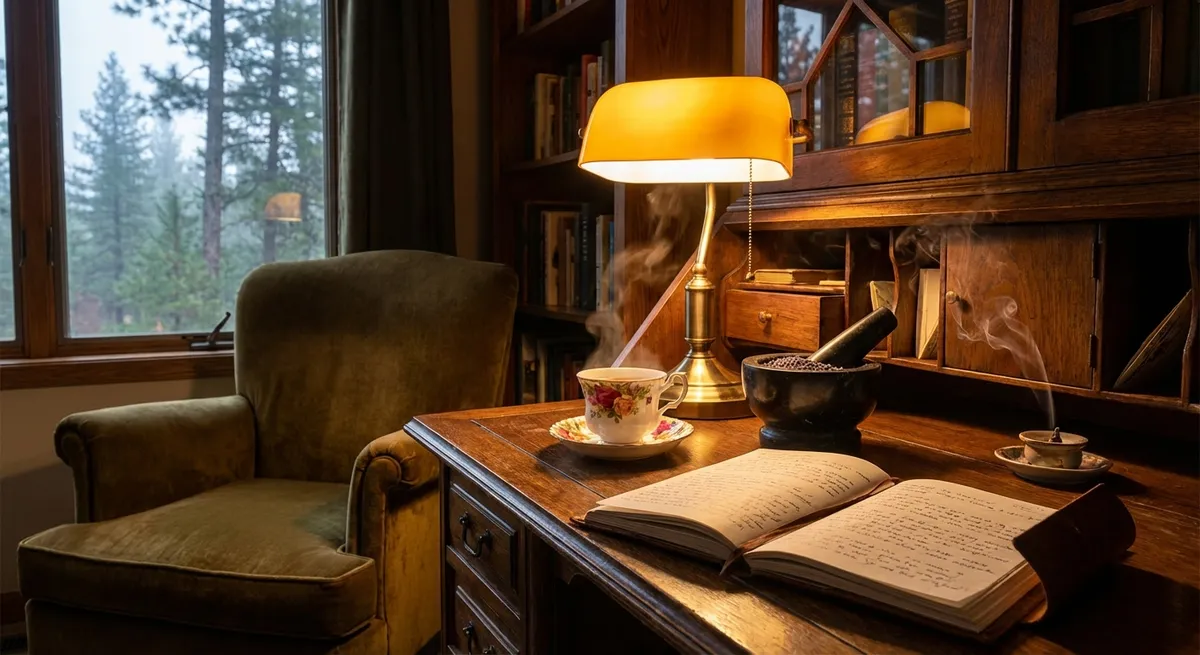
- Evening decompression: A blend of chamomile, lemon balm, and passionflower in a small porcelain cup, sipped slowly with the lights dimmed and screens at a distance.
- Chronic tension pattern: Magnesium (especially glycinate or threonate forms), taken under professional guidance, to soften muscular gripping and mental overdrive.
Exclusive Insight #3: Use botanicals to sculpt your daily emotional contour, not just to put out fires. Rather than taking herbs only when you feel overwhelmed, design a gentle, personalized arc: something clarifying yet stabilizing in the morning, something steadying mid-day if needed, and something deeply soothing in the evening. This prevents emotional whiplash and trains your nervous system to anticipate support rather than crisis.
Important: Always consult a qualified healthcare professional before starting new herbal or supplement regimens, especially if you are pregnant, breastfeeding, taking medications, or have underlying health conditions.
The Micro-rituals of Pause: Refining the Art of Mental Transitions
One of the most overlooked natural remedies for mental wellness is the way we transition between tasks, roles, and spaces. High-achieving individuals often move from meeting to message to meal without psychic punctuation, accumulating unprocessed stress that later erupts as anxiety, irritability, or insomnia.
Micro-rituals of pause are ultra-brief, repeatable practices—30 seconds to 3 minutes—that act as buffers between segments of your day. They don’t demand a full meditation session; they simply allow the nervous system to reset before carrying accumulated tension forward.
Examples include:
- Standing at a window between virtual meetings, letting your gaze soften on something distant to counteract screen-induced tunnel vision.
- Performing three slow exhalations (slightly longer than your inhales) each time you close a laptop, to nudge the vagus nerve toward parasympathetic dominance.
- Rinsing your hands under cool or warm water as you consciously release the previous task, using the temperature change as a tactile cue for “new chapter.”
Exclusive Insight #4: Protect the first and last three minutes of each major task as sacred transition time. Do not open a new email, scroll, or switch tabs in that liminal space. Instead, devote it to a micro-ritual that marks a deliberate shift. This small act of restraint is disproportionately powerful—over days and weeks, it transforms your life from a continuous stream of demands into a series of intentional movements.
Sensory Curation as Therapy: Sound, Texture, and Visual Quiet
Natural remedies are not limited to what we ingest; they include what we perceive. The sensory field around you continuously informs your level of arousal, even when you’re not consciously “looking” or “listening.”
Sound: Research suggests that certain forms of music—particularly slow-tempo, minimal, or nature-rich soundscapes—can reduce physiological markers of stress. But refinement means choosing sound that suits your cognitive demands. For deep focus, consider low-complexity ambient tracks or gentle instrumental classical pieces. For decompression, soft natural recordings (rain, distant thunder, waves) with a consistent, non-jarring rhythm can be profoundly soothing.
Texture: The tactile world is a direct line to the body’s sense of safety. Weighted blankets can increase feelings of groundedness in some individuals, while smooth ceramic, linen, or cashmere against the skin can provide a quieting, luxurious reassurance. Even the feel of a well-balanced pen on high-quality paper can slow your thoughts as you write.
Visual Quiet: Clutter is a visual form of noise, constantly reminding the mind of unfinished business. A curated visual field—limited color palette, intentional negative space, selective decor—allows the nervous system to rest. This does not require minimalism, but it does require editorship.
Exclusive Insight #5: Identify one “anchor sense” and design it as your primary gateway to calm. For some, sound is the easiest pathway: a particular playlist becomes synonymous with focus or unwinding. For others, it is touch: slipping into a specific robe or wrapping in a particular throw signals safety. Choose the sensory channel that calms you most quickly, and refine it deliberately with high-quality, consistent inputs. When life feels unmanageable, return to that anchor sense first.
Conclusion
Natural remedies for mental wellness are most powerful when they are subtle, repeated, and deeply personal—less a collection of hacks, more a quietly curated lifestyle. When you treat your mind as something worthy of elegance and precision, every detail becomes an opportunity for therapeutic refinement: a signature scent that ushers in repose, a herbal profile that matches your day’s arc, transitions that honor your boundaries, textures and sounds that deepen your sense of safety.
This is the subtle alchemy of calm: not a dramatic transformation, but a gentle re-education of your entire system toward poise, clarity, and ease. Over time, these choices accumulate into something rare in modern life—a mind that feels both awake and untroubled, resilient yet unhurried, naturally at home in itself.
Sources
- [National Center for Complementary and Integrative Health (NCCIH) – Herbs at a Glance](https://www.nccih.nih.gov/health/herbs-at-a-glance) – Evidence-based overviews of commonly used herbs and botanicals, including safety considerations.
- [Mayo Clinic – Relaxation Techniques: Try These Steps to Reduce Stress](https://www.mayoclinic.org/healthy-lifestyle/stress-management/in-depth/relaxation-technique/art-20045368) – Outlines physiological effects of relaxation practices and practical methods to calm the nervous system.
- [Cleveland Clinic – Essential Oils: Types, Uses and Risks](https://my.clevelandclinic.org/health/treatments/22054-essential-oils) – Reviews the science, uses, and potential risks of essential oils for mood and stress support.
- [Harvard Health Publishing – Understanding the Stress Response](https://www.health.harvard.edu/staying-healthy/understanding-the-stress-response) – Explains how the autonomic nervous system and stress hormones shape baseline mental state.
- [National Institutes of Health – Music and Health: What You Need To Know](https://www.nccih.nih.gov/health/music-and-health-what-you-need-to-know) – Summarizes research on how music and sound can influence mood, stress, and overall well-being.
Key Takeaway
The most important thing to remember from this article is that this information can change how you think about Natural Remedies.