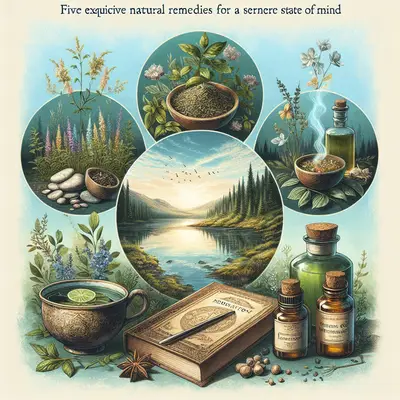
Mental calm is not an accident; it is a craft. Beyond trends and quick fixes, there is a quieter world of natural remedies that work in concert with the nervous system rather than against it. For those who value refinement in how they live—and how they feel—mental wellness becomes less about escape and more about curation: of inputs, rituals, and sensory experiences. This is where a more nuanced, elevated approach to natural remedies begins.
Below are five exclusive, thoughtfully chosen insights for those who expect their mental wellness practices to be as considered as the rest of their life.
Insight 1: The Micro-Dose Ritual of Aroma—Not Just “Essential Oils”
Most conversations about aromatherapy stop at “use lavender to relax.” A more refined approach treats aroma as a micro-dose ritual for the nervous system—precise, minimal, and intentional.
Instead of diffusing strong scents for hours, consider what could be called “whisper dosing”:
- One drop of high-quality essential oil on a ceramic stone, placed near your workspace—not the entire room.
- A single, subtle wrist application before a demanding meeting, then a slow inhale with eyes softly closed.
- Alternating between two aromas—one grounding (like vetiver or cedarwood), one brightening (like bergamot)—to cue your mind for different states: decompression versus focus.
This restrained use preserves the sophistication of the experience and prevents olfactory fatigue. Moreover, research suggests that certain aromatic compounds can influence activity in the limbic system—particularly involved in emotion and stress response—without overwhelming the senses. The key is precision, not abundance.
Insight 2: Nervous System Pairings—Match the Remedy to the Overload
Most people reach for any “calming” remedy when they feel stressed. A more discerning approach asks: What kind of overload is this? From there, you can pair the remedy to the pattern—not just the symptom.
Consider three common internal states and their natural counterparts:
- Agitated and wired: Racing thoughts, shallow breathing, restlessness.
- Refined remedy pairing: Warm herbal infusions with nervine herbs (such as chamomile, lemon balm, or passionflower), dimmed lights, and deliberate exhalations that are slightly longer than your inhales. The warmth, the sedative properties of certain herbs, and the exhale-focused breathing collectively signal “safe to soften.”
- Foggy and depleted: Mentally dull, heavy, or emotionally flat.
- Refined remedy pairing: Gentle stimulating botanicals like green tea (for a measured dose of L-theanine and caffeine), cool water with a pinch of mineral-rich salt, and brief exposure to natural light. This is not about “pushing through,” but about respectfully waking the mind from its heaviness.
- Quietly tense: You seem composed, but shoulders, jaw, and gut say otherwise.
- Refined remedy pairing: Magnesium-rich foods or supplements (as guided by a professional), slow stretching, and a light aromatherapeutic touch—like a drop of diluted frankincense on pulse points. This pairing nourishes relaxation from inside (minerals) and outside (somatic release and scent).
By matching the character of your overload to the character of your remedy, you respect the complexity of your nervous system instead of treating all stress as identical.
Insight 3: Botanical Beverages as Evening Signals, Not Just “Sleep Aids”
Evening herbal teas are often marketed as generic sleep solutions. A more elevated perspective sees them as signals—a language you speak to your body about what comes next.
Rather than drinking a “sleep tea” and scrolling on your phone, consider designing an evening botanical that carries three qualities: warmth, softness, and slowness.
- Warmth eases the transition from the sympathetic (fight-or-flight) to parasympathetic (rest-and-digest) state. A slowly sipped, warm drink can be a physical cue: “the day is closing.”
- Softness in flavor (not overly sweet, not aggressively bitter) encourages the mind to associate evening with gentle sensory input, not stimulation.
- Slowness is created by the ritual itself: selecting the herbs, watching water come to temperature, waiting for the steep, holding the cup with both hands.
Herbs like lemon balm, chamomile, and lavender have been studied for their calming potential, but the sophistication lies in timing and environment: low lighting, minimal noise, and no competing screens. Over time, this ritual becomes a conditioned cue, where simply preparing the beverage begins to soften mental edges.
Insight 4: Texture as Medicine—The Underestimated Sense in Mental Ease
Taste, scent, and sound dominate wellness conversations, yet texture is one of the most quietly therapeutic senses—and an overlooked natural remedy for a restless mind.
Our skin and fascia respond to texture more than we realize. Fine adjustments in what we touch daily can subtly shift our internal state:
- Weighted or textured blankets: Gentle, evenly distributed pressure can engage deep-pressure receptors, sending calming signals to the nervous system—similar in principle to therapeutic touch or swaddling, but refined for adults.
- Deliberate contrast: Moving between smooth and slightly textured surfaces—a linen pillowcase after a warm shower, a woven throw under the hands during reading—reminds the body of its boundaries and can be grounding when thoughts feel diffuse.
- Ritual touch tools: A smooth stone in a pocket, a finely crafted wooden massager, or a silk eye mask. These are not toys; they are tactile anchors, privately luxurious and discreetly regulating.
In a world dominated by digital flatness, curating the textures that meet your skin can become a subtle but powerful way to invite calm, presence, and a clearer sense of self.
Insight 5: The Quiet Audit—Refining Inputs as a Natural Remedy
Natural remedies are not only things we add; they are also what we allow in. One of the most exclusive mental wellness practices is the quiet audit: a refined, almost editorial review of your daily inputs.
Consider treating your mind as you would a high-end gallery space: not everything earns a place on the walls.
A quiet audit might include:
- Information diet: Limiting news consumption to one or two trusted sources and specific times of day, rather than constant background anxiety.
- Acoustic environment: Replacing low-level noise with curated sound—gentle instrumental music, nature soundscapes, or deliberate silence. Background sound should be chosen, not accidental.
- Visual field: Reducing visual clutter, even in small ways: keeping one surface consistently clear, minimizing harsh lighting, and introducing a single calming object, such as a small plant or a well-crafted candle, as a visual anchor.
This is not minimalist theater; it is nervous system hygiene. By pruning chaotic stimuli, you allow your natural remedies—herbs, aromas, touch, breath—to work in a cleaner, less reactive internal environment. The result is not just temporary relief, but a steadily lower baseline of mental friction.
Conclusion
Natural remedies for mental wellness become truly powerful when they are treated less as wellness “products” and more as instruments in a carefully composed score. Aroma, botanicals, texture, minerals, and curated inputs each play a part, not in numbing the mind, but in refining its experience of daily life.
For those who value discretion, elegance, and depth in their self-care, mental calm is not a luxury—it is a standard. By approaching natural remedies with this level of intention, you transform them from occasional interventions into a quiet, continual art of living.
Sources
- [National Center for Complementary and Integrative Health – Aromatherapy](https://www.nccih.nih.gov/health/aromatherapy) - Overview of research and safety considerations for essential oils and aromatic therapies
- [Harvard Health Publishing – Herbs and Supplements for Stress](https://www.health.harvard.edu/mind-and-mood/herbs-and-supplements-for-stress) - Evidence-based look at calming herbs and how they may influence mood and stress
- [Cleveland Clinic – Magnesium and Your Health](https://health.clevelandclinic.org/magnesium-benefits) - Explanation of magnesium’s role in the body, including muscle relaxation and nervous system support
- [Mayo Clinic – Weighted Blankets: Do They Work?](https://www.mayoclinichealthsystem.org/hometown-health/speaking-of-health/weighted-blankets-do-they-work) - Discussion of the potential calming effects of deep-pressure stimulation from weighted blankets
- [Harvard Health Publishing – The Health Hazards of Overexposure to Screens and Media](https://www.health.harvard.edu/blog/the-harmful-effects-of-too-much-screen-time-2021022222020) - Insight into how constant digital and informational input can affect mental health and stress levels
Key Takeaway
The most important thing to remember from this article is that this information can change how you think about Natural Remedies.