In an age where even our leisure arrives via notification, the truly scarce luxury is a mind that feels unhurried, unharried, and quietly sovereign. As Cyber Monday weekend headlines promise “deals that will make you forget Black Friday even happened,” the cultural tempo accelerates yet again—faster refresh rates, faster shipping, faster everything. The nervous system, however, has not upgraded its hardware in millennia.
This is the overlooked story behind the retail spectacle: as we chase digital bargains, we also accumulate invisible costs—mental clutter, decision fatigue, and a subtle sense that our attention no longer fully belongs to us. For readers of Calm Mind Remedies, this moment is not just about resisting excess consumption; it is an invitation to reinvest in a slower, richer currency: calm.
Below, discover five refined, nature-rooted practices designed not as quick fixes, but as elegant correctives to an overstimulated world. Each is crafted to sit comfortably alongside a discerning lifestyle—think of them as the wellness equivalent of a timeless cashmere coat: understated, enduring, and quietly transformative.
1. The “Anti-Cyber Monday” Hour: A Digital Fast Paired with a Botanical Infusion
While brands extend Cyber Monday into a full “weekend victory lap,” consider claiming a parallel hour of deliberate digital absence. This is not a protest against technology, but a recalibration of its place in your life. By intentionally stepping away from screens, especially during peak promotional surges, you send a powerful signal to your nervous system: you are not on sale, and your attention is not a commodity.
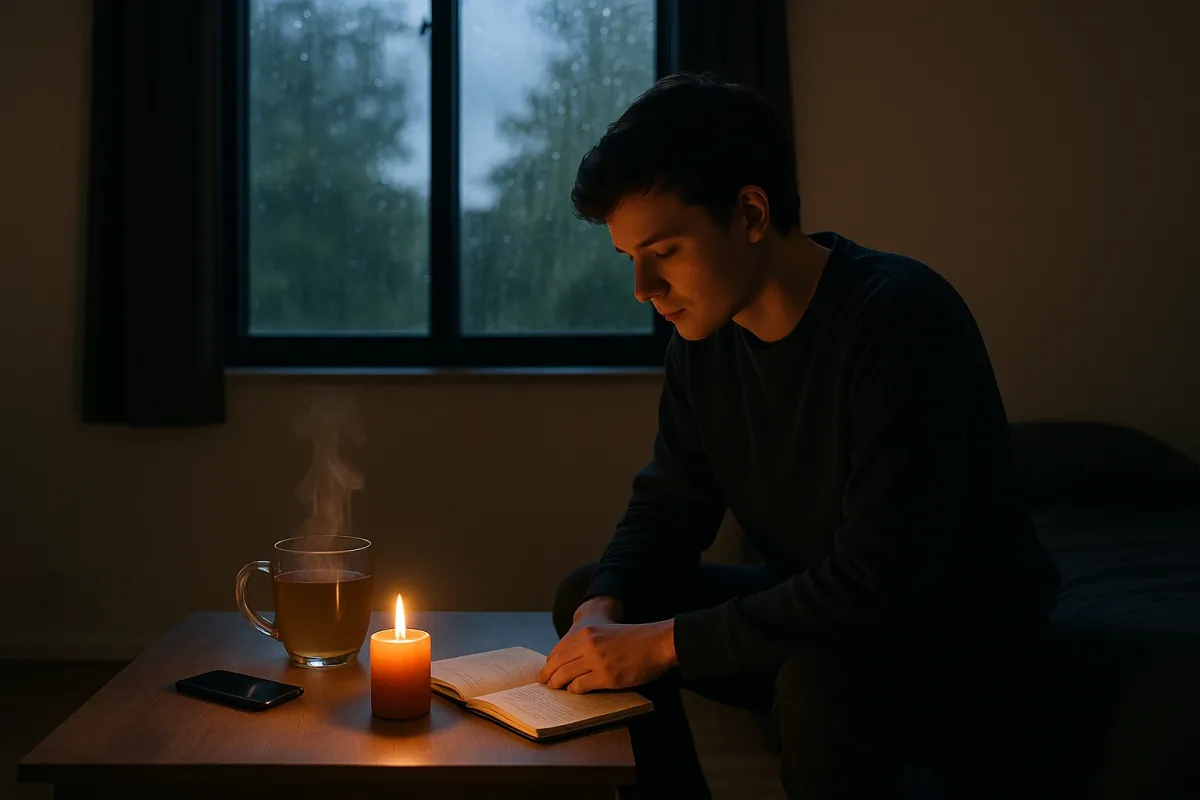
Elevate this hour with a thoughtfully chosen herbal infusion. A blend of organic lemon balm, tulsi (holy basil), and linden blossom creates a subtle triad of calm. Lemon balm offers a light, citrus-tinged lift that can soften anxious rumination; tulsi is revered in Ayurvedic tradition for its adaptogenic and stress-balancing qualities; linden, with its delicate floral notes, has long been associated with gentle relaxation and heart-centered calm. Sip slowly, preferably from a vessel that feels pleasing in your hand—porcelain, stoneware, or glass. Let the experience feel ceremonial rather than functional.
The key is consistency: schedule this hour as you would a meeting with someone important—because it is. Over time, your body will begin to anticipate this pause, lowering cortisol and easing mental hypervigilance before you even pour the water.
2. Sensory Minimalism: A Curated Evening Environment for Nervous System Repair
If Cyber Monday represents maximalism—more offers, more stimuli, more urgency—then consider the opposite aesthetic for your evenings: sensory minimalism. This is not an empty room, but a carefully edited one, in which every element within your line of sight gently affirms, “Nothing is required of you now.”
Begin with light. Replace harsh overhead glare with low, warm pools of illumination: a single shaded lamp, beeswax candles, or a salt lamp if you prefer a soft amber glow. These tones mimic sunset more than midday, signaling to your brain that melatonin may safely rise. Next, address sound. Swap algorithm-driven audio for something intentionally chosen: soft instrumental piano, distant rain recordings, or—if accessible—actual open-window birdsong or evening air.
Introduce a single aromatic anchor. Rather than diffusing multiple oils, select one calming note that will become synonymous with unwinding in your nervous system. High-quality lavender, Roman chamomile, or neroli (for those who appreciate a more luxurious floral) are ideal. Use a ceramic diffuser, a few drops in a bowl of warm water, or a discrete dab on your pulse points diluted in a carrier oil.
The elegance here lies in restraint. By reducing visual, auditory, and olfactory noise, you free mental bandwidth, allowing your inner world to exhale. Over time, your evening space itself becomes a natural sedative—no prescription required.
3. The Grounded Gaze: A Window Ritual for Overthinking Minds
As social media fills with charming images of animals framed in windows—cats perched on sills, dogs enthralled by passing scenery—we might overlook the simple wisdom on display: they are wholly present to the view in front of them. No multitasking. No endless scrolling. Just attentive gazing.
Reclaim this instinct with a daily “grounded gaze” ritual. Choose a window with some trace of natural life: a tree, shifting clouds, distant rooftops, or even the choreography of city lights. Stand or sit comfortably, spine long but not rigid. Rest your hands on your lap or gently wrapped around a mug of something warm. Then, do nothing but look.
The therapeutic power lies in how you look. Rather than hunting for novelty—Is something happening?—allow your eyes to soften and take in the whole scene at once. This panoramic, unfocused gaze engages the parasympathetic nervous system, the body’s rest-and-digest mode. If thoughts arise (and they will), let them drift past the way you might watch a bird cross the sky: noticed, but not chased.
To deepen the natural aspect, you may place a small potted plant or a vase of fresh herbs—rosemary, eucalyptus, or mint—on the sill. As you gaze outward, occasionally bring your awareness to the plant’s scent or texture, lightly brushing the leaves to release their essential oils. It is a quiet reminder that you, too, are a living organism, not a device required to be “on” at all times.
4. The Botanical Buffer: Using Plant Scents to Transition Between Roles
In a world of remote work and 24/7 connectivity, many people no longer commute physically—but the mind still needs a commute emotionally. Instead of a highway or subway line, create a botanical buffer: a short, sensory ritual using plant-based remedies that marks the transition from one life-role to another—professional to partner, parent to individual, host to restful self.
Select one grounding scent and reserve it exclusively for transition moments. Vetiver, with its deep, earthy character, is particularly suited to this role; cedarwood, sandalwood, or frankincense are sophisticated alternatives. These oils, when responsibly sourced and properly diluted, lend a sense of quiet gravity, like stepping into a shaded grove after a bright, overstimulated afternoon.
Your ritual might be as simple as this: after shutting your laptop, place one hand over your heart, the other over your abdomen. Inhale the scent (from a roll-on blend, diffuser, or a drop on a cotton pad) for four slow counts, pause for four, and exhale for six. Repeat three to five times, with the clear inner statement: “That role is complete for now. I am returning to myself.”
By pairing this internal declaration with a consistent aroma, you create a powerful association. Over time, the mere hint of that scent can begin to downshift your cognitive speed, soothe shallow breathing, and restore a sense of inner hierarchy: you are not your inbox, your to-do list, or your notifications. You are the person who chooses when to attend and when to retreat.
5. The Luxurious Discipline of Micro-Rest: Herbal-Assisted Mini Pauses
When an online poll asks, “Can you handle these annoying life choices?” it mirrors a deeper modern tension: many of us can endure almost anything—overwork, overstimulation, under-rest—but endurance is not the same as elegance. A refined nervous system does not simply survive; it recovers, regularly and deliberately.
Enter micro-rest: 2–5 minute intervals throughout the day devoted solely to nervous system reset. These pauses are more effective when paired with a simple, natural aid. Think of them as small, exquisite intermissions in your mental performance.
A few options:
- Peppermint or spearmint lozenge (sugar-free, naturally flavored): Let it dissolve slowly while you close your eyes and feel the cooling sensation travel through your mouth and throat. Follow the path of the sensation as if you’re tracing a river of freshness; this anchors your wandering mind in the body.
- Rose hydrosol mist: Lightly spritz your face or wrists and inhale deeply. Rose is traditionally associated not only with relaxation but with emotional softening—a gentle antidote to the hard edges of daily pressure.
- Magnesium-rich snack: A small handful of raw almonds or pumpkin seeds, savored slowly. Magnesium plays a role in relaxation and muscle function; the act of deliberate, mindful eating tells your body that it is safe enough to digest, not just to react.
Set a discreet timer or use natural anchors—every time you switch tasks, complete a call, or feel the first spark of irritation, take a micro-rest. Over days and weeks, this practice transforms your inner landscape from a single, exhausting marathon into a series of measured, restorative intervals. The result is not laziness, but a more sustainable, quietly powerful form of productivity.
Conclusion
As headlines celebrate the frenzy of Cyber Monday weekends and the next wave of digital distraction, a more intimate story unfolds in the background: your relationship with your own attention, your own breath, your own peace. Natural remedies are not merely herbs in jars or oils in bottles; they are ways of being in which you curate your sensory world with the same care you bring to your wardrobe, your home, and your closest relationships.
By weaving in a daily digital fast with a botanical infusion, cultivating sensory minimalism at night, gazing out of a window with animal-like presence, marking transitions with plant-based scent, and honoring micro-rest as a non-negotiable luxury, you create a life that feels less like a sale and more like a sanctuary.
In a culture that urges you to click “buy now,” consider this your invitation to “be now”—gently, deliberately, and with the quiet opulence of a calm mind.
Key Takeaway
The most important thing to remember from this article is that this information can change how you think about Natural Remedies.