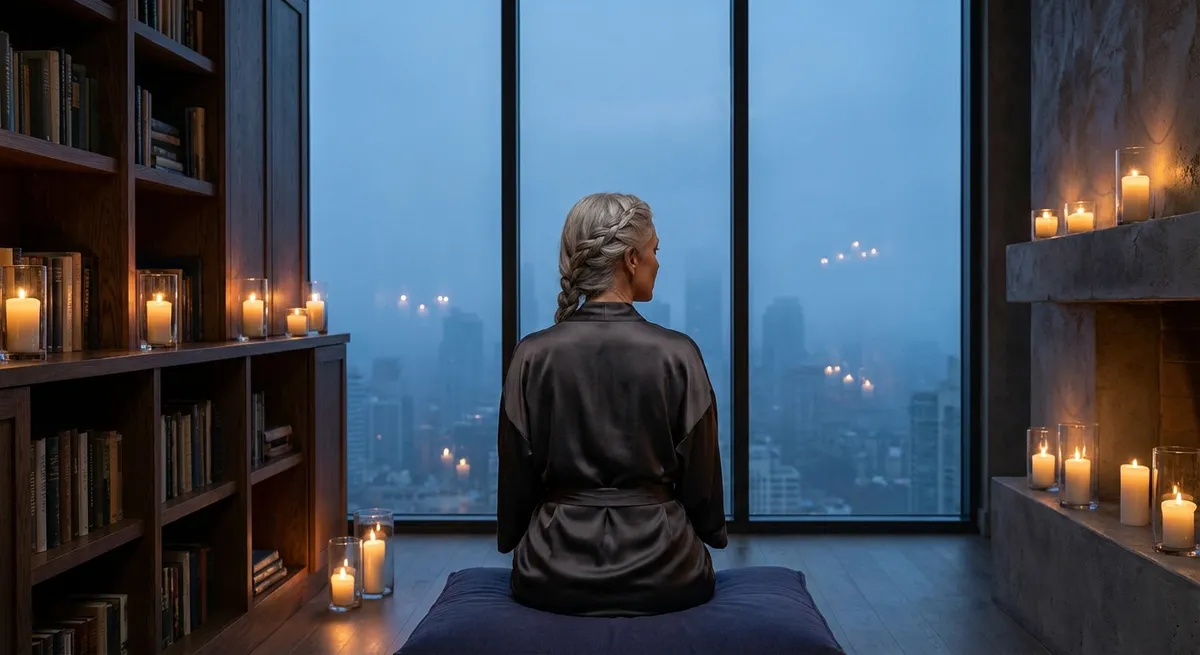
Modern life rewards speed, yet the mind’s finest work happens in stillness. For those who value discernment, nuance, and quiet excellence, meditation is less a “self-care trend” and more a cultivated art form: a way of refining perception, decision-making, and emotional tone. Rather than an escape, it becomes a deliberate practice of returning—again and again—to the most composed version of yourself.
Below, you’ll find five exclusive, lesser-discussed insights into meditation designed for a discerning audience: practices that go beyond “just breathe” and into the territory of mental craftsmanship.
Meditation as Cognitive Curatorship
Most people approach meditation as stress management; a discerning mind can approach it as curation. Your attention is your most valuable asset, yet in an average day it is scattered across micro-distractions, low-value inputs, and reactive habits. Meditation, approached with intention, becomes the quiet room in which you decide what is allowed to shape your inner world.
Rather than passively “clearing the mind,” think of yourself as a curator in a private gallery. Each thought that enters is observed: Is this useful? Is it beautiful? Is it necessary? You are not suppressing what arises, but you are declining to give certain narratives premium wall space. Over time, this subtle act of choosing where to rest your attention spills into daily life—emails, conversations, and obligations begin to feel less like demands and more like conscious selections.
This curatorial lens also makes consistency easier. Ten minutes of refined, intentional attention has a different quality than thirty minutes of distracted sitting. The goal is not austerity, but discrimination: you are learning to recognize which mental habits deserve amplification and which should gently fade into the background.
The Architecture of a Quiet Ritual
Meditation deepens when its surrounding details are treated with quiet precision. Environment is not cosmetic; it is structural. A well-designed ritual tells your nervous system: “We are entering a different mode of being.”
Begin with lighting: gentle, indirect light signals the body to soften without inducing sleep. A single candle or a warm, low lamp is often enough. Consider texture—a shawl, a well-chosen cushion, or a favorite chair with stable back support. These tactile signals teach your body that meditation is not an interruption, but a sanctuary.
Scent can be used sparingly and with intention. One consistent, subtle aroma—such as sandalwood, vetiver, or high-quality lavender—can serve as an olfactory anchor. Over time, your brain will associate this note with composure, making it easier to settle quickly.
Keep the ritual simple, but exact. Perhaps you always begin by placing your phone in another room, then pouring a small glass of water or herbal tea, then sitting. When repeated daily, these micro-gestures create a sense of ceremony—elevating meditation from a chore into a private appointment with your highest clarity.
The Precision of Breath: Moving Beyond “Just Inhale, Exhale”
Breathwork is often introduced as “slow, deep breathing,” but a refined approach acknowledges that different breathing patterns have different neurological signatures. Rather than breathing at random, you can choose a style that matches your intention for the day.
For composure and emotional equilibrium, research points to “coherent breathing”: inhaling for about five seconds and exhaling for about five seconds, maintaining a smooth, unforced rhythm. This roughly five-breaths-per-minute pace supports heart rate variability, which is associated with resilience to stress and improved emotional regulation.
When the day demands alert focus (presentations, negotiations, intensive work), shortening the exhale slightly—say, inhaling for four counts, exhaling for three—can promote wakefulness without agitation. Conversely, lengthening the exhale—inhale four, exhale six—activates the parasympathetic nervous system, ideal for winding down in the evening.
The insight here is precision. Instead of treating breathing as a vague backdrop, you are selecting a specific respiratory architecture for a specific mental outcome. Your meditation becomes tailored rather than generic—more like a bespoke suit than an off-the-rack solution.
Quiet Recalibration: Micro-Meditations Between Demands
Extended sittings are valuable, but the truly discerning practice lies in what you do with the “in-between” spaces of your day. Micro-meditations—30 to 90 seconds of focused attention—can act as subtle recalibrations that prevent stress from compounding.
Consider three elegant micro-practices:
- The Threshold Pause: Each time you move from one environment to another (entering a meeting room, your home, or your car), pause for three breaths at the threshold. Notice the last environment leaving your system, then consciously choose the quality of mind you wish to bring into the next.
- The Luminous Gaze: For one minute, look out a window at natural light or distant scenery. Let your eyes soften and widen their field of view. This “panoramic vision” quietly signals the nervous system to relax, contrasting with the narrow, tunnel vision of high-stress states.
- The Quiet Reset: Between tasks, close your eyes and silently label your current inner state with a single, neutral word—“busy,” “tense,” “flat,” “focused.” No judgment. This simple act of naming introduces a sliver of spaciousness and interrupts automatic reactivity.
These micro-meditations are not about achieving transcendence in 60 seconds; they are about preventing the mind from accumulating unnoticed tension. Over time, your baseline experience of the day shifts from “barely keeping up” to “steadily choosing your pace.”
Deep Listening: From Inner Noise to Refined Intuition
For many high-functioning individuals, intuition is present but drowned out by mental noise. Meditation, when approached as an exercise in deep listening, becomes a training in recognizing the difference between reactivity and refined inner guidance.
Once your breath has steadied and the mind is somewhat settled, pose a single, open-ended question to yourself—something meaningful but not urgent. Examples: “What do I need less of in my life right now?” or “Where is my energy genuinely welcomed?” Then, rather than thinking your way to an answer, simply listen.
What emerges might be a phrase, an image, or even a physical sensation. It will often be quieter and more understated than your usual internal commentary. The discipline lies in not rushing to interpret or act, but in giving that subtle signal the same respect you’d give a trusted advisor.
Over time, this practice refines your ability to detect early signals—of fatigue before burnout, of misalignment before resentment, of opportunity before regret. Meditation thus becomes not only a tool for calm, but an ongoing conversation with your most lucid, unhurried intelligence.
Conclusion
Meditation, practiced with discernment, is less about escaping life and more about inhabiting it with exquisite clarity. By curating your attention, designing a quiet ritual, refining your breath, integrating micro-meditations, and cultivating deep listening, you transform stillness into strategy: a sophisticated way of aligning your inner climate with the life you wish to lead.
In a culture that celebrates visible busyness, there is something quietly radical about making space for such refinement. You are not withdrawing from the world; you are simply choosing to meet it with a mind that is composed, selective, and deeply awake.
Sources
- [National Center for Complementary and Integrative Health (NCCIH) – Meditation: In Depth](https://www.nccih.nih.gov/health/meditation-in-depth) - Overview of meditation practices, potential benefits, and scientific evidence
- [Harvard Health Publishing – Mindfulness meditation may ease anxiety, mental stress](https://www.health.harvard.edu/mind-and-mood/mindfulness-meditation-may-ease-anxiety-mental-stress) - Discusses research on meditation’s impact on stress and mental health
- [American Psychological Association – Mindfulness meditation: A research-proven way to reduce stress](https://www.apa.org/topics/mindfulness/meditation) - Summarizes psychological findings on mindfulness and its effects on cognition and emotion
- [Cleveland Clinic – What Is Breathwork?](https://health.clevelandclinic.org/what-is-breathwork) - Explains different breathing techniques and their effects on the nervous system
- [Greater Good Science Center, UC Berkeley – How Meditation Changes the Brain](https://greatergood.berkeley.edu/article/item/how_meditation_changes_the_brain) - Reviews neuroscientific research on structural and functional brain changes linked to meditation
Key Takeaway
The most important thing to remember from this article is that this information can change how you think about Meditation.