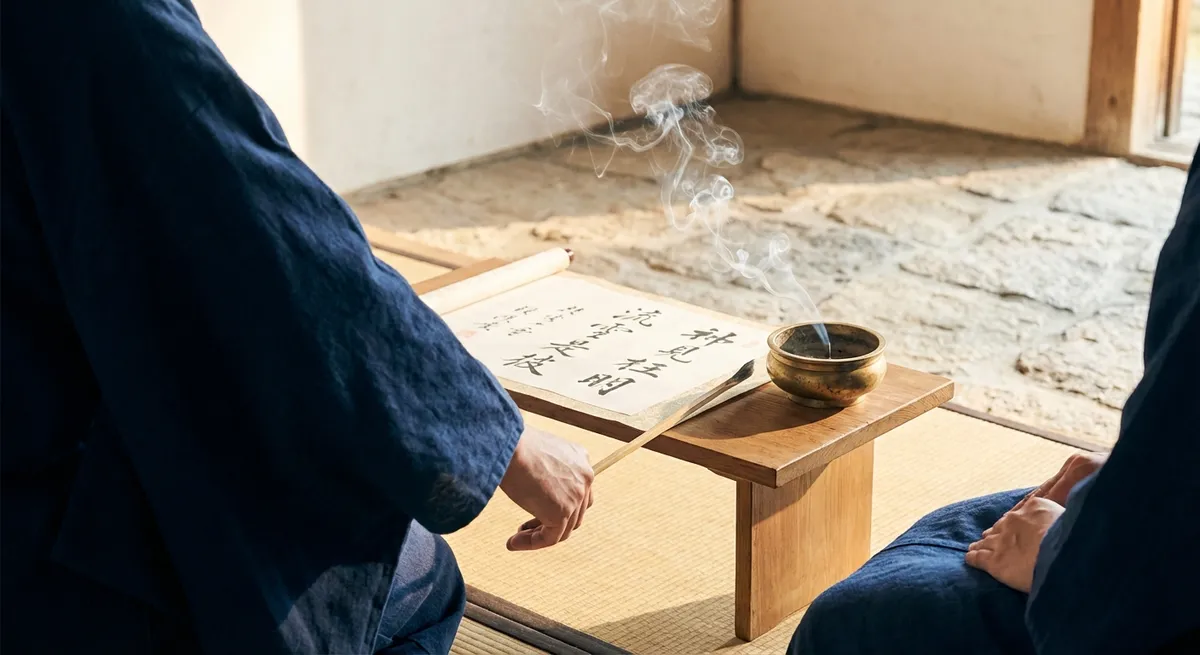
Mental wellness is often marketed as a quick escape: a scented candle, a weekend retreat, a fleeting digital detox. Yet the most profound composure rarely arrives in a rush. It is cultivated—discreetly, consistently—through practices that refine the mind the way a master artisan refines a timeless piece. Meditation, approached as a subtle discipline rather than a trendy habit, becomes less about “relaxing” and more about quietly reshaping the way you inhabit your own life.
Below are five exclusive, nuanced insights into meditation—designed for those who are no longer satisfied with surface-level calm and are ready to curate a more elegantly composed inner world.
Meditation as Mental Architecture, Not Escape
Meditation is too often framed as a pause from life, a temporary refuge from stress. A more sophisticated approach treats it as mental architecture: you are not checking out, you are quietly redesigning the structure of your attention.
Neuroscientific research shows that consistent meditation can alter regions of the brain involved in emotion regulation, attention, and self-awareness, such as the prefrontal cortex and the amygdala. Over time, this does more than simply make you “feel calmer.” It changes the way your mind organizes experience. You begin to notice earlier when your thoughts are escalating, when your emotions are spiraling, when your body is tightening in anticipation of stress.
Rather than chasing a perfect, distraction-free session, consider each meditation as micro-architecture: one detail, one corner, one structural beam at a time. A three-minute session between meetings, a quiet breath before you open a difficult email, or a steady gaze out the window when the day begins to blur—all of these are subtle design choices. The point is not to leave your life, but to inhabit it with more intentional structure and less psychological clutter.
The Luxury of Single-Task Attention
In an overstimulated world, true luxury is the ability to attend to one thing fully. Meditation is not only about sitting with closed eyes; it is also a daily rehearsal for single-task attention—a mental state that quietly upgrades every part of your life.
When you train your mind to rest on a single anchor—your breath, a sound, a phrase, or a point in the body—you are rehearsing the skill of staying with what matters, even when distractions proliferate. This is the same skill that later allows you to read an entire chapter without checking your phone, to have a conversation without mentally drafting your next response, or to complete a complex project with a sense of unhurried concentration.
High performers in demanding fields increasingly rely on meditation not as a spiritual badge, but as a precision tool for focus. The paradox is elegant: by dedicating a small, protected portion of your day to deliberate stillness, you reclaim scattered fragments of attention across the rest of your schedule. The result feels less like productivity hacking and more like reclaiming the dignity of your own time.
The Art of Emotional Decanting
Refined experiences often involve decanting—allowing what is dense, cloudy, or compressed to settle and clarify. Meditation serves a similar role for your emotional life. Instead of suppressing or dramatizing feelings, you give them space to unfold with less urgency and more discernment.
In practice, this means you sit—briefly, consistently—with whatever is present: irritation, fatigue, restlessness, contentment. You are not required to approve of these states; you are simply invited to witness them. Over time, a subtle shift occurs: emotions move from being your identity (“I am anxious”) to being temporary visitors (“Anxiety is present”).
This decanting has practical benefits. Research indicates that mindfulness-based practices can reduce symptoms of anxiety and depression, in part by changing how we relate to our thoughts and feelings. When you are no longer immediately enmeshed with every inner surge, you gain a composed interval between stimulus and response. In that interval lies your freedom to choose: to pause before replying, to rest before you burn out, to decline what no longer aligns with your wellbeing.
Micro-Rituals: Elevating the Ordinary into Quiet Ceremony
For those seeking mental wellness at a higher level of refinement, the container around meditation matters almost as much as the practice itself. You do not need an elaborate setup, but you can cultivate micro-rituals that make even five minutes of stillness feel like a private ceremony rather than an afterthought.
This might mean choosing a specific chair or corner, a particular time of day, or a gentle sensory cue—a certain type of light, a soft textile, or a single piece of calming music that plays as you settle in (and then fades to silence). The aim is not aesthetic perfection; it is consistency and association. Over time, your nervous system begins to recognize these signals as an invitation to soften, to settle, to release.
These micro-rituals transform meditation from a task on your to-do list into a quiet appointment with yourself. They are not about indulgence; they are about signaling to your mind that your inner state is worthy of preparation and care. When your environment begins to mirror the ease you are cultivating internally, the practice no longer feels like work—it feels like coming home.
Precision Meditation: Matching the Practice to the Moment
One of the most underappreciated aspects of meditation is precision—the ability to select the right style for the right mental state. Instead of forcing a single technique onto every mood and moment, you can treat meditation like a refined toolkit.
For mental overactivity and racing thoughts, a breath-focused practice with a gentle count (such as inhaling for four, exhaling for six) can help regulate the nervous system. For emotional heaviness or self-criticism, a compassion-based practice—silently offering kind phrases to yourself and others—can soften rigid inner narratives. When your body is tense and wired, body-scan meditation, systematically moving attention through different areas, can foster a more grounded presence.
This tailored approach aligns with research showing that different techniques (focused attention, open monitoring, loving-kindness) engage distinct neural networks and can yield different psychological outcomes. Instead of “doing some meditation” and hoping for the best, you become a discerning curator of your own inner practices—choosing each one with intention, clarity, and an understanding of what you truly need in that moment.
Conclusion
Meditation, when approached as a subtle discipline rather than a quick fix, is less about chasing peak experiences and more about cultivating an exquisitely steady baseline—a mind that is quieter, clearer, and less easily pulled apart by the noise of the day.
By treating meditation as mental architecture rather than escape, by honoring the luxury of single-task attention, by decanting your emotions with composure, by adorning your practice with micro-rituals, and by selecting techniques with precision, you elevate meditation from a wellness trend to a lifelong refinement.
In this refined approach, calm is no longer an occasional break from chaos; it becomes the understated foundation upon which you design the rest of your life.
Sources
- Harvard Health Publishing – Mindfulness Meditation May Ease Anxiety, Mental Stress - Overview of research showing how mindfulness and meditation affect stress and emotional regulation
- National Institutes of Health (NIH) – Meditation: In Depth - Comprehensive evidence-based summary of different forms of meditation and their health effects
- American Psychological Association – Mindfulness Meditation: A Research-Proven Way to Reduce Stress - Discusses psychological mechanisms and benefits of meditation, including attention and emotional regulation
- Massachusetts General Hospital – Meditation Study on Brain Structure - Research showing structural brain changes associated with regular meditation
- Mayo Clinic – Meditation: A Simple, Fast Way to Reduce Stress - Practical overview of types of meditation and how they support stress reduction and overall wellbeing
Key Takeaway
The most important thing to remember from this article is that this information can change how you think about Meditation.