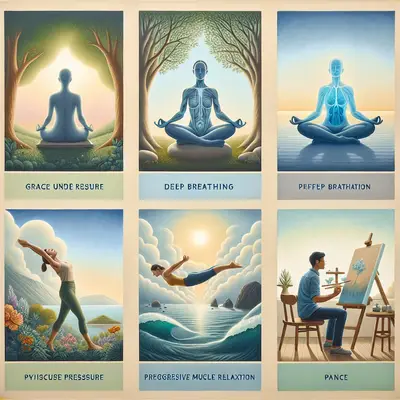
There is a difference between merely coping with stress and cultivating a life that metabolizes it with grace. For those whose days are dense with decisions, demands, and quiet responsibilities, stress relief is not a luxury—it is infrastructure. This is not about escaping your life, but refining the way you inhabit it. What follows is a considered approach to stress relief, built around nuanced practices that preserve clarity, presence, and composure in a fast-moving world.
Beyond “Self-Care”: Redefining Stress Relief as Daily Architecture
In sophisticated, high-pressure lives, “stress relief” often gets relegated to the margins: an occasional yoga class, a weekend away, or a spa appointment squeezed between obligations. The problem is structural, not superficial. When stress management is treated as an add-on, it competes with everything else on your calendar—and usually loses.
A more effective approach is to treat stress relief as architecture rather than decoration. Instead of asking, “What can I add to reduce stress?” consider, “How can the way I work, commute, communicate, and unwind be designed to generate less internal friction?” This shift turns mental wellness from a reaction to overwhelm into a quiet baseline standard.
Architecture-level choices include how you structure your first 10 minutes of the day, the way you transition between high-intensity tasks, and the signals you send your nervous system before sleep. When these micro-moments are deliberately arranged, your day stops feeling like a series of emergencies and begins to function more like a well-orchestrated performance. Tension still appears—but it no longer dictates the entire show.
Exclusive Insight 1: The Precision Pause — Interrupting Stress Before It Cascades
Most stress does not start as a crisis; it begins as a small, physiological ripple—slight muscle tension, a shallow breath, a bit of jaw tightness—that goes unchecked until it becomes a wave. The “Precision Pause” is the practice of intervening at the ripple stage. Instead of waiting until you feel overwhelmed, you train yourself to recognize the first subtle signs and respond with a micro-interruption.
For 20–40 seconds, you do three things: you still your body, you lengthen your exhale, and you soften your visual field (gazing slightly downward or into the distance rather than at a bright, stimulating screen). This combination sends a clear signal to your nervous system that you are safe enough to de-escalate. It takes less time than opening a new email tab, but its impact compounds through the day.
This practice works best when it is anchored to specific triggers: every time you end a meeting, every time you switch tasks, or each time you notice yourself clenching your jaw. Over time, the Precision Pause becomes as automatic as reaching for your phone—except this habit lowers your stress instead of feeding it. It is discreet, elegant, and perfectly suited to environments where elaborate rituals are not realistic.
Exclusive Insight 2: Designing “Cognitive Velvet”: Making Your Inner Dialogue Less Abrasive
Stress is not only created by what happens to you, but by the tone with which you speak to yourself about what happens. High performers and conscientious individuals often run a relentless inner commentary—critical, harsh, and rarely satisfied. This internal abrasion keeps the nervous system subtly activated, even in quiet moments.
“Cognitive velvet” is the deliberate softening of your inner narration without losing precision or standards. It is the difference between “I cannot believe you messed that up again” and “That didn’t go as planned; what would you do differently next time?” The facts remain intact; the delivery changes.
To cultivate this, begin by noticing three types of abrasive thinking: catastrophizing (“This will ruin everything”), personalizing (“This is all my fault”), and globalizing (“I always fail at this”). Instead of arguing with these thoughts, reframe them with specific, measured language: “This is inconvenient, not catastrophic”; “I contributed to this, but I am not the only variable”; “I struggled with this situation, not with everything.” Over time, your mind becomes a more refined place to live—firm, but not cruel. The reduction in chronic, low-level stress can be profound.
Exclusive Insight 3: The Transitional Ritual: Protecting the Edges of Your Day
For many people, stress intensifies at the edges of the day: the rushed acceleration of the morning and the mental spillover of the evening. Without clear transitions, you carry the static of one domain into another—work into home, home into sleep, notifications into midnight. A transitional ritual is a curated micro-ceremony that marks a psychological shift in roles and responsibilities.
This does not need to be elaborate. It might be two minutes of deliberately putting away your laptop and closing all browser tabs, accompanied by a deep exhale, a glass of water, and three notes in a journal: “What I completed,” “What I am leaving for tomorrow,” and “One thing I am grateful for today’s effort.” The goal is to signal to your brain that you have stepped out of one arena and into another.
Morning transitions can be equally intentional: one full minute of quiet, eyes open, before touching any device; three slow stretches while you notice how your body feels; or a short, spoken intention for the day that is rooted in how you want to feel, not only what you must do. These small, consistent acts create a sense of containment. Your day becomes a series of well-defined movements, not a blur of overlapping roles.
Exclusive Insight 4: Curating Your Inputs: An Intentional Approach to Mental Nutrition
Stress is aggravated not only by what you are responsible for, but by what you consume. News feeds, message threads, and constant updates function like a low-grade stimulant. Over time, this “input overload” erodes attention, increases irritability, and keeps your nervous system humming at a mildly elevated state, even when nothing urgent is happening.
Curating your inputs is the mental equivalent of upgrading your diet. Instead of attempting a full digital detox—which often fails—you refine the quality, timing, and purpose of what you allow in. For example, you might reserve news consumption for one or two specific windows per day, choosing longform, reputable reporting over constant headline scrolling. You might check social media on a schedule, rather than as a reflex.
This is not about asceticism; it is about control and curation. Ask of each regular digital input: “Does this clarify my mind, or clutter it? Does it energize me, or quietly drain me?” Gradually, you construct a personal ecosystem of information that supports steadiness rather than agitation. The reduction in ambient mental noise creates more capacity to process genuine stressors calmly and intelligently.
Exclusive Insight 5: Tension Mapping: A Personalized Blueprint for Release
Stress is both mental and physical, but many people treat their bodies as afterthoughts, only noticing discomfort when it becomes pain. “Tension mapping” is a refined self-observation practice that helps you identify where stress lives in your body and how it behaves across the day.
Once or twice daily—perhaps midday and evening—take 60–90 seconds to scan from crown to toes. Note, without judgment, where you feel tightness, pressure, or heat: behind the eyes, at the base of the skull, in the shoulders, the jaw, the chest, the stomach, the lower back. Over a week, write down patterns you notice: which tasks correspond to which physical responses, and when your body feels most and least tense.
With this map, you can apply targeted micro-practices. Neck tension might respond to a 30-second stretch and three slow breaths. Chest pressure might ease with a brief walk away from your desk. Stomach tightness might call for gentler caffeine intake or a slower lunch. The key is personalization: your body’s stress signature is unique. Once you understand it, you can intervene with almost surgical precision—quietly dismantling the physical scaffolding of stress before it hardens.
Conclusion
In a life that moves quickly, true stress relief is not about escaping your responsibilities; it is about refining the way you meet them. Precision pauses, a softer inner narrative, deliberate transitions, curated inputs, and a detailed map of your body’s responses form a subtle but powerful system. These are not grand gestures; they are understated upgrades to the way you inhabit each day.
The aim is not to eliminate stress—an impossible and, in many ways, undesirable goal—but to metabolize it with grace. When your inner architecture is thoughtfully designed, you carry your commitments differently: less like a weight, more like a well-tailored garment. The external world may remain demanding, but your internal experience becomes markedly more composed, intentional, and quietly resilient.
Sources
- [National Institute of Mental Health – 5 Things You Should Know About Stress](https://www.nimh.nih.gov/health/publications/stress) - Overview of what stress is, its impact on the body, and basic management strategies
- [American Psychological Association – Stress Effects on the Body](https://www.apa.org/topics/stress/body) - Detailed explanation of how stress affects different bodily systems
- [Harvard Health Publishing – Take a Breath for Better Health](https://www.health.harvard.edu/mind-and-mood/take-a-breath-for-better-health) - Discusses how breathing practices influence the nervous system and stress responses
- [Mayo Clinic – Slide Show: Stress Management Techniques](https://www.mayoclinic.org/healthy-lifestyle/stress-management/in-depth/stress-management/art-20044151) - Practical stress management methods, including relaxation and lifestyle adjustments
- [Cleveland Clinic – Digital Detox: How to Cut Back on Screen Time](https://health.clevelandclinic.org/digital-detox) - Evidence-based guidance on reducing digital overload and its impact on stress
Key Takeaway
The most important thing to remember from this article is that this information can change how you think about Stress Relief.