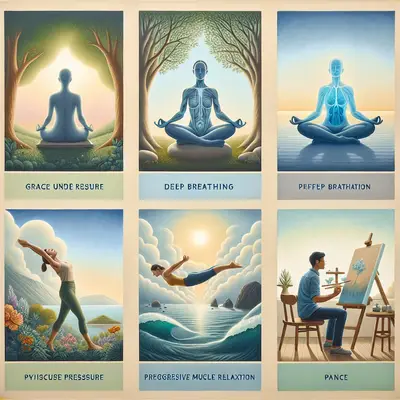
Stress, in its modern form, is rarely loud. It is discreet, threaded into notifications, expectations, and the silent pressure to perform. For the discerning mind, stress relief is not about escape; it is about intelligent recalibration—an elegant rebalancing of nervous system, environment, and intention. This is where refinement matters: small, precise interventions that quietly change everything.
Below are five exclusive, quietly powerful insights designed for those who view mental wellness not as a trend, but as an elevated standard of living.
1. Treat Your Nervous System as an Ecosystem, Not a Machine
Most stress advice assumes the body is a switch: “on” or “off,” stressed or relaxed. A more refined approach is to treat your nervous system as an ecosystem—complex, responsive, and sensitive to micro-changes.
The autonomic nervous system (ANS) has two main branches: sympathetic (alert, mobilized) and parasympathetic (rest, recovery). Stress relief becomes far more effective when you stop trying to “shut off stress” and instead cultivate balance between these branches throughout the day.
Consider:
- Micro-doses of regulation: 30–90 seconds of intentional slow breathing (for example, a 4-second inhale, 6-second exhale) several times per hour. This signals safety to the body and gradually shifts your baseline.
- Gentle oscillation, not forced relaxation: Allow yourself to move between mild activation and calm; aim for fluidity, not permanent serenity. This mirrors healthy ecosystems, which fluctuate but remain resilient.
- Nervous system-friendly scheduling: Avoid stacking back-to-back cognitively demanding tasks. Instead, alternate focus-heavy work with short, sensory-reset moments—stepping outside, washing your hands with cool water, or looking at a distant view.
The sophisticated shift is this: you are not suppressing stress; you are curating regulation, moment by moment.
2. Curate Sensory Inputs as You Would a Gallery
Refined stress relief begins with what you allow into your sensory field. The brain is continuously scanning for cues of threat or safety, and your visual, auditory, and tactile environment silently dictates your stress load.
Rather than a full “digital detox” or drastic lifestyle reform, consider curation:
- Visual calm: A single clear surface in your home or workspace—a desk, a side table—kept intentionally uncluttered. The brain reads order as safety.
- Auditory design: Replace constant background noise with deliberate soundscapes: gentle instrumental music, nature sounds, or silence punctuated by brief, intentional audio (a favorite track, a short guided pause).
- Tactile reassurance: High-quality textures—linen, cashmere, smooth wood, cool ceramic—act as miniature grounding tools. Simply resting your hand on a favorite object can serve as a quiet anchor when stress spikes.
The aim is not minimalism for its own sake, but sensory coherence. When your environment whispers “you are safe,” your physiology responds in kind.
3. Upgrade Your Inner Dialogue from Performance to Stewardship
Chronic stress is often less about workload and more about the narrative wrapped around it. Many high-functioning individuals unconsciously treat their mind as an instrument for output rather than something under their care.
A subtle but transformative pivot is to move from performance mindset to stewardship mindset:
- Performance mindset: “I must push through; rest is a reward I earn later.”
- Stewardship mindset: “My cognitive clarity is an asset. Maintenance is non-negotiable.”
This shift reframes restorative practices—sleep, pauses, walks, nourishing meals—not as indulgences, but as intelligent asset management. Over time, this:
- Reduces guilt around rest.
- Lowers baseline anxiety about productivity.
- Softens harsh self-criticism, a major amplifier of stress.
A refined inner dialogue might sound like: “This pause is not procrastination. It is calibration so that my next 60 minutes are sharp, precise, and aligned with my standards.”
4. Practice “Precision Recovery” Instead of Generic Relaxation
“Just relax” is vague advice, and the nervous system rarely responds to vagueness. Precision recovery is a more elevated approach: choosing stress-relief methods tailored to the type of stress you’re experiencing.
Ask yourself: What kind of depleted am I?
- Cognitively overloaded (mental noise, decision fatigue):
Opt for low-input, low-choice activities. Examples: a short walk without podcast or music, looking out a window at a distant view, gentle stretching in silence. The brain needs fewer inputs, not more entertainment.
- Emotionally saturated (upset, anxious, irritable):
Engage in somatic grounding: placing a hand on your chest or abdomen, feeling your feet against the floor, lengthening your exhale. Emotional overload is often best met through the body, not more thinking.
- Physically drained (tired, wired, restless body):
Consider nervous system downshifting: warm showers or baths, dimmer lighting in the evening, and light movement (like slow yoga or a leisurely stroll) to metabolize accumulated stress hormones.
By matching the remedy to the precise nature of your stress, you waste less time on techniques that “should” work and more time on what actually does.
5. Adopt “Evening as a Ritual of Descent,” Not Just the End of the Day
The way you land your day determines the quality of your internal landscape tomorrow. Evening is not merely the end of being productive; it is a descent—a deliberate softening of physiological and cognitive intensity.
A sophisticated evening practice is less about elaborate routines and more about consistent signals:
- Lighting as language: Transition from bright, overhead light to warm, low-level lamps in the final hours of the day. This supports melatonin production and tells your nervous system, “The work of vigilance is over.”
- Information fast: Establish a personal “last call” for incoming information—no emotionally charged news, emails, or social media after a set time. Sleep is shallow when the mind is still negotiating unfinished arguments or unresolved stimuli.
- Small closing ritual: One or two predictable actions—a short reflection in a notebook, making tomorrow’s to-do list, or tidying a single area. This gives your brain closure: the day has been acknowledged; nothing urgent is being abandoned.
Over time, this transforms your evenings from a vague slide into exhaustion into a styled, intentional descent into rest—one of the most potent forms of stress prevention.
Conclusion
True stress relief for the discerning mind is not loud, dramatic, or performative. It is composed: a series of precise, intelligent choices that reshape your internal world without spectacle.
By treating your nervous system as an ecosystem, curating sensory inputs, elevating your inner dialogue, practicing precision recovery, and honoring evening as a ritual of descent, you move beyond generic self-care into something far more powerful: quiet mastery over how your mind and body respond to a demanding world.
The refinement lies in the details—subtle, repeatable shifts that, over time, make calm not an exception, but your default.
Sources
- National Institute of Mental Health – 5 Things You Should Know About Stress - Overview of what stress is, how it affects the body, and basic coping strategies
- Harvard Health Publishing – Understanding the Stress Response - Explains the biology of the stress response and the role of the autonomic nervous system
- American Psychological Association – Stress in America - Current data and insights on how stress shows up in modern life and its psychological impact
- Cleveland Clinic – Autonomic Nervous System: What It Is and How It Works - Detailed explanation of the sympathetic and parasympathetic systems and their influence on health
- Sleep Foundation – How Light Affects Sleep - Evidence-based discussion of how evening light and screens influence sleep quality and stress regulation
Key Takeaway
The most important thing to remember from this article is that this information can change how you think about Stress Relief.