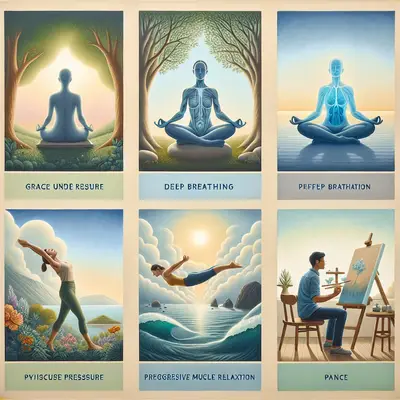
Stress relief, when thoughtfully approached, can become less of an emergency response and more of a cultivated skill—quietly woven into the fabric of a well-designed life. For the discerning mind, true ease is not about escape but about precision: understanding which levers to pull, which rituals to refine, and which states of mind to protect. This is stress relief less as a slogan, more as an artful, evidence-aligned practice.
Below are five exclusive, nuanced insights—each designed for those who view mental wellness not as a trend, but as an elevated standard of living.
Reframing Stress as Information, Not an Intruder
For many, stress is cast as an enemy to be eliminated. A more sophisticated approach treats it as data: a subtle, physiological memo from the body about misalignment, overload, or neglect.
When cortisol and adrenaline rise, they are not simply sabotaging you; they are signalling. Perhaps the pace is unsustainable, the boundaries too porous, the sleep too shallow. Instead of asking, “How do I make this stop?” a more refined question is, “What is this stress attempting to tell me?”
Neuroscience suggests that our interpretation of stress dramatically shapes its impact. Research on the “stress mindset” shows that when individuals perceive stress as potentially enhancing (a call to focus, a cue to adjust), they experience fewer negative health effects and perform more effectively. This does not romanticize chronic overload; rather, it helps you distinguish between acute, purposeful stress and chronic, corrosive strain.
A premium stress practice involves a daily check-in: observing stress signals with curiosity. Tight jaw? Racing thoughts? Compressed breathing? Each sensation offers a clue about where your life design needs recalibration—not as a failure, but as ongoing refinement.
Precision Recovery: Matching the Remedy to the Stress Pattern
Most advice offers generic solutions: “Take a break,” “Practice self-care,” “Try meditation.” Effective for some, but often imprecise. Elevated stress relief requires something more discerning: matching the remedy to the pattern of stress.
Consider three distinct stress profiles:
- Cognitive overload – Too many decisions, ideas, or inputs.
Refined remedy: Low-input recovery. Silent walks without podcasts, offline reading, or a notebook session where thoughts are “downloaded” onto paper, allowing the mind to decongest.
- Emotional strain – Interpersonal conflict, caregiving burdens, or unspoken resentments.
Refined remedy: High-containment spaces. This might mean a standing conversation with a trusted confidante, a well-chosen therapist, or a structured journaling ritual focused on naming and contextualizing emotions.
- Physiological overdrive – High heart rate, muscle tension, shallow breathing.
Refined remedy: Body-first interventions. Slow nasal breathing, restorative stretching, temperature-based resets (a cool face rinse, a warm bath), or gentle somatic practices that signal safety to the nervous system.
Rather than reaching for whatever wellness trend is circulating this week, pause and ask: Is my stress primarily mental, emotional, or physiological? Then curate a response that is specific, not generic—more like a tailor-made garment than an off-the-rack solution.
Guarding Cognitive Luxury: Curating a Cleaner Mental Environment
In a premium lifestyle, we curate objects, spaces, and experiences with care. Yet many allow their mental environment to be overrun by low-quality inputs: endless notifications, reactive news scrolling, ambient noise from other people’s anxieties.
Cognitive luxury is the quiet privilege of having mental space—uncluttered, unhurried, and intentional. Protecting it can be a profound form of stress relief.
This can involve:
- Deliberate information boundaries: Consuming news at set times instead of constant checking; choosing in-depth longform journalism over shallow, anxiety-inducing fragments.
- Notification minimalism: Ruthlessly disabling non-essential alerts so that your attention is requested, not hijacked.
- Quality thresholds for digital intake: Asking, “Does this inform, inspire, or nourish me?” before engaging—especially with social media.
- Structured solitude: Scheduling pockets of unstructured time not as indulgences, but as non-negotiable mental hygiene.
A calmer life is not only created by what you add—breathwork, rituals, supplements—but by what you remove: overstimulation, digital noise, and low-grade input that slowly frays your focus. Cultivating this cognitive minimalism turns everyday life into a quieter, more deliberate experience.
Elegantly Designed Micro-Rituals for Everyday Decompression
Not everyone can disappear to a spa or retreat, but everyone can design elegant micro-rituals that punctuate their day with calm. Think of them as subtle “pressure valves” that allow stress to dissipate before it consolidates.
These micro-rituals are brief—often 30 seconds to 3 minutes—but intentional:
- Transitional breaths at thresholds: A simple ritual of three slow, conscious breaths each time you change environments: before opening your front door, before entering a meeting, before starting your car. It creates a subtle reset between roles.
- Sensory resets: A curated scent (essential oils, a favorite candle), a specific piece of music, or a particular tea reserved only for decompression moments. Over time, these cues become associated with safety and softness, training your nervous system to shift states more easily.
- Visual stillness: A clean, minimally cluttered corner in your home or office—nothing more than a chair, a plant, perhaps a single art piece. A place that exists purely for pausing, not for productivity.
- Closing rituals: A brief end-of-day practice—writing three lines about what went well, powering down all devices at a set time, or dimming lights systematically. This signals to the body that the day is complete, reducing the mental tendency to “carry work to bed.”
These are not grand gestures; they are small, precise edits to the architecture of your day that create an ongoing undercurrent of release.
Protecting Sleep as Your Most Luxurious Stress Intervention
Among all wellness practices, high-quality sleep remains the most sophisticated—and the most understated—medicine for stress. Chronic stress and poor sleep form a mutually reinforcing loop: the more stressed you are, the more fractured your sleep; the worse your sleep, the more reactive your stress response.
A premium approach treats sleep not as an afterthought, but as a central pillar of your mental portfolio.
This may mean:
- Guarding a consistent sleep window as diligently as any high-level meeting.
- Creating sensory coherence in your bedroom: cool temperature, darkness, and quiet or intentionally chosen gentle sound. Think of the space less as a room and more as a sanctuary engineered for recovery.
- An unhurried glide path to rest: Reducing light and screen exposure at least 30–60 minutes before bed, replacing digital stimulation with analog rituals—paper books, gentle stretches, reflective writing.
- Strategic caffeine and alcohol awareness: Not moralizing them, but respecting their timing; minimizing both in the hours leading to sleep, understanding their influence on sleep depth and REM patterns.
Deep, consistent rest is not a luxury reserved for when life “calms down.” It is the engine that allows you to meet a demanding life with far more grace, resilience, and emotional stability.
Conclusion
Refined stress relief is less about escape and more about design: understanding your own stress patterns, treating your physiology as an ally, and shaping your daily environment so that calm is not an exception, but the baseline.
By reframing stress as information, prescribing precise remedies for specific patterns, curating your mental inputs, weaving in elegant micro-rituals, and fiercely protecting restorative sleep, you create a life in which composure is not fragile, but quietly robust.
In this framework, stress does not disappear. It simply loses its authority.
Sources
- American Psychological Association – Stress Effects on the Body – Overview of how stress affects various bodily systems and why chronic stress is harmful
- Harvard Medical School – Understanding the Stress Response – Explains the biology of the stress response and how mindset and behavior can influence it
- Stanford Medicine – Sleep and Health – Discusses the role of sleep in health, cognition, and emotional regulation
- NIH – Stress and Your Health – Evidence-based information on stress, its impact, and strategies for management
- McKinsey Health Institute – Addressing Employee Burnout – Insights on stress, overload, and the importance of recovery in high-performance contexts
Key Takeaway
The most important thing to remember from this article is that this information can change how you think about Stress Relief.