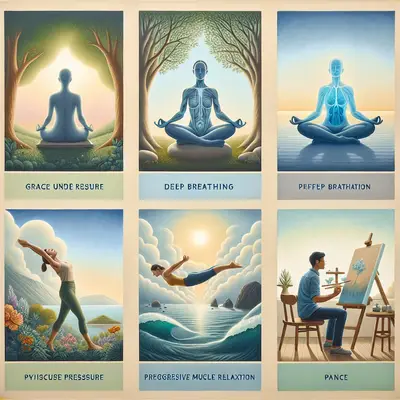
Stress is no longer a rare disruption; for many, it is the default setting. Yet true refinement lies not in outrunning pressure, but in orchestrating a life that metabolizes it with grace. For the discerning mind, stress relief is less about quick fixes and more about cultivating an inner environment where calm feels inevitable rather than aspirational.
This is not an invitation to withdraw from ambition, but to pair your drive with a more artful relationship to your nervous system. What follows are five exclusive, quietly powerful insights—subtle levers that, when consistently applied, elevate stress relief from basic coping to an elegant personal standard.
1. Curating Micro-Transitions: The Lost Art of Changing Gears
Most people treat their day as a single, continuous runway—commute into work into emails into dinner into screens into bed. The nervous system, however, is designed for distinct phases, not a blur. Micro-transitions are deliberate, 60–180 second bridges between activities that signal to your brain: “We are shifting states now.”
Rather than collapsing from one task into the next, consider transitions as miniature rituals. Closing your laptop? Take exactly three slow breaths, stretch your shoulders, and consciously note one task you’ve completed. Entering your home? Pause at the door, feel your feet on the floor, and decide which version of yourself you are bringing inside: leader, partner, parent, or simply human at rest.
Neuroscientifically, these small pauses act as pattern interrupts, preventing the accumulation of unprocessed stress. Each micro-transition is an elegant boundary—subtle, but powerful. Over time, these boundaries keep your day from smearing into an indistinguishable, exhausting blur. Your mind learns that it does not need to drag the intensity of one context into the next.
The refined goal is not a “stress-free day,” but a day composed of intelligible chapters, each bookended by a brief, conscious recalibration.
2. Nervous System Literacy: Treating Calm as a Biochemical Craft
Calm is often treated as a mood or personality trait. In reality, it is a biochemical state that can be understood, influenced, and, to a meaningful degree, designed. Nervous system literacy means learning to read your own physiological signals with the same discernment you bring to fine art, sound, or wine.
Start by observing three early indicators of rising stress that are specific to you: perhaps your jaw tightens, your email pace becomes frantic, or you find yourself rereading the same sentence. These are “whispers” from your sympathetic nervous system. Respond at the whisper stage—not the shout. That might look like stepping away for a 90-second slow-breath interval, taking a short corridor walk, or intentionally softening your gaze away from screens.
It is equally sophisticated to understand which inputs restore your parasympathetic (rest-and-digest) dominance. Gentle lengthened exhale breathing, a glass of water sipped slowly, a brief look out a window at something distant, or a short body scan can all recalibrate your system. These are not indulgences; they are methods of biochemical stewardship.
By treating your nervous system as something you can collaborate with—not battle—stress relief becomes less reactive and more precise. You are no longer simply “stressed” or “not stressed”; you are an attentive curator of internal states.
3. Designing a Calm-Forward Environment: Subtle Luxury in the Background
Most stress advice fixates on what you can do, but the environment you inhabit quietly dictates how much effort is required merely to feel normal. A calm-forward environment is curated so that serenity is the default, not the reward for surviving the day.
Begin with sensory editing. Harsh overhead lighting, constant notifications, cluttered surfaces, and jarring soundscapes each place a tax on your nervous system. Replace what you can with soft, layered lighting; disable non-essential alerts (especially anything that “pings” or flashes); and simplify the visual field of your main work and rest spaces. The goal is understated minimalism—an aesthetic that whispers, “Everything essential is already here.”
Scent, texture, and sound can become your quiet allies. A single, consistent calming scent (such as lavender or bergamot), used judiciously, can become a somatic cue for relaxation. A weighted throw, a well-crafted chair, or high-quality bedding can gently signal to the body that it is safe to soften. Consider a sound environment that prioritizes gentle, consistent audio—a soft playlist, white noise, or natural soundscapes—to counteract the jolt of sudden disruptions.
The sophistication lies in restraint. Rather than crowding your space with “relaxation gadgets,” choose a few intentional, high-quality elements that support calm in the background. You’re designing an ecosystem where stress relief doesn’t always require deliberate effort; sometimes, the space itself is doing part of the work.
4. Refining Your Stress Aesthetic: From Busyness to Composed Ambition
Many people unconsciously treat stress as a status symbol. Being “slammed” or “overbooked” can feel like proof of importance. For a discerning mind, this is an outdated aesthetic. The new luxury is composed ambition—pursuing substantial goals without theatrically broadcasting your depletion.
Begin by listening to your language. The phrases you repeat—“I’m drowning,” “It’s chaos,” “My week is insane”—become the narrative frame your mind uses to interpret your life. Refinement doesn’t mean pretending everything is effortless; it means describing your reality with precision rather than drama. You might experiment with: “This season is full, so I’m being more selective,” or “Today is dense; I’m protecting recovery time this evening.”
Similarly, evaluate your commitments through the lens of energetic cost, not just calendar availability. Two hours with a draining obligation are not equivalent to two hours spent on a meaningful, aligned project. Discerning individuals often adopt the practice of “graceful no’s”—declining opportunities not out of avoidance, but to protect the quality of their presence for what truly matters.
In redefining your stress aesthetic, you elevate calm from a private afterthought to a visible, chosen standard. You are quietly signaling—to yourself and others—that true sophistication is incompatible with chronic overwhelm.
5. Quiet Reserves: Building an Elegant Buffer Against Inevitable Stress
Even the most refined routines cannot eliminate life’s shocks. What distinguishes the poised from the perpetually rattled is the presence of reserves: emotional, physical, and logistical buffers that absorb impact without immediate collapse.
Emotional reserves are cultivated through small, consistent practices that strengthen self-trust. That could be journaling a brief daily check-in, maintaining one non-negotiable supportive habit (like an evening wind-down), or engaging in therapy or coaching before crisis hits, not after. Each of these invests in your ability to remain coherent when circumstances become demanding.
Physical reserves come from treating basics as sacred: sleep that is protected like an important meeting, nutrition that stabilizes rather than spikes, and movement that feels sustainable rather than punishing. These are not aesthetic wellness gestures but quiet infrastructure. You may not notice the benefit on a calm day—but on a difficult day, they can be the difference between bending and breaking.
Logistical reserves include generous time buffers between major commitments, a margin in your finances where possible, and simple contingency plans: a backup work location, a pre-planned “recovery evening” routine, or a short list of people you can call when things feel heavy. This is not pessimism; it is elegant realism.
With reserves in place, stress shows up as a wave, not a flood. You may still feel its force, but you are no longer at its mercy.
Conclusion
Refined stress relief is not a single technique; it is a philosophy of living that respects your nervous system as much as your ambitions. Curated micro-transitions, nervous system literacy, calm-forward environments, a reimagined stress aesthetic, and well-tended reserves all converge into something rare: a life in which composure is not a performance, but a baseline.
You will still face pressure. Deadlines will still tighten, unexpected news will still arrive. Yet with these practices, you meet those moments from a place of structure, not strain—from a velvet edge of ease rather than a frayed edge of exhaustion. In that quiet difference, a truly elevated experience of daily life begins.
Sources
- [National Institute of Mental Health – 5 Things You Should Know About Stress](https://www.nimh.nih.gov/health/publications/stress) – Overview of how stress affects the body and mind, with evidence-based guidance.
- [American Psychological Association – Stress: The Different Kinds of Stress](https://www.apa.org/topics/stress) – Explains acute vs. chronic stress and the psychological mechanisms involved.
- [Harvard Health Publishing – Understanding the Stress Response](https://www.health.harvard.edu/staying-healthy/understanding-the-stress-response) – Details the biology of the stress response and strategies to manage it.
- [Mayo Clinic – Chronic Stress Puts Your Health at Risk](https://www.mayoclinic.org/healthy-lifestyle/stress-management/in-depth/stress/art-20046037) – Discusses the health consequences of ongoing stress and practical management tips.
- [Cleveland Clinic – Relaxation Techniques for Health](https://my.clevelandclinic.org/health/articles/8693-relaxation-techniques) – Reviews evidence-backed relaxation methods that support nervous system regulation.
Key Takeaway
The most important thing to remember from this article is that this information can change how you think about Stress Relief.