In an era defined by constant notification, true mental ease has become a rare luxury. Yet the most refined forms of wellness are often quiet, elemental, and rooted in nature. Natural remedies—when chosen with discernment and practiced with intention—can function like velvet linings to the day: subtle, supportive, and deeply stabilizing. This is not about quick fixes or trend-driven “hacks,” but about cultivating a more cultured nervous system—one that responds to stress with nuance rather than reactivity.
Below, you’ll find a considered exploration of natural supports for mental calm, followed by five exclusive insights designed for those who want their inner life to feel as curated as the rest of their world.
The Art of Natural Calm: Beyond Trend and Hype
Natural remedies occupy a curious intersection between tradition and science. Well before mental health became a modern talking point, cultures across the world turned to plants, minerals, and sensory rituals to steady the mind. What differentiates a refined approach from a generic one is selectivity: choosing what is both evidence-informed and experientially elegant.
Herbal allies such as lavender, chamomile, and lemon balm have long histories in European and Middle Eastern herbalism, not just as teas but as baths, oils, and compresses intended to soften anxiety and promote sleep. Similarly, Asian traditions have revered adaptogens like ashwagandha and rhodiola for their ability to help the body cope with stressors more evenly.
Contemporary research has begun to validate many of these traditional remedies, but the goal is not to replace therapy or medical care. Instead, natural remedies can serve as a supportive layer—like fine underpinnings beneath a well-tailored garment—subtle but profoundly influential in how we move through the day.
A sophisticated mental wellness ritual is less about stocking every “calming” product and more about editing ruthlessly: a few carefully chosen elements, practiced consistently and with intention, will always feel—and work—better than a cluttered cabinet of half-used solutions.
Building a Refined Ritual: Setting, Sensory Detail, and Consistency
Natural remedies perform best within a context. The same chamomile tea consumed hastily at a cluttered desk will not feel the same as one sipped slowly in a dimly lit space with gentle music and a soft throw on your lap. The nervous system registers not only the remedy itself, but the entire sensory environment that surrounds it.
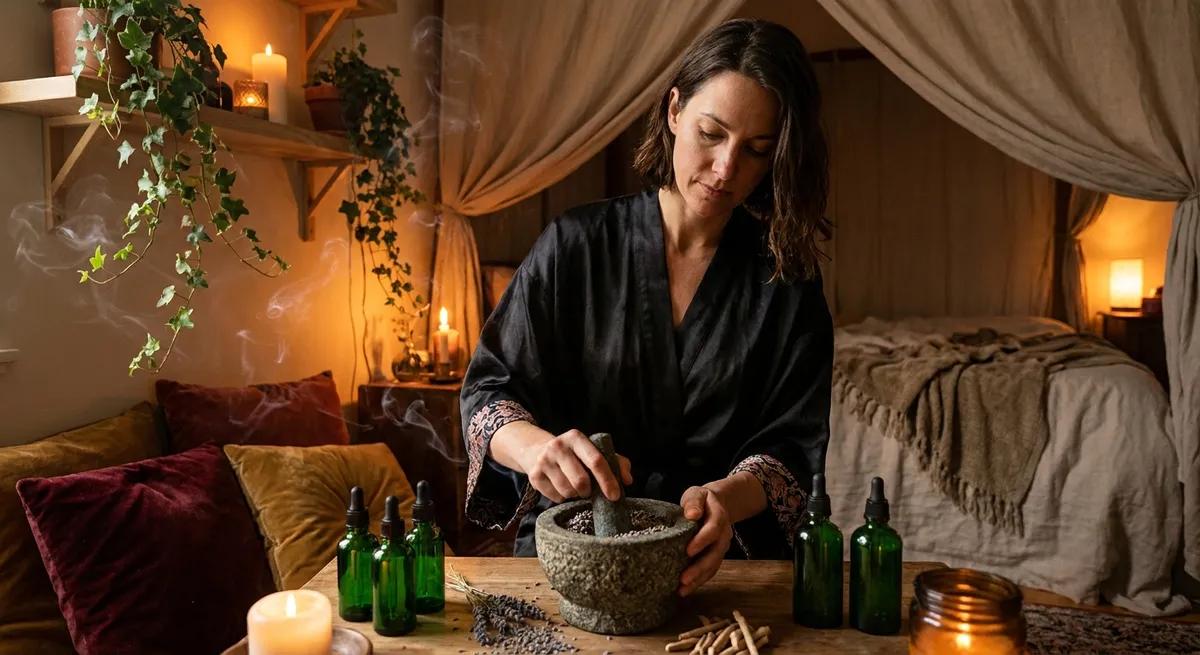
Begin by curating a small “mental reset” space in your home: a particular chair by a window, a corner with a low lamp and a plant, or even a bench on a balcony. Keep this area visually calm and uncluttered, with subtle, high-quality touches—a linen cushion, a ceramic mug, perhaps a small tray that holds your chosen remedies.
Layer in sensory cues that signal safety and rest: a single essential oil in a diffuser (such as lavender or bergamot), a weighted blanket, or a particular playlist you only use for unwinding. Over time, your brain will associate this environment with decompression, allowing your chosen natural remedies to work with greater efficiency.
The final—and often overlooked—element is consistency. A magnesium-rich bath once a month is a treat; a twice-weekly ritual is a nervous system education. Think of each repetition as an investment in long-term emotional resilience rather than a one-off indulgence.
Five Exclusive Insights for the Discerning Mind
Below are five elevated, less-discussed ways to engage with natural remedies—approaches that people serious about mental refinement tend to appreciate once they discover them.
1. Treat Your Nervous System Like a Palette, Not a Problem
Many people approach natural remedies reactively: “I’m anxious; what can I take right now?” A more sophisticated approach is to treat your nervous system like a color palette—something to be subtly adjusted rather than “fixed.”
Just as you would never use the same shade of fragrance for every occasion, not every mood requires the same botanical support. Some herbs are better suited to quieting an overactive mind (passionflower), others to smoothing emotional edges (lemon balm), and still others to restoring depleted reserves (ashwagandha).
Begin noticing the “quality” of your stress:
- Wired and restless? Look to calming nervines such as chamomile, lavender, or passionflower.
- Drained yet tense? Explore adaptogens like ashwagandha or reishi (with professional guidance if you have medical conditions).
- Irritable or emotionally frayed? Consider lemon balm or linden, which have historically been used for emotional agitation.
When you perceive your internal state with this kind of nuance, your use of natural remedies becomes less like emergency intervention and more like the work of a skilled curator.
2. Time Your Remedies to Your Body’s Natural Rhythms
The same remedy can feel markedly different depending on when you use it. The body runs on circadian and ultradian rhythms, cycles that govern cortisol, melatonin, digestion, and cognitive focus. Aligning remedies with these rhythms is a quiet way to upgrade their impact.
- Morning: If you wake with a subtle sense of dread or anticipatory anxiety, a light ritual—such as green tea (with its calming amino acid L-theanine) sipped near a window—can provide alertness without nervous agitation.
- Afternoon: Many people experience a mid-afternoon slump that is more emotional than physical. Here, a short outdoor walk followed by a cup of lemon balm or tulsi tea can recalibrate mood without the harshness of additional caffeine.
- Evening: This is when more sedative herbs (valerian, passionflower, chamomile) shine, especially when paired with reduced screen exposure and low light.
This temporal matching respects the body’s own architecture rather than working against it. Instead of asking remedies to overpower your physiology, you invite them to harmonize with it.
3. Upgrade the Medium: How You Take a Remedy Matters
A refined wellness practice pays attention not only to what you use, but how you experience it. The same plant can feel grounding or negligible depending on the medium you choose.
- Infusions and teas invite slowness. The process—heating water, steeping, holding a warm cup—becomes part of the remedy. This format is ideal for evening calming rituals and for those who benefit from the mindful act of preparation.
- Tinctures (alcohol- or glycerin-based extracts) are more concentrated and discreet. A few drops under the tongue can be integrated into a busy schedule, though the sensory experience is less ritualized.
- Baths and soaks (with magnesium salts, essential oils, or herbal sachets) bring the skin and muscles into the equation, offering both mental and somatic release.
- Aromatherapy works through olfactory pathways connected directly to brain regions involved in emotion and memory, making it particularly powerful for rapid shifts in mood or stress perception.
Experiment with one plant across multiple formats. For example, try lavender as a tea, an essential oil, and a bath additive. Notice which version your body and mind respond to most readily. This level of discernment turns basic self-care into a subtle, personalized craft.
4. Pair Botanicals with Micro-Behaviors for Exponential Effect
Natural remedies amplify their value when coupled with small, strategic behaviors—micro-shifts that require minimal effort but yield outsized returns when repeated daily.
Consider pairing:
- Magnesium supplementation (with healthcare guidance) with a 10-minute pre-bed “light fast,” where you dim screens and overhead lights. Magnesium supports muscle and nervous system relaxation, while reduced blue light supports melatonin production. Together, they function like a well-coordinated duet for sleep quality.
- Aromatherapy (lavender, bergamot, or ylang-ylang) with a short, structured breathing pattern—such as 4-second inhale, 6-second exhale—for five minutes. The aroma signals calm to primitive brain regions while regulated exhalation length tones the vagus nerve, which is central to the body’s relaxation response.
- Adaptogens such as ashwagandha with a steady, not extreme, movement practice (like a daily 20–30-minute walk). The adaptogen supports more balanced stress responses, while the gentle exercise normalizes cortisol rhythms. Over time, this combination can feel like a quiet reformatting of baseline tension.
By pairing remedies with precise micro-behaviors, you transform them from passive consumables into anchors that reshape habits and physiological patterns.
5. Treat Quality and Sourcing as Part of the Therapy
In a premium mental wellness practice, quality is not cosmetic—it is therapeutic. Herbs grown in depleted soil, essential oils adulterated with synthetic fragrances, or supplements produced without rigorous testing may not only be less effective but also introduce unwanted compounds into the body.
When selecting natural remedies, look for:
- Transparent sourcing: Brands that disclose where and how their plants are grown or harvested.
- Third-party testing: Independent verification for purity and potency, especially with supplements and essential oils.
- Minimal, intelligible ingredient lists: Avoid formulas cluttered with fillers or poorly explained “proprietary blends.”
- Respect for traditional use: Products aligned with how an herb has been used historically (for example, whole-plant preparations rather than highly isolated fragments, when appropriate).
There is also a psychological dimension: when you choose well-made, thoughtfully sourced remedies, you reinforce the belief that your inner life is worthy of care at the highest standard. That mindset—of deserving quality—often becomes as healing as the remedy itself.
Conclusion
Natural remedies, when approached with discernment, can become more than supplements or scents: they evolve into rituals of self-respect for the mind. By understanding your own nervous system, aligning remedies with your body’s rhythms, refining the way you take them, pairing them with strategic micro-behaviors, and investing in quality, you transform simple botanicals and minerals into instruments of mental refinement.
This is not about assembling a vast apothecary or chasing every new plant on the market. It is about choosing a handful of allies and engaging with them in a way that feels deliberate, elevated, and sustainable. Over time, these quiet choices accumulate into something unmistakable: a mind that feels less like a battlefield and more like a well-tended, elegantly lit interior—calm, collected, and distinctly your own.
Sources
- National Center for Complementary and Integrative Health (NCCIH) – Herbs at a Glance - Overview of evidence, safety, and traditional uses for common herbs such as chamomile, lavender, and lemon balm
- Mayo Clinic – Ashwagandha: Is it helpful for stress? - Evidence summary and safety considerations for ashwagandha as an adaptogen for stress
- Cleveland Clinic – Magnesium and Sleep: How It Helps - Discussion of how magnesium supports sleep and relaxation, with dosage and safety notes
- Harvard Medical School – The Health Benefits of Meditation and Mindfulness - Explains how breathing and mindfulness practices interact with the nervous system, complementing natural remedies
- Johns Hopkins Medicine – Aromatherapy: Is It Worth Trying? - Reviews the research and mechanisms behind aromatherapy for stress and mood support
Key Takeaway
The most important thing to remember from this article is that this information can change how you think about Natural Remedies.