In a world that often rewards urgency over depth, a composed mind becomes a quiet luxury. Natural remedies, when chosen with discernment, can offer more than quick fixes; they can form a refined ecosystem of calm—subtle, enduring, and deeply personal. This is not about chasing the latest trend in wellness, but about curating a palette of botanical, sensory, and ritual-based supports that feel both intelligent and beautiful in daily life.
Below, you’ll find a considered exploration of natural remedies for mental ease, followed by five exclusive, less-discussed insights for those who treat their inner life with the same care they devote to their surroundings.
The Art of Natural Calm: Beyond “Herbal Quick Fixes”
Most people encounter natural remedies through simple lists: “take lavender, drink chamomile, try magnesium.” While these can be helpful, an elevated approach requires a more nuanced lens—one that considers synergy, ritual, and identity.
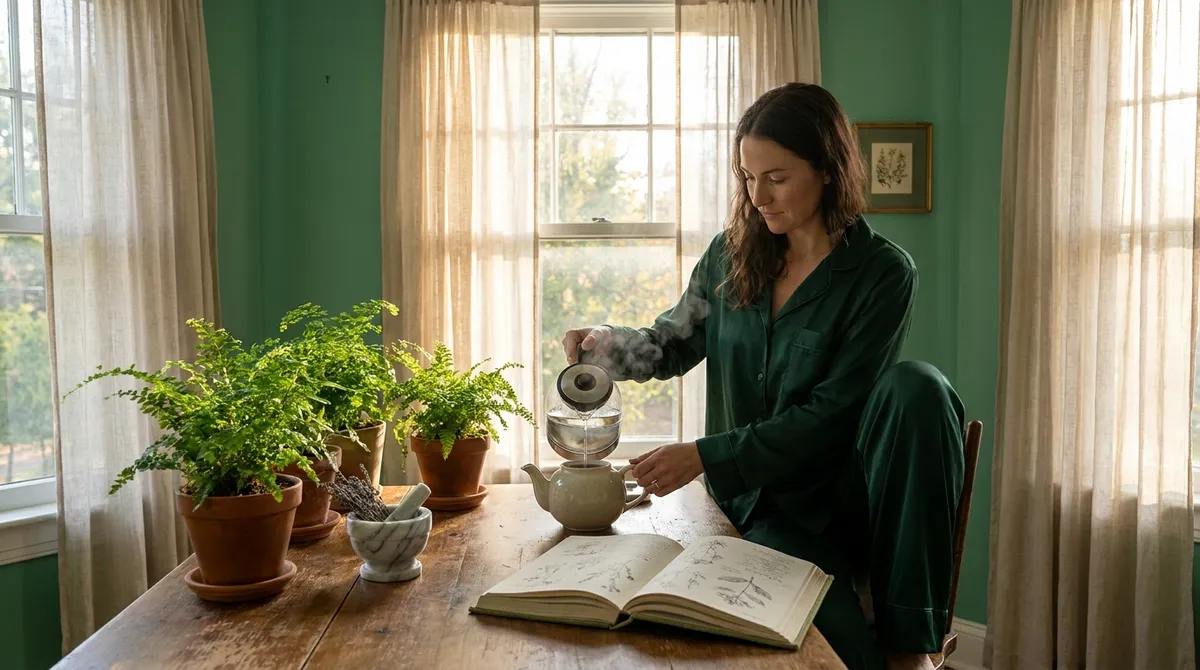
Natural remedies are not just substances; they are experiences. A cup of tea can be purely functional, or it can be a deliberately orchestrated sensory event: the warmth of porcelain, the fragrance blooming with steam, the stillness of the first sip. This qualitative dimension matters. Research now supports what intuitively refined people have long known: how we take something can be as impactful as what we take.
Botanical allies such as passionflower, lemon balm, and ashwagandha can gently modulate stress pathways, but their gifts are amplified when integrated into daily rituals—morning grounding, mid-day recalibration, evening unwinding. The goal is not sedation; it is composure: a state where clarity and calm coexist, and the nervous system feels subtly buffered rather than overwhelmed.
A sophisticated natural regimen also respects individuality. One person’s ideal is a clear, lightly bitter tonic taken in the afternoon; another’s is a fragrant, honey-soft infusion at twilight. When remedies are matched not only to physiology but to personal aesthetic, adherence stops feeling like discipline and begins to feel like pleasure.
Curating a Personal Apothecary for Mental Ease
Imagine your mental wellness not as a problem to solve but as a collection to curate—an apothecary of items that are as beautiful as they are functional. Each piece plays a role in shaping the emotional “climate” of your days.
Begin with categories rather than products:
- Foundations: Magnesium, omega‑3 fatty acids, and B‑vitamins form a physiological backdrop for steadier mood and stress resilience. These are less dramatic in the moment, but quietly essential.
- Botanical Soothers: Herbs like lemon balm, chamomile, lavender, and passionflower can smooth the edges of anxiety and restlessness when used consistently and thoughtfully.
- Rhythmic Regulators: Adaptogens such as ashwagandha, rhodiola, or holy basil (tulsi) can help the body adapt to ongoing stress, provided they’re chosen and timed with care.
- Sensory Aligners: Essential oils, ambient soundscapes, and tactile elements (fine textiles, weighty glassware, handcrafted ceramics) signal safety and ease to the nervous system.
The refined approach is to assemble a small number of high-quality, well-researched items and integrate them into your environment in a way that feels intentionally designed. A hand‑blown glass bottle for nightly magnesium, a stoneware jar for your herbal blend, a linen cloth reserved for your evening tea tray—these details do not simply charm the eye; they tell your system, “This is a protected moment.”
The ultimate test of a natural remedy is not merely whether it “works,” but whether it integrates gracefully into your actual life: does it invite you back, night after night, not as an obligation but as a quiet pleasure?
Five Exclusive Insights for the Discerning Mind
1. Nervous System Elegance: Pairing Botanicals with Micro-Rituals
Many people take herbal remedies like pills—swallow and forget. For a more elevated effect, consider pairing each botanical with a specific micro-ritual that engages the senses and the nervous system simultaneously.
For example, if you use lemon balm for gentle calm:
- Prepare it in a specific vessel you only use in the evening.
- Sit in the same chair, with the same low, warm lighting.
- Take the first sip in silence, noticing temperature, aroma, and flavor.
- Exhale slowly after each sip, letting your exhale be slightly longer than your inhale.
Over time, the ritual itself becomes a conditioned signal of safety. Your body learns: “When I hold this cup, in this light, with this fragrance, I can relax.” The herb and the ritual weave together, amplifying one another and creating a kind of nervous system elegance—calm that arrives more quickly, with less effort.
This approach transforms natural remedies from “things you take” into refined experiences that train your physiology toward composure.
2. Aromatic Boundaries: Using Scent to Frame Emotional Space
Fragrance is often treated as decoration, but for a sophisticated mental wellness practice, scent becomes architecture: it frames space, time, and state of mind.
Consider curating three distinct olfactory “zones” for your day:
- Cognitive Clarity: Rosemary, peppermint, or frankincense during focused work. These scents are associated with alertness and cognitive performance.
- Emotional Softening: Neroli, rose, or sandalwood in the late afternoon or early evening, when irritability or decision fatigue tends to surface.
- Pre‑Sleep Descent: Lavender, bergamot, or chamomile reserved only for the 60–90 minutes before bed.
What makes this exclusive is the discipline of non-overlap. Each scent family is tied to a particular state and is not used outside that context. Over time, the brain begins to anticipate the corresponding mental shift the moment the fragrance arises. You’re not merely diffusing oils; you’re sculpting boundaries between your work, your emotional processing, and your rest.
This is especially potent for those whose days blur together. Scent becomes an elegant, natural way to say: “This is work. This is unwinding. This is release.”
3. Mineral Refinement: The Understated Power of Magnesium as Ritual
Magnesium is often mentioned casually in wellness spaces, but approached thoughtfully, it becomes a quiet cornerstone of mental ease.
Rather than simply taking a capsule, think of magnesium as a nightly transitional ceremony:
- Choose a form with good bioavailability (such as magnesium glycinate or magnesium bisglycinate) if your practitioner agrees it’s appropriate for you.
- Place it in a small, beautiful dish or glass that you use for nothing else.
- Take it at a consistent time each evening—ideally after screens are off, but before you are fully horizontal in bed.
- Pair the moment with a single, repeating behavior: a brief journal note, a gentle neck stretch, or a single page of an inspiring but calming book.
This constancy sends a powerful message to your system: “The day is closing.” Magnesium’s role in neuromuscular relaxation and nervous system regulation is supported by research; coupling it with a ritualistic container transforms it from a supplement into a nightly act of refinement—an invisible luxury you extend to your future self.
4. Botanical Layering: Designing “Mood Palettes” Rather Than Single Herbs
Most people choose herbs one at a time: “I’m anxious, I’ll take valerian.” A more artful approach is to think in mood palettes—combinations of herbs that echo and refine one particular emotional texture.
For instance, for steadied clarity (as opposed to sedation):
- A base of tulsi (holy basil) for gentle adaptogenic support.
- Lemon balm for softening anxiety and quieting mental chatter.
- A hint of rosemary for cognitive alertness without over‑stimulation.
For tender unwinding (for those who feel “wired but fragile”):
- Chamomile for digestive and emotional settling.
- Passionflower for calming a ruminating mind.
- Linden (lime blossom) for a soft, heart-centered ease.
Curating blends this way allows you to honor the nuance of your emotional life. Instead of “stress relief,” you have a palette for alert composure, another for gentle surrender, another for emotional processing. Over time, you get to know your collections the way you might know wines or fragrances—each has a profile, a context, and a best moment.
This elevates natural remedies into a subtle art form: you’re not merely drinking tea; you are selecting the precise emotional note you wish to emphasize.
5. Environmental Infusions: Treating Your Home as a Nervous System Ally
Natural remedies are often thought of as things you ingest, but for the discerning mind, the environment itself can function as a living, continuous remedy.
Consider three subtle environmental infusions:
- Light as Tonic
Use warm, low color-temperature lamps after sunset, reserving bright, cooler light only for focused tasks. This respects your circadian rhythm and reduces the subtle agitation created by harsh evening lighting.
- Texture as Soothing Input
Incorporate a few deliberately chosen tactile elements: a weighty throw, a smooth stone kept at your desk, a finely woven cushion. When stress arises, consciously make contact with these textures. The nervous system reads consistent, pleasant tactile input as a cue of safety.
- Sound as Soft Architecture
Curate soundscapes (gentle instrumental, nature sounds, or even intentional silence) for specific times of day. The key is consistency—your brain learns that this particular auditory atmosphere is paired with decompression and ease.
When combined with well-chosen botanicals and supplements, your home begins to behave like a continuous, subtle therapeutic field. You’re no longer managing stress in isolated moments; you’re living inside a carefully composed ecosystem that quietly supports a calmer mind.
Conclusion
Calm, in its most refined form, is not a single intervention but a cultivated atmosphere—an interplay of plants, minerals, light, scent, sound, and ritual. Natural remedies move from the realm of trend to the realm of timelessness when they are chosen with discernment and experienced through thoughtfully designed moments.
For a discerning mind, the question is no longer, “What can I take to feel less stressed?” but rather, “How can I compose my inner and outer worlds so that ease becomes my default state?” In that composition, each herb, each fragrance, each nightly gesture becomes part of a quiet symphony—an elegant, living remedy for the mind.
Sources
- National Institutes of Health – Magnesium: Fact Sheet for Consumers – Overview of magnesium’s role in the body, including its relevance to sleep and nervous system function
- National Center for Complementary and Integrative Health – Stress, Anxiety, and Complementary Health Approaches – Evidence-based review of natural and integrative approaches to stress and anxiety
- National Center for Complementary and Integrative Health – Lavender – Summary of research on lavender, including its effects on anxiety and sleep
- Harvard Health Publishing – Herbs and Supplements for Mental Health – Discussion of common herbs and supplements used to support mood and mental wellness
- Mayo Clinic – Aromatherapy: Do Essential Oils Really Work? – Examination of aromatherapy, its mechanisms, and where evidence supports its use
Key Takeaway
The most important thing to remember from this article is that this information can change how you think about Natural Remedies.