In the past week, celebrity headlines have read more like live‑streamed relationship autopsies than entertainment news. A viral clip of Benny Blanco’s seemingly “cold” treatment of Selena Gomez at a Lakers game has split the internet into forensic analysts of eye contact and hand‑holding, while Hugh Jackman’s red‑carpet appearance with Sutton Foster in the shadow of his divorce has ignited a wave of outrage and judgment. Simultaneously, a new “she’s copying her” narrative has trailed Cynthia Erivo as her Wicked: For Good success catapults her onto magazine covers worldwide.
On the surface, these are simply pop‑culture moments. But beneath the memes and quote‑tweets lies a quieter truth: our collective nervous system is being trained to turn other people’s lives into emotional battlegrounds—and to keep our own minds permanently on call. Every push notification, every trending hashtag, is a subtle invitation to abandon our inner calm and enlist in someone else’s drama.
For a calm, discerning mind, the real story is not “Did he refuse to hold her hand?” or “Is she trying to become Ariana?” but rather: What does it do to my mental health when I let the internet’s outrage cycles set the tone of my inner world? Below are five refined, evidence‑informed insights for those who wish to live differently—attentive, aware, but not emotionally captive to every viral wave.
1. Emotional Voyeurism Is the New Overstimulation—And Your Nervous System Knows It
The Selena Gomez–Benny Blanco clip became a Rorschach test for millions: one brief moment, endlessly rewound and reinterpreted as rejection, detachment, or just…nothing. What’s striking from a mental wellness perspective is not the “truth” of the interaction, but our collective need to feel something about two strangers at a basketball game.
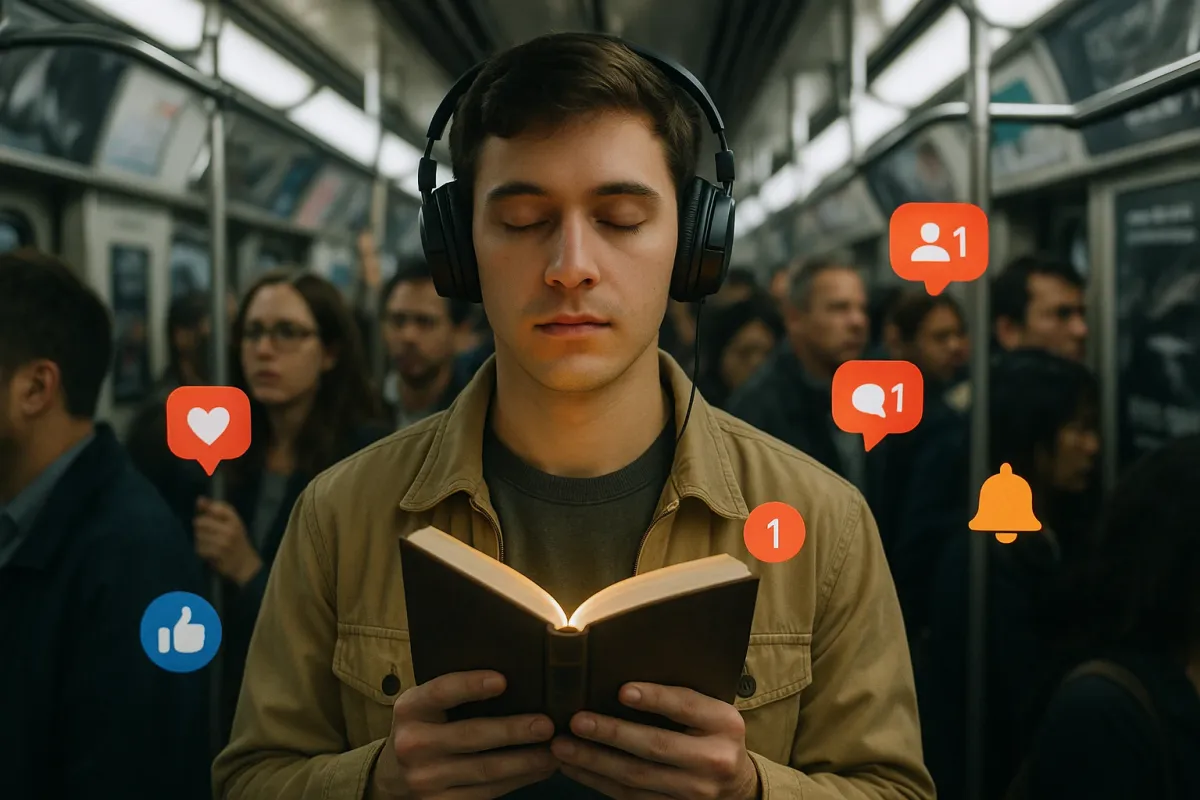
Neuroscience is clear: the brain is highly responsive to social cues, especially those that hint at rejection, humiliation, or conflict. When you watch a clip framed as “cold,” “gross,” or “toxic,” your mirror neurons and threat‑detection systems quietly activate as though you are in the room. It’s low‑grade stress masquerading as entertainment.
Over time, this constant emotional voyeurism can:
- Dull your sensitivity to your own emotional states
- Keep your baseline arousal subtly elevated—restless, unsettled, easier to irritate
- Condition you to seek emotional spikes instead of genuine connection or rest
A refined practice: before you press play on any “you won’t believe what he did” clip, ask a single, elegant question—“Do I want this to touch my nervous system today?” This micro‑pause restores a sense of agency. You are not the audience the algorithm assumes; you are the curator of what your highly sensitive inner world encounters.
2. The Algorithm Thrives on Indignation—Your Mind Thrives on Nuance
Hugh Jackman’s red‑carpet appearance with Sutton Foster amid divorce commentary has triggered familiar online responses: “Gross,” “She is still married,” “How could he?” These remarks are designed to be instantly legible and highly shareable—ideal for feeds, devastating for nuance.
Our brains love clear villains and heroes; ambiguity is metabolically expensive. But life—especially emotional life—rarely arranges itself into such tidy categories. Indignation is cognitively cheap; nuance requires effort, reflection, and a willingness to hold multiple perspectives simultaneously.
From a mental wellness standpoint, chronic outrage has a cost:
- It keeps the sympathetic nervous system lightly activated—ready to judge, react, defend
- It narrows your emotional palette to anger, superiority, and contempt
- It trains your attention toward what is wrong, broken, or offensive in every scene
A premium inner habit is the cultivation of “emotional chiaroscuro”—the ability to notice light and shadow at once. When confronted with a scandal‑framed story, try this three‑step refinement:
- Name the framing: “This is being presented as betrayal / humiliation / hypocrisy.”
Introduce nuance: “What if there are details I don’t know? What if multiple truths coexist here?”
Choose your depth: “Do I wish to engage deeply, lightly, or not at all?”
This doesn’t excuse harmful behavior; it simply refuses to let your mental world be flattened into click‑ready absolutes.
3. Comparison Culture Has Evolved: It’s Now About Identity, Not Just Appearance
Cynthia Erivo’s rising visibility—fronting magazine covers as Wicked: For Good dominates conversation—has sparked a new genre of criticism: “She’s trying to become Ariana.” Where early social media culture fixated on bodies and beauty, the current era polices identity: style, voice, aesthetic, even emotional tone.
This matters for mental wellness because comparison has migrated from the surface to the core. We’re no longer asked, “Do you look like this?” but “Are you authentic enough?” “Original” enough? “Different” enough? The pressure is subtler, but more invasive.
For a sensitive, ambitious mind, this can quietly produce:
- Imposter syndrome: the sense that any overlap with others makes you fraudulent
- Creative inhibition: fear of being seen as “copying” shuts down experimentation
- Identity fatigue: constant self‑monitoring to avoid being misread
A sophisticated reframe: originality is not the absence of resemblance; it is the presence of integrity. You and a public figure may share aesthetics, influences, or tastes. The question is not “Do we overlap?” but “Is what I am doing true, intentional, and rooted in my own lived experience?”
A practical ritual: once a week, perform a brief “identity inventory.” Ask:
- What am I currently doing because it feels true?
- What am I doing because I fear being judged, misread, or left behind?
Anything in the second category deserves gentle reconsideration. This is not self‑critique; it is subtle alignment.
4. The Quiet Art of Emotional Distance: Caring Without Carrying
Being informed and emotionally literate does not require you to become a reservoir for every public meltdown, relationship speculation, or culture‑war micro‑drama. There is a luxurious middle ground between apathy and overwhelm: discerning distance.
As we scroll through threads about celebrities’ supposed “coldness,” “downgrades,” or “gross” behavior, we are practicing a skill—often unconsciously. The skill is emotional over‑involvement: joining battles that are not ours, absorbing feelings that are not ours, and rehearsing judgments that do not improve our own lives.
To reclaim your emotional bandwidth, consider integrating three quiet boundaries:
- Boundary of scope: “Is this within the circle of things I can meaningfully influence?”
- Boundary of intimacy: “Do I truly have enough context to have a grounded opinion here?”
- Boundary of cost: “Will thinking about this leave me clearer or more agitated?”
If something fails all three, you may choose a stance of elegant non‑involvement: “I see that this is happening. I am not required to feel this deeply about it.”
This is not detachment born of cynicism; it is stewardship. Your inner life is a finite, exquisitely sensitive ecosystem. Not every storm on the internet merits a change in your internal weather.
5. Designing a “Mentally Luxurious” Media Ritual in a Loud World
The current online landscape—culture‑shock threads, call‑out posts, viral humiliation, and endlessly dissected relationships—will not become gentler on its own. If you desire a calmer mind, the change must begin at the level of ritual, not just willpower.
Think of your daily media habits as a form of interior design for your mind. Right now, many of us have unknowingly furnished our inner spaces with whatever the feed delivers: clashing opinions, jangling outrage, fluorescent anxiety. A premium approach is to curate instead of consume.
Consider adopting a simple, elegant media ritual:
- A morning of intention, not intrusion: Delay checking social media until after you’ve anchored yourself—through breath, movement, journaling, or a quiet beverage in silence. Let you arrive in your day before the world does.
- A selective “window” of engagement: Choose one or two brief periods for catching up on news or trending stories, rather than letting them drip‑feed into your nervous system all day.
- A nightly cool‑down: The last 30–60 minutes before sleep are prime time for nervous system repair. Replace scrolling with something textural and grounding: a physical book, restorative stretching, slow skincare, or simply low light and quiet music.
The goal is not perfection but texture: moments of deliberate stillness woven through a noisy day. Calm, in this paradigm, is not an accident; it is crafted.
Conclusion
Today’s headlines ask us to be many things at once: judge, jury, therapist, stylist, moral authority. Whether it’s dissecting Benny Blanco’s body language toward Selena Gomez, litigating Hugh Jackman’s romantic life in real time, or questioning Cynthia Erivo’s right to occupy cultural space, our feeds treat other people’s lives as raw material for our own stimulation.
You are allowed to opt out.
A truly refined mental wellness practice in this era is not about never scrolling or renouncing popular culture. It is about choosing, with exquisite care, what you allow to touch your nervous system—and how deeply. When attention is treated as a luxury rather than a reflex, outrage loses its grip, comparison loosens, and a quieter, more dignified form of presence emerges.
In a world that monetizes your distraction, guarding your inner stillness is not just self‑care; it is a subtle, radical act of self‑respect.
Key Takeaway
The most important thing to remember from this article is that this information can change how you think about Mental Wellness.