As the 2025 Nature inFocus Photography Awards unveil otherworldly images of the Northern Lights, the internet is collectively pausing to gaze upward. From Jayamahal Palace in Bengaluru—where the winning photographs were announced—to millions of glowing phone screens worldwide, the aurora has become today’s quietest global headline: a reminder that nature still outperforms any filter.
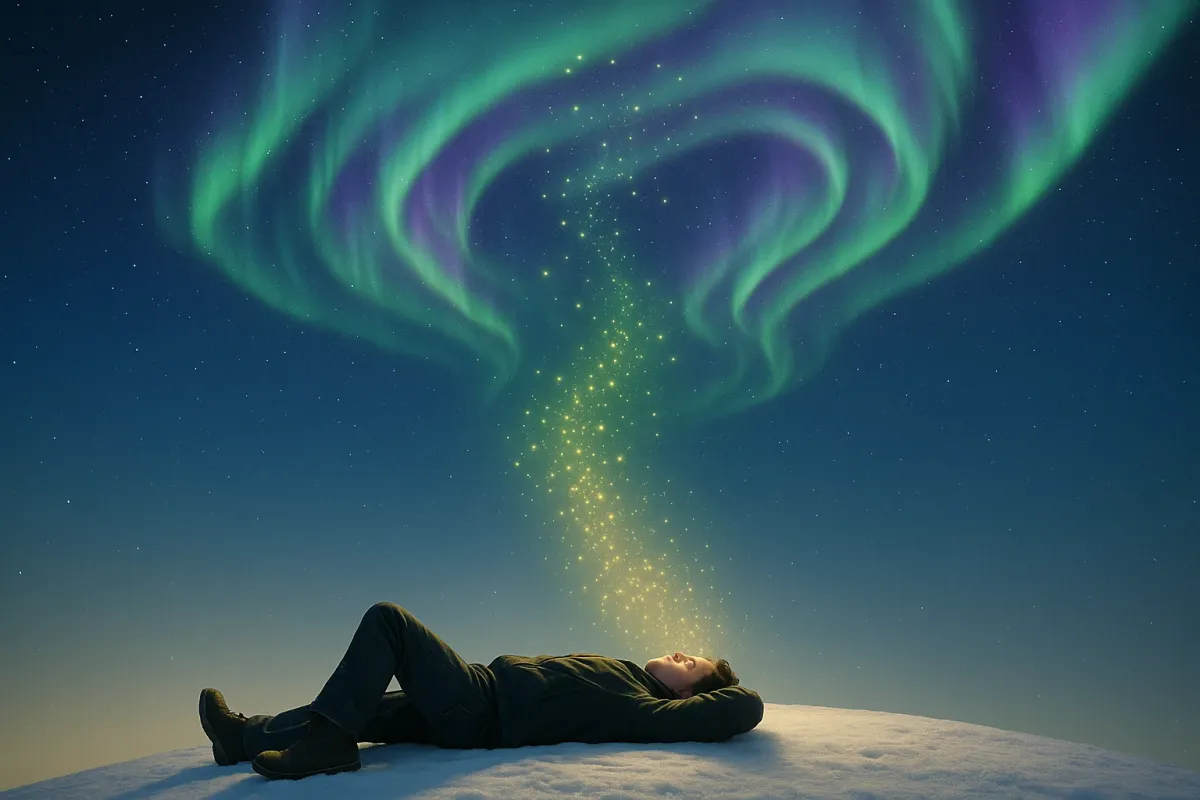
For most of us, witnessing the aurora borealis remains a distant dream—yet the emotional pull is immediate and visceral. The winning photographs, shared widely across social media, offer more than aesthetic pleasure; they awaken an ancient instinct to be soothed by the sky, by rhythm, by color, by something larger than ourselves. In an age of relentless artificial light and endless content, the aurora is nature’s own luxury cinema—silent, slow, and essentially healing.
Inspired by this renewed fascination with the Northern Lights and the 2025 Nature inFocus winners, let’s explore how you can invite this same auroral calm into your life—no plane ticket to the Arctic required. Below are five exclusive, aurora-inspired insights for cultivating a refined, naturally grounded mental wellness practice.
Aurora-Inspired Night Rituals: Reclaiming the Dark as Medicine
The aurora can only be seen against a clean, generous darkness. The photographers celebrated at Nature inFocus 2025 waited patiently in Nordic winters and remote landscapes for the sky to dim enough for color to emerge. Your mind, too, requires a ritual descent into darkness before it can reveal its own quiet brilliance.
Begin by treating the last hour before sleep as a “private viewing” of your inner sky. Dim your lights earlier than feels necessary; allow your home to transition gradually from bright to candle-soft. Replace blue-lit scrolling with a single intentional visual ritual: gazing at a favorite night-sky photograph, perhaps even a print from this year’s award-winning aurora series. Let your eyes linger on gradients of green and violet, following the gentle curves as if tracing them with your breath.
Physiologically, this reduced light exposure allows melatonin to rise naturally; psychologically, you are signaling to your nervous system that the performance of the day has ended. Over time, this nightly embrace of darkness shifts from something to “get through” to something you actively crave—a luxurious, deliberate retreat where the mind is finally permitted to quiet.
Chromatic Calm: Using Aurora-Inspired Color Therapy for Emotional Balance
One reason the Northern Lights captivate us is their color language. Soft greens, ethereal violets, and rare pinks unfurl in the sky like an emotional symphony. As the award-winning nature photographs circulate through social feeds this week, notice how often people describe the images as “healing,” “soothing,” or “unreal”—long before they mention technical details. Our bodies understand color before our minds interpret it.
You can translate this auroral palette into a subtle, natural remedy at home. Green—often dominant in aurora displays—is associated with balance and restoration. Incorporate it in understated ways: an olive-toned throw by your reading chair, a sage-green ceramic mug reserved for your evening herbal tea, a muted moss-colored journal. Lavender and violet tones, frequently captured in the 2025 winning shots, invite introspection and spiritual quiet; they pair beautifully with your meditation corner, sleepwear, or even the soft glow of a tinted salt lamp.
Spend two minutes each evening simply observing one of these colors in your space. Notice its edges, its depth, the way it interacts with shadow. This brief, intentional color meditation becomes an elegant antidote to emotional turbulence—no affirmations, no forced positivity, just the dignified act of letting a single shade steady your nervous system.
Celestial Breathing: A Northern Lights–Inspired Rhythm for Anxiety
Photographers waiting for the aurora often describe a particular stillness before the sky begins to move—a sense that the atmosphere is holding its breath. Then the first ribbon of light unfurls, slowly, expansively, without hurry. There is a rhythm to this cosmic performance that can be mirrored in the body as a potent natural remedy for anxiety.
Try this aurora-inspired “celestial breath” whenever your mind feels agitated:
- Inhale gently through the nose for 4 counts, imagining a soft trail of light rising along your spine, like the first hint of green on the horizon.
- Hold the breath for 4 counts, picturing the sky suspended in quiet anticipation.
- Exhale slowly through the mouth for 6–8 counts, as if the aurora is cascading across the sky in slow motion, unfurling color with elegant ease.
- Pause for 2 counts before the next inhale, honoring the brief darkness between each wave of light.
Repeat for 5–7 cycles. Physiologically, this extended exhale stimulates the parasympathetic nervous system—the body’s natural “calm” mechanism. Symbolically, you are practicing the art of luminous release: allowing what no longer serves you to drift away like fading light across a polar sky. Over days and weeks, this ritual becomes not just a coping tool but a refined, embodied way of meeting stress with poise.
Polar Silence: Crafting a Soundscape That Mimics Remote Northern Landscapes
Many of the photographers celebrated at the Nature inFocus 2025 festival describe the profound silence that accompanies an aurora encounter. Away from cities, in Arctic or sub-Arctic regions, the absence of noise becomes as striking as the presence of light. This contrast is increasingly rare in modern life—and deeply therapeutic when consciously recreated.
Consider curating a “polar silence” environment for 15–20 minutes each evening. Turn off all background sound—no music, no podcast, no television humming in another room. If complete silence feels confronting, opt for ultra-subtle nature audio: distant wind, soft snow underfoot, a barely audible river. The key is spaciousness—sound that feels like sky, not like a crowded room.
As this practice deepens, your brain begins to associate this particular soundscape with safety and decompression. Over time, even a few minutes of this curated quiet can lower heart rate, soften jaw tension, and create the kind of internal spaciousness we often mistakenly seek through more content, more stimulation, more noise. The remedy is the opposite: an elegant subtraction.
The Luxury of Distance: Reframing Your Problems Through the Cosmic Lens
One of the understated gifts of the Nature inFocus 2025 aurora images is perspective. We are reminded that above our deadlines, notifications, and geopolitical anxieties, charged particles from the sun are colliding with Earth’s magnetic field in a silent, luminous negotiation. Our personal drama is real—but not definitive.
You can convert this cosmic awareness into a refined mental wellness practice. Once a day, preferably in the evening, step outside—onto a balcony, a terrace, a quiet street—and look up for exactly two minutes. Even if you cannot see stars or auroras, imagine the layers above the clouds: the upper atmosphere, the dancing geomagnetic fields, the distant sun whose winds sculpt our sky. Silently ask yourself: “How large is this problem from 100 kilometers above the Earth?”
This is not an invitation to dismiss genuine pain, but to gently loosen its grip. Perspective is a natural anxiolytic: it does not erase difficulty, but it right-sizes it. By cultivating a daily relationship with the sky—even a clouded, city-lit one—you train your mind to remember its own vastness. Over time, your inner landscape begins to resemble those award-winning aurora images: still, expansive, threaded with quiet light even in the darkest hours.
Conclusion
As the world shares and celebrates the 2025 Nature inFocus Photography Awards, especially the ethereal Northern Lights imagery, we are collectively reminded that nature remains our most sophisticated therapist. Photographers traveled to remote, freezing landscapes, waited through long nights, and surrendered to forces they could not control—only witness. The result is an archive of calm, captured in color.
You may not be booking a flight to the Arctic this season, but you can bring the essence of that experience into your daily rituals: embracing darkness as medicine, bathing your senses in aurora-inspired color, breathing with celestial rhythm, honoring polar silence, and reclaiming perspective through the elegant lens of distance.
In a world saturated with quick fixes and loud solutions, these practices offer something rarer: a quiet, luxurious intimacy with the sky—and with yourself.
Key Takeaway
The most important thing to remember from this article is that this information can change how you think about Natural Remedies.