There is a particular kind of modern stress that doesn’t come from war zones, natural disasters, or financial collapse. It leaks in through our screens—through timelines, feeds, and reply threads that feel increasingly unhinged. This week, Bored Panda spotlighted the viral “Cursed Comments” subreddit, a place where people share the most shocking, unfiltered, and often disturbing remarks found online. It’s meant to be darkly humorous—but its popularity reveals something more: our collective nervous system is quietly fraying under the weight of digital hostility and emotional whiplash.
If your shoulders tense every time you open the comments section, you are not imagining it. Comment culture—especially when weaponized for shock value—is becoming a subtle but significant source of chronic stress. Yet you don’t need to abandon the internet to reclaim your peace. You simply need more deliberate, elevated rituals around how you engage, consume, and protect your attention.
Below are five refined, quietly radical ways to preserve mental ease in an age of cursed comments and viral outrage.
1. Curated Exposure: Treat Your Feed Like a Private Gallery, Not a Public Street
The “Cursed Comments” trend isn’t happening in a vacuum—it’s part of a larger digital appetite for the extreme, the shocking, and the emotionally jarring. Algorithms, whether on Reddit, X, TikTok, or Instagram, are exquisitely tuned to reward intensity, not serenity. This constant micro-dosing of emotional chaos nudges your nervous system into a subtle fight-or-flight state, even while you’re “just scrolling.”
Begin treating your digital environment the way a collector treats a gallery wall: with discernment and intention. Quietly unfollow accounts that rely on outrage, mockery, or humiliation as entertainment—even if they are “just memes.” Mute keywords that you know lead you down spirals of agitation. On platforms like Reddit, reshape your home feed around communities that elevate, educate, or genuinely delight, rather than shock. Set a specific time—perhaps once in the evening—when you allow yourself to catch up on “what happened on the internet today,” and contain it to a defined window. This small act of curation is not digital snobbery; it is emotional hygiene. Over time, your feed becomes less like a chaotic street brawl and more like a private members’ club—calm, intentional, and aligned with how you wish to feel.
2. Nervous System Luxury: A Single Breath Ritual Before You Scroll
Modern stress is often subtle, cumulative, and largely invisible. You may not feel “stressed” in the moment you open Reddit or check Instagram, but notice: does your jaw tighten, does your breath become shallow, do your shoulders climb towards your ears? Each shocking comment or viral argument is a tiny jolt to a system already running near capacity.
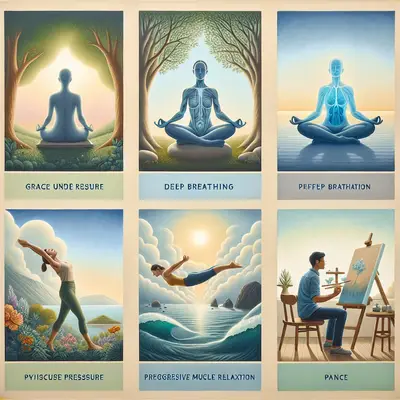
Introduce a microscopic yet luxurious ritual: one deliberate breath before you engage. Each time you unlock your phone with the intention of entering a social app, pause for precisely ten seconds. Inhale slowly through the nose for a count of four, hold for four, exhale gently through pursed lips for six to eight. Let the exhale be noticeably longer than the inhale; this activates the parasympathetic (rest-and-digest) branch of your nervous system. This practice is deceptively simple. You are telling your body, “We are safe,” before exposing it to a landscape that often behaves as if we are not. Over time, this pre-scroll breath becomes a subtle act of self-respect—a quiet, somatic boundary between your serenity and the internet’s chaos.
3. Emotional Distance as an Art Form: Observing, Not Absorbing
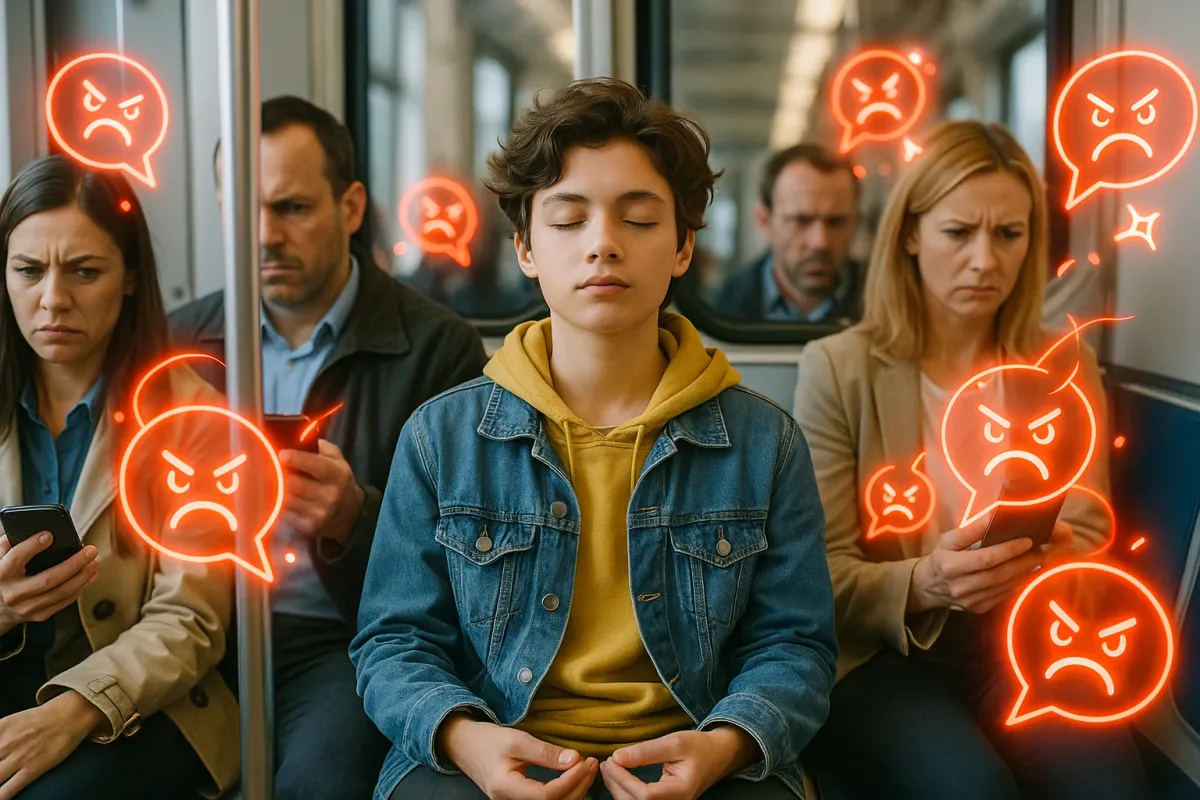
The most unsettling element of spaces like “Cursed Comments” isn’t only their content—it’s how quickly we internalize the emotional temperature. Someone else’s cruelty or absurdity becomes our agitation. We mirror the emotional volatility of strangers and then carry it into our evening, our sleep, our relationships.
A premium mental wellness skill in 2025 is the cultivation of refined emotional distance—not indifference, but poise. When you encounter a disturbing, absurd, or aggressively contrarian comment, practice the art of silent labeling: “That is anger.” “That is fear.” “That is performance.” “That is pain disguised as humor.” By mentally naming the emotion you’re witnessing, you create a subtle psychological space between you and the content. You shift from participant to observer. This is a classic mindfulness technique, but applied with precision to the digital era. Over time, your inner dialogue moves from “People are awful” to “This is what unprocessed emotion looks like online.” The difference is profound; one leaves you jaded, the other leaves you informed yet intact.
4. The Comment Detox: 24 Hours Without Opinions, Only Originals
In an age when the comments often eclipse the content, it is easy to forget that human beings were not designed to digest thousands of opinions per day. The nervous system experiences this as low-grade chaos—tiny, conflicting signals, each demanding a reaction. Immersing yourself in “cursed,” inflammatory, or hyper-sarcastic remarks only intensifies the noise.
Once a week, gift yourself a 24-hour “comment detox.” You may still read articles, watch videos, or explore images—but you intentionally skip the comment sections, replies, and quote-tweets. No scrolling through the reactions. No “top comments.” Just the original content itself. To elevate this ritual, pair it with something tactile and grounding: a slow cup of tea in a favorite mug, a silk or cashmere throw, a short walk without AirPods. Notice how different media feels when it isn’t accompanied by an avalanche of other people’s judgments. Many discover that their baseline anxiety softens, their focus deepens, and their own inner voice grows clearer—no longer drowned out by a chorus of anonymous opinions.
5. Transforming Digital Whiplash into a Personal Calm Aesthetic
The fascination with “Cursed Comments” sits alongside other intensities in our feeds: shocking real estate listings, bizarre design fails, bitter academic controversies, surreal celebrity dramas. Each one tugs our attention toward the extreme. Yet this very contrast creates an opportunity: in a culture addicted to jarring stimuli, calm becomes not only therapeutic, but distinctly luxurious.
Begin designing a “calm aesthetic” for your digital and physical life as a deliberate counterpoint to the internet’s chaos. On your phone, create a dedicated Calm folder containing only apps and playlists that soothe: guided breathwork, ambient soundscapes, poetry, classical or soft electronic music. On social media, follow accounts that spotlight nature photography (like recent winners of the Nature inFocus contest), Northern Lights experiences, or slow craftsmanship. In your environment, designate one corner—no matter how small—as a sacred calm zone: a chair, a candle, a low light, perhaps a single plant. Each time you feel the urge to dive back into the madness of threads and comments, give yourself two minutes in this space first. By ritualizing serenity, you signal to your nervous system that calm is not an afterthought; it is the standard, and everything else is the exception.
Conclusion
The rise of “Cursed Comments” and similar online trends is more than a curiosity—it’s a mirror, reflecting how overstimulated, under-grounded, and chronically amused-yet-exhausted our collective psyche has become. You cannot single‑handedly civilize the internet, but you can curate the texture of your own experience within it. Through intentional exposure, luxurious micro-rituals, elegant emotional distance, gentle detox periods, and a consciously designed calm aesthetic, you reclaim what the digital age quietly erodes: your inner equilibrium.
In a world where shock is cheap and serenity is rare, treating your peace as a precious, non-negotiable asset is not indulgent. It is the most sophisticated remedy of all.
Key Takeaway
The most important thing to remember from this article is that following these steps can lead to great results.