Mental ease is rarely the result of a single grand gesture. More often, it is composed of quiet, deliberate choices—subtle shifts in how we breathe, sip, steep, and wind down the day. Natural remedies, when approached with discernment, can become less of a “fix” and more of a refined daily ritual: a way to converse gently with your nervous system rather than shout at it.
This guide explores a curated selection of natural approaches for mental calm, and offers five exclusive insights that go beyond the usual “drink chamomile tea” advice. Think of it as a minimalist, high-quality toolkit for those who prefer their wellness understated yet impeccably considered.
The Art of Intentional Preparation: Turning Remedies into Ritual
Natural remedies are often dismissed when they’re treated as casual add-ons—supplements taken hastily, teas microwaved, tinctures swallowed while scrolling. The real potency frequently lies not only in the plant but in the choreography of how you use it.
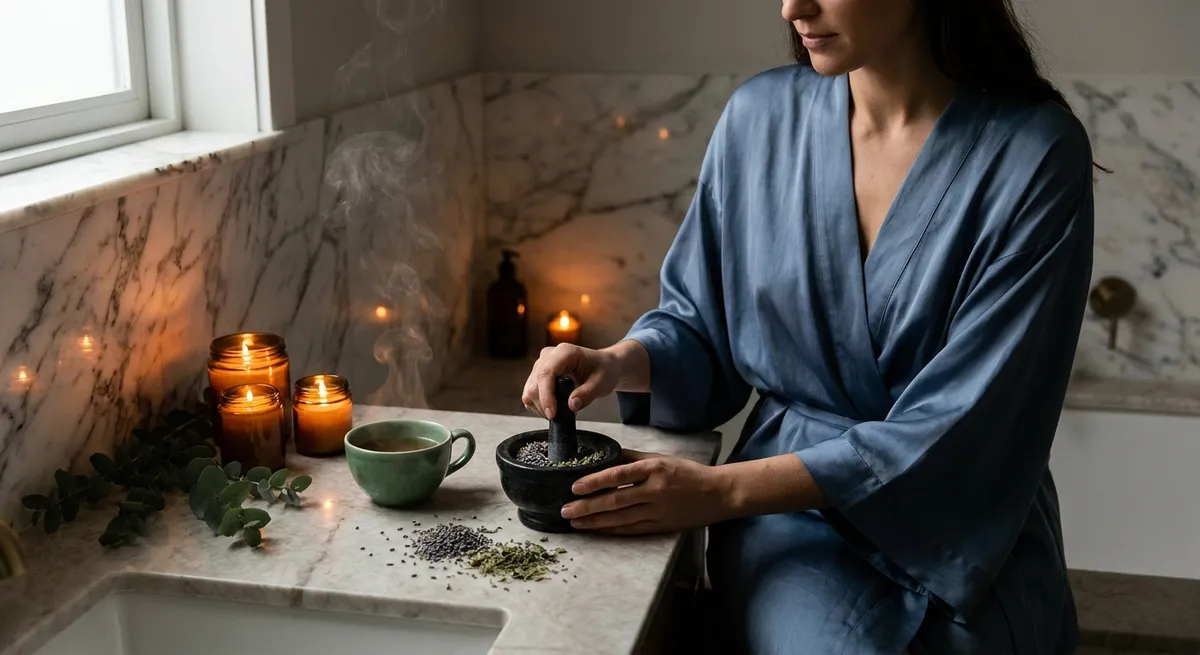
Begin by elevating the preparation itself. Choose a single, small tray or surface that becomes your “quiet bar”—perhaps a linen napkin, a handcrafted mug, a glass teapot. When you prepare a calming tea or tincture, do it the same way each time: same vessel, same water temperature, same order of actions. This repetition signals predictability to the brain, which the nervous system reads as safety.
The sophisticated shift: Aim to reduce stimulation in the five minutes before and five minutes after taking your remedy. No email, no news, no rapid-fire messages. By buffering the moment of consumption with calm, you allow the body to associate that plant or practice with genuine decompression rather than a frantic lifestyle.
Calming the Nervous System Through the Breath–Body Corridor
Many people approach natural remedies as something they ingest, yet some of the most precise regulation of the nervous system is achieved through breath and subtle body positioning—no capsules required.
A refined approach is to pair any natural remedy with a “breath corridor”: a simple, elegant breathing pattern that guides your physiology toward calm. One effective pattern is the 4–6 breath: inhale softly through the nose for a count of four, exhale fully for a count of six. The slightly longer exhale engages the parasympathetic nervous system, the branch associated with rest and restoration.
Enhance this by adjusting your posture in small, deliberate ways: feet flat on the floor, jaw released, tongue resting gently on the roof of the mouth, shoulders sinking away from the ears. You’re essentially creating a physical and respiratory frame that allows any calming tea, adaptogen, or aromatic oil to “land” in a more receptive body.
Exclusive Insight #1: Pair, don’t layer. Instead of stacking multiple stress-relief tools chaotically (tea + supplements + apps + podcasts), choose one natural remedy and one breath pattern, and practice them together at the same time each day. Consistency outperforms complexity in nervous system regulation.
Botanicals as Companions, Not Crutches
Herbal remedies can be exquisite allies when used with respect and knowledge. However, the most elegant use of botanicals is not about taking as many as possible—it’s about selecting a few, using them thoughtfully, and understanding their role in your larger lifestyle.
Gentle calming botanicals often explored for mental ease include:
- Lavender (often as tea or aromatherapy) for subtle relaxation and sleep support
- Lemon balm for a softening of tension and nervous restlessness
- Passionflower and valerian root, frequently used in sleep blends
- Chamomile, classic for evening unwinding and digestive calm
The refined approach is to treat these plants as companions to behavioral changes (better sleep hygiene, reduced late-night screen exposure, structured breaks), not substitutes for them. For example, use a lavender tea after dimming the lights and closing your laptop, not while scrolling through bright screens in bed.
Exclusive Insight #2: Single-herb trials. Instead of buying complex “calm” blends, trial one herb at a time for 7–10 days (assuming no contraindications and with professional guidance if you take medications). This allows you to sense which plants actually resonate with your body, rather than being unsure which component is helping—or overloading your system with unnecessary extras.
The Ambient Nervous System: Scent, Sound, and Subtle Surroundings
Natural remedies are not limited to what we consume. The nervous system responds powerfully to our immediate environment, often beneath conscious awareness. A sophisticated mental wellness practice pays attention to the “ambient layer” of your space.
Aroma can be used with restraint and elegance: a single high-quality essential oil (such as lavender, bergamot, or frankincense) in a diffuser, or a drop on a cotton pad near your work area. The key is subtlety—the scent should feel like background music, not a perfume counter. Overly strong aromas can be stimulating rather than calming.
Sound matters as much as scent. Replace constant, information-heavy audio (news, commentary, high-energy playlists) with low-stimulation soundscapes for specific periods of the day: soft instrumental music, gentle nature recordings, or intentional silence. This creates pockets of sensory relief that function as natural, non-ingestible remedies for the mind.
Exclusive Insight #3: Design a “low-input window” instead of a full digital detox. Rather than unrealistic all-day tech avoidance, choose a 30–60 minute window each evening where you reduce sensory density—dim lights, minimal noise, gentle scent, and a single intentional activity (stretching, journaling, sipping tea). This condensed, realistic practice has a disproportionate calming impact.
The Quiet Luxury of Consistent Sleep Cues
Many natural remedies for calm fail not because they are ineffective, but because they are competing with erratic sleep patterns. One of the most premium investments you can make in your mental stability is not a product—it is a consistent set of pre-sleep cues.
Think of your nighttime routine as a small, elegant sequence that repeats almost identically each evening:
Lights dimmed at a similar time
Screens reduced or filtered (warm light, lower brightness)
One signature sensory cue: a specific tea, aroma, or calming skin care step
A slow, predictable wind-down activity: a few pages of a book, stretching, or journaling
Over time, this sequence becomes a “neural lullaby”—a reliable pattern your brain associates with deactivation and ease. Natural sleep-supportive herbs (like chamomile, lemon balm, or valerian) become more effective when nested in a predictable context.
Exclusive Insight #4: Choose one “signature cue” and keep it constant. Instead of experimenting endlessly with different nighttime teas, apps, and rituals, select one cue—perhaps a particular herbal infusion or a specific scent—and repeat it daily. Your brain learns to treat that cue as a direct signal to de-escalate.
The Elegance of Limits: When Less Becomes Therapeutic
In an overstimulated world, the most refined remedy is sometimes not an addition, but a deliberate limit. Reducing exposure to what dysregulates your nervous system is as crucial as adding soothing elements.
This can look like:
- Deliberately limiting late-night news or social feeds that trigger anxiety
- Setting boundaries around when you are reachable, even if only by 30 minutes of “off” time each day
- Editing your space: fewer visual distractions, more empty surfaces, one intentional object that signals calm (a plant, a candle, or a small sculpture)
Exclusive Insight #5: Treat boundaries as a form of natural medicine. Just as you’d schedule time to steep tea or take a supplement, schedule micro-boundaries: a 10-minute walk outside without your phone, or a non-negotiable buffer between your last work email and your evening routine. These “limits” are nervous-system-level remedies, not mere lifestyle preferences.
Conclusion
Natural remedies for mental wellness are most powerful when they are integrated with precision, subtlety, and respect for the body’s own rhythms. The luxury is not in amassing more tinctures, teas, and tools—it is in designing a calm, coherent experience for your nervous system.
By pairing botanicals with intentional breathing, refining your sensory environment, stabilizing your sleep cues, and treating boundaries as medicine, you create an ecosystem of quiet support around your mind. It’s less about chasing calm and more about making calm the most natural, inevitable outcome of how you live.
Sources
- National Center for Complementary and Integrative Health (NCCIH): Relaxation Techniques - Overview of evidence-based relaxation and breathing practices for stress reduction
- Mayo Clinic: Herbal Supplements and Heart Health - Discusses safety, interactions, and general considerations for using herbal remedies
- Cleveland Clinic: Sleep Hygiene Tips - Practical, research-informed guidance on creating consistent sleep routines
- Harvard Health Publishing: Breathing Techniques for Anxiety - Explains how specific breathing patterns influence the nervous system
- NCCIH: Lavender for Anxiety and Related Conditions - Reviews current evidence on lavender’s potential calming effects and safety considerations
Key Takeaway
The most important thing to remember from this article is that this information can change how you think about Natural Remedies.