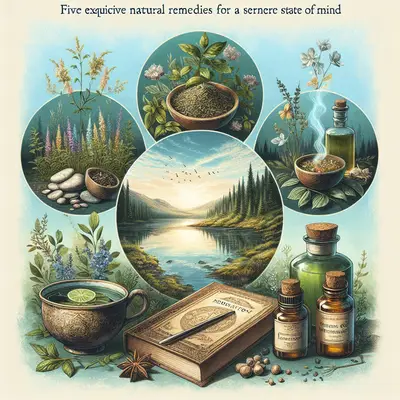
A composed mind is not an accident; it is an architecture. For those who prefer refinement over frenzy, natural remedies offer a quiet, intelligent grammar for daily equilibrium. Away from wellness fads and frantic “hacks,” there exists a subtler world: well-chosen botanicals, sensory rituals, and evidence-informed practices that feel as luxurious as they are effective. This is not about doing more; it is about curating better—selecting a few exquisite, grounded rituals that invite the nervous system to exhale.
Below are five exclusive, elevated insights into natural remedies for mental wellness—designed for those who value discernment as much as they value calm.
The Art of “Micro-Dosing Calm” with Botanical Pairings
Most people approach natural remedies as singular heroes—one tea, one supplement, one bath. A more refined approach treats botanicals like a curated ensemble, using subtle pairings in small, consistent doses throughout the day rather than a single, overwhelming intervention at night.
Consider a quiet sequence:
- Morning clarity: A light infusion of rosemary and green tea. Rosemary has been associated with improved cognitive performance and alertness, while green tea offers gentle caffeine balanced with L-theanine, which may promote calm focus rather than jittery stimulation.
- Afternoon composure: A delicate lemon balm tisane, known for its potential anxiolytic and mood-stabilizing properties, taken warm in winter or iced in warmer months.
- Evening unwinding: A restrained blend of chamomile and lavender, both traditionally used to support sleep quality and relaxation.
The sophistication lies in dosage and timing. Rather than using a sedating herb as a blunt instrument at the end of a stressful day, the nervous system is subtly guided from morning stimulation to afternoon softening to evening release. This “micro-dosing calm” approach is less about intensity, more about consistency—your day becomes infused with gentle nudges toward balance, rather than dramatic swings.
For those with complex schedules, preparing a small carafe of each infusion ahead of time creates a quiet, almost ceremonial rhythm; you simply decant into a glass or porcelain cup when needed. The act of pausing, pouring, and holding a warm vessel becomes part of the remedy.
Always speak with a clinician before combining botanicals with medications, especially if you are pregnant, breastfeeding, or managing chronic conditions.
Aromatic Boundaries: Using Scent to Signal Psychological Safety
Scent is one of the most underutilized—and quietly powerful—natural tools for mental ease. It travels directly to the limbic system, the brain’s emotional center, and can become a reliable signal that it is safe to soften. The refined approach is to create aromatic boundaries: specific scents assigned to specific mental states.
Instead of diffusing essential oils indiscriminately, consider a more precise structure:
- One signature scent for “transition home” (for example, bergamot blended with a drop of cedarwood). You activate it only when you are ready to leave the workday behind, even if you work from home. Over time, this aroma becomes a conditioned cue that it is permissible to downshift.
- A separate, softer scent for pre-sleep (such as Roman chamomile with sweet orange, or classic lavender). Use it exclusively in the last 30–45 minutes before bed.
- A clarity scent for focused work (rosemary, peppermint, or a restrained citrus). This scent is never used for relaxation, so the association remains clean and predictable.
The exclusivity of each scent for each state teaches your nervous system to recognize context instantly. You are essentially designing olfactory “doorways” between tension and ease, sleep and wakefulness, focus and repose.
This is not about overpowering fragrance; it is about precision. A single drop in a diffuser, a subtly scented cotton pad near your desk, or a micro–pulse of aromatherapy on the wrists is sufficient. In a sophisticated calm practice, scent should whisper, not shout.
Essential oils are potent; they should be diluted properly, kept away from children and pets, and never ingested unless under professional guidance.
Mineral Quietude: Elevating Magnesium into a Ritual, Not a Trend
Magnesium has become a wellness buzzword, but when handled with intention, it becomes a discreet luxury for the nervous system. Instead of simply swallowing a supplement and hoping for the best, magnesium can be transformed into a layered ritual that supports the body both through ingestion and absorption.
A curated approach might include:
- A warm magnesium bath using magnesium chloride or Epsom salts (magnesium sulfate), kept at a comfortable—not scalding—temperature. Dim lighting, no screens, and a carefully chosen 15–20 minutes where you allow the water to do the work.
- A topical magnesium oil or lotion applied to calves, shoulders, or the soles of the feet after bathing. The tactile act of massaging it in allows you to inhabit your body again after a day spent in your head.
- A thoughtfully selected magnesium supplement, chosen in consultation with a healthcare provider (for example, magnesium glycinate or citrate, depending on your needs and tolerance), taken at a consistent time in the evening.
Magnesium is involved in hundreds of biochemical reactions, including those that regulate muscle tension and nervous system excitability. The key distinction here is that instead of treating it as a trendy “add-on,” you weave it into a nightly pattern that tells your system, repeatedly: we are entering the quieter part of the day.
This multi-layered ritual is not about indulgence for its own sake; it is about intelligent redundancy. If one layer falls short (a poor night’s sleep, a stressful day), the others quietly support you, and over time your baseline tension gradually softens.
Consult a clinician for dosing, especially if you have kidney issues or take other medications.
The Velvet Edge of Adaptogens: Using Them Sparingly, Not Habitually
Adaptogens such as ashwagandha, rhodiola, or holy basil (tulsi) are often marketed as everyday tonics, but the more discerning approach is to treat them like a finely tailored garment—worn when appropriate, not every hour of every day.
A premium mindset asks three questions before incorporating adaptogens:
What is the specific pattern of stress?
- Dragging fatigue with anxious overthinking might benefit from gentle, evening-focused ashwagandha (for some individuals). - Low mood with mental fog in the earlier part of the day might align more with rhodiola, taken in the morning.
Where do I want modulation, not amplification?
Adaptogens help the body respond to stress more evenly, but more stimulation is not always desirable. If your nervous system already feels “loud,” the intention should be softening and buffering, not further activation.
Can I use them in intentionally timed cycles?
Instead of indefinite daily use, consider structured periods (for example, several weeks under professional guidance, followed by a deliberate pause), while monitoring how your sleep, mood, and focus respond.
The elegance lies in restraint. You are not “collecting” adaptogens; you are curating. One or two thoughtfully chosen allies, used at appropriate times with medical oversight, can offer a velvet edge of support—softening rough moments without overwhelming your natural rhythms.
Adaptogens can interact with medications and medical conditions. Professional guidance is essential, especially for pregnancy, thyroid conditions, blood pressure issues, or psychiatric medications.
Sensory Minimalism: Curating a Single Daily “Sanctuary Interval”
Many wellness routines fail not because they lack good elements, but because they are bloated. A sophisticated mind often rebels against excessive structure. Instead of a complicated checklist, consider the power of a single, daily “sanctuary interval”—a 10–25-minute window where you combine multiple natural remedies in a highly curated, minimalist way.
For example, your sanctuary interval could look like this:
- Environment: One cleared surface, one chair with good support, lights softened.
- Botanical: A small porcelain cup of a chosen herbal infusion (such as lemon balm, tulsi, or chamomile).
- Aromatherapy: Your designated “rest” scent diffused quietly in the background.
- Body cue: Bare feet on a natural surface (wood, cork, a simple rug) and two or three slow stretches or joint rolls to loosen accumulated tension.
- Mind cue: A deliberately slow practice—five minutes of unhurried journaling, a single poem, or simply watching the steam rise from your cup.
The potency of this practice is in its regularity and aesthetic coherence. The same cup, the same scent, the same chair—your nervous system begins to recognize: this is the safe interval; this is where urgency temporarily ceases. Over time, the body anticipates the sanctuary, and calm arrives more quickly.
In a world that rewards constant expansion, choosing one impeccably designed daily interval is an act of quiet rebellion—and profound nervous system hygiene.
Conclusion
Natural remedies for mental wellness are often presented as a chaotic marketplace of options. A more elevated perspective understands them as instruments in a carefully tuned orchestra: botanicals, minerals, scent, adaptogens, and sensory ritual working together in quiet harmony. The goal is not to numb or escape, but to cultivate a mind that moves through the day with composed responsiveness rather than reactivity.
By micro-dosing calm, using scent as a boundary, elevating minerals into ritual, handling adaptogens with restraint, and protecting a daily sanctuary interval, you give your nervous system something it rarely receives: a consistent, beautiful language of safety. Over time, that language becomes your default—and calm ceases to be an occasional visitor, becoming instead the underlying tone of your life.
Sources
- [National Center for Complementary and Integrative Health (NCCIH) – Herbs at a Glance](https://www.nccih.nih.gov/health/herbs-at-a-glance) - Evidence-based overviews of chamomile, lavender, lemon balm, holy basil, and other botanicals referenced
- [Harvard Health Publishing – Magnesium: The Relaxation Mineral?](https://www.health.harvard.edu/staying-healthy/magnesium-the-relaxation-mineral) - Discussion of magnesium’s role in muscle relaxation, sleep, and nervous system regulation
- [Cleveland Clinic – Aromatherapy: Is It Worth Trying?](https://health.clevelandclinic.org/aromatherapy-benefits) - Review of how essential oils like lavender and bergamot may influence mood and stress levels
- [Cleveland Clinic – What Are Adaptogens and Are They Healthy?](https://health.clevelandclinic.org/what-are-adaptogens) - Explanation of adaptogens such as ashwagandha and rhodiola, including potential benefits and cautions
- [Mayo Clinic – Herbal Supplements: What to Know Before You Buy](https://www.mayoclinic.org/healthy-lifestyle/consumer-health/in-depth/herbal-supplements/art-20046714) - Guidance on safety, interactions, and how to evaluate quality when using herbal remedies
Key Takeaway
The most important thing to remember from this article is that this information can change how you think about Natural Remedies.