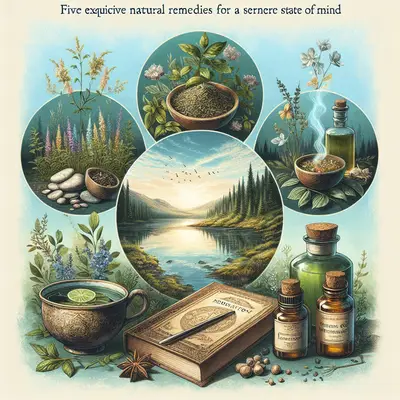
In a world calibrated for urgency, the nervous system is often treated as a machine to be overridden rather than a landscape to be tended. Yet, there is a quieter, more cultivated path—one in which natural remedies are not quick fixes but carefully chosen companions in a refined mental wellness ritual. This is the realm of whispered botanicals, nuanced sensory practices, and deliberately paced routines that restore an atmosphere of calm from the inside out.
Below, you’ll find five exclusive insights—less about trends, more about discernment—that elevate natural remedies into a sophisticated practice of mental ease.
The Signature Infusion: Crafting a Personalized Herbal Calm
Herbal teas are often discussed in broad strokes—“drink chamomile, it’s relaxing”—but a truly elevated approach treats herbal infusions as a bespoke blend, tailored to your nervous system’s unique imprint.
Begin by observing how you experience stress: racing thoughts, shallow breathing, tension in the jaw, or restlessness in the body. Each pattern pairs naturally with specific botanical allies. For mental overactivity and circular thoughts, lemon balm and skullcap can lend a gently clarifying softness. For somatic tension—tight shoulders, clenched jaw—linden blossom and passionflower bring a loosening, almost velvet-like release in the body. For emotional reactivity, rose petals and tulsi (holy basil) add a subtle, heart-centered steadiness.
Instead of a cupboard crowded with random teas, curate a small apothecary with three to five high-quality, single-ingredient herbs. This allows you to blend with intention, adjusting ratios according to your day: more lemon balm on cognitively demanding afternoons, more linden on days dense with interpersonal demands. Drink your infusion from a vessel you genuinely enjoy holding—fine porcelain, handmade ceramic—so the experience feels less like “taking something” and more like entering a composed moment.
The ritual—and not only the herb—becomes the remedy: the sound of water, the steeping time, the first aromatic wave. Over weeks, your body begins to associate this precise sensory constellation with exhale and ease, amplifying the effect of the plants themselves.
Aromatic Atmospheres: Scent as a Subtle Nervous System Cue
Scent reaches the emotional brain faster than words ever could. A refined mental wellness practice uses this fact with discretion—creating aromatic “signals” that quietly train the mind toward calm.
Rather than diffusing strong fragrances all day, reserve certain aromas exclusively for your moments of decompression. This preserves their potency as cues. For example, you might choose soft, resinous notes like frankincense or cedarwood for late evenings, and green, clarifying tones like rosemary or bergamot for transitions between work and rest. The key is consistency: the same scent, at the same type of moment, becomes a familiar doorway.
Opt for high-quality, pure essential oils or discreet aromatherapy roll-ons, and use them sparingly. One drop on a cotton pad placed near your workspace, or a tiny dilution on the inside of the wrist, is often enough. Over time, your nervous system begins to anticipate exhale at the first hint of that particular aroma, not unlike how the mind prepares for sleep upon entering a dimly lit bedroom.
You can refine this even further by pairing scent with micro-practices. Frankincense plus three slow breaths at your desk before important calls; lavender plus a short stretching sequence before bed; neroli plus journaling on emotionally complex days. Scent becomes an invisible architecture—quietly organizing your inner state throughout the day.
The Mineral Element: Subtle Nourishment for an Overextended Mind
In the conversation about natural remedies, minerals are often overshadowed by botanicals, yet they form the quiet scaffolding of a stable mood and a resilient stress response. When approached with discernment and guidance, they can add a significant layer of support.
Magnesium, for instance, is involved in hundreds of biochemical reactions and plays a crucial role in regulating the nervous system. Many people under chronic stress are mildly depleted, which can manifest as muscle tension, restlessness, irritability, or trouble winding down at night. Gentle forms such as magnesium glycinate or magnesium bisglycinate are typically preferred for nervous system support, while magnesium citrate is more commonly used for its laxative properties.
Beyond supplements, a mineral-conscious approach to nourishment might include mineral-rich broths, leafy greens, pumpkin seeds, cacao, and sea vegetables—elements that lend not only nutrients but also a sense of groundedness to meals. For some, a warm evening foot soak with Epsom salts (magnesium sulfate) becomes a meaningful nightly ritual: the weight of the day literally drawn down into the water, muscles softening, thoughts loosening.
The refined approach here is to avoid extremes. Rather than chasing high-dose quick fixes, consider lab testing (under professional guidance) to understand your actual status, then layering moderate, consistent intake through both diet and thoughtfully chosen supplementation. Mental clarity and steadier moods often arise not from a single miracle ingredient, but from this quiet, cumulative sufficiency.
Circadian Elegance: Designing Evenings as a Natural Sedative
Natural remedies are not only things you ingest—they are also ways you choreograph light, temperature, sound, and pace. When aligned with your circadian rhythm, your evening environment itself becomes a kind of gentle, slow-acting sedative.
Begin with light. Blue-enriched light in the evening can delay melatonin production and fragment sleep, which in turn destabilizes mood and increases irritability the next day. A sophisticated evening ritual treats light as a therapeutic medium: overhead lights dimmed or off, lamps with warm-toned bulbs, perhaps even candles for the final hour before bed. Screens are either minimized or filtered with warm-light settings; if evening work is unavoidable, blue-light-blocking glasses can reduce the impact.
Temperature is the second, often overlooked dimension. The body naturally cools before sleep; a slightly cooler bedroom with a breathable, layered bedding arrangement encourages deeper rest. A warm shower or bath an hour before bed followed by a cool bedroom environment can amplify this natural drop, making sleep onset more fluid.
Finally, consider the acoustic texture of your evenings. Instead of the constant hum of shows or news, experiment with low-volume instrumental music, natural soundscapes, or deliberate quiet. Combined with herbal allies like chamomile, lemon balm, or valerian (used under appropriate guidance), your evening becomes a multi-sensory descent—subtle, elegant, and remarkably effective at restoring mental serenity.
The Micro-Ritual Principle: Refining Calm into Everyday Moments
Many people approach natural remedies as emergency measures: something to reach for when anxiety is already spiking. A more cultivated strategy uses “micro-rituals”—tiny, repeatable, sensorially rich practices woven through the day—to prevent the build-up of mental static.
Think of these as 30–90 second practices that you return to often, paired with specific actions you already perform. For instance:
- Every time you wash your hands, you direct full attention to the sensation of water and the temperature on your skin, taking one slow inhale and exhale before turning off the tap.
- Before opening your email in the morning, you place one hand over your chest, feel three heartbeats, and consciously soften your jaw.
- Each time you prepare an herbal infusion, you take a single intentional breath over the steam, registering the aroma before you sip.
These gestures are almost invisible to others, yet they are powerful pattern interrupters. They communicate safety to the body, recruiting the parasympathetic (rest-and-digest) branch of the nervous system dozens of times a day. Over weeks, this accumulative effect can be more impactful than an occasional, elaborate ritual.
You may choose to pair micro-rituals with your chosen natural supports: a small spritz of a calming hydrosol on your face before a brief breathing sequence, a petite square of high-quality dark chocolate followed by a 60-second mindful pause between meetings, a dab of lavender oil on a handkerchief before a short walk. The aim is not austerity, but elegance—transforming your day into a series of calmly choreographed intervals, rather than a single, exhausted crash at night.
Conclusion
Natural remedies for mental wellness are most powerful when they are not treated as novelties, but as curated elements in a larger, intentional design of living. Herbal infusions chosen with discernment, aromatic atmospheres reserved for precise emotional tones, mineral support tailored to your genuine needs, circadian-aware evenings, and micro-rituals threaded discreetly through the day—together, these form a sophisticated ecosystem of calm.
In this refined approach, you are not simply “managing stress”; you are composing an inner environment that quietly insists on ease. Over time, the nervous system learns this composition by heart, and what once felt like a rare reprieve becomes your new, elegantly anchored baseline.
Sources
- National Center for Complementary and Integrative Health (NCCIH) – Herbs at a Glance - Overview of commonly used herbs such as chamomile, lemon balm, and passionflower, including safety and evidence.
- Cleveland Clinic – Magnesium for Anxiety and Stress - Explores the role of magnesium in nervous system regulation and its potential impact on stress and anxiety.
- Harvard Medical School – Blue Light Has a Dark Side - Explains how evening exposure to blue light affects circadian rhythms, melatonin, and sleep quality.
- Sleep Foundation – How Light Affects Sleep - Details the interaction between light exposure, the circadian clock, and mental and physical health.
- Mayo Clinic – Aromatherapy: Do Essential Oils Really Work? - Discusses the evidence, uses, and precautions around essential oils for mood and relaxation.
Key Takeaway
The most important thing to remember from this article is that this information can change how you think about Natural Remedies.