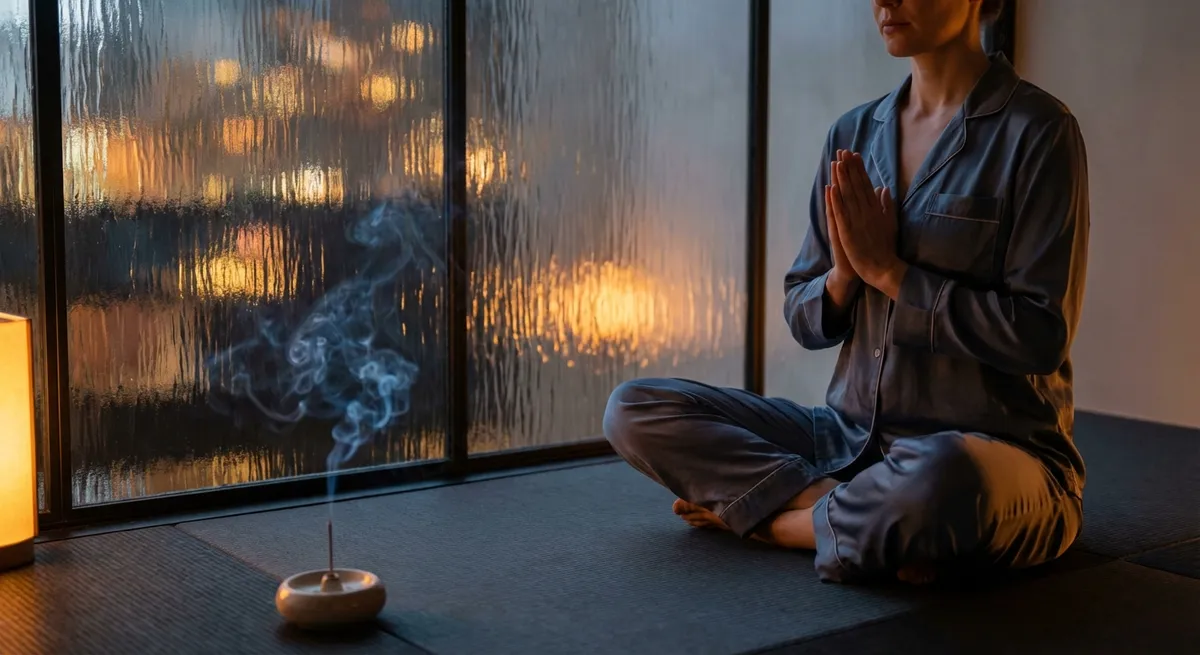
In an age of relentless notifications and curated distractions, true focus has become a rare luxury. Meditation is often framed as a tool for relaxation, yet its most exquisite power lies in its ability to refine attention—making the mind both sharper and softer at once. For those seeking a more cultivated inner life, meditation is less a “stress hack” and more an art of mental craftsmanship: subtle, deliberate, and quietly transformative.
Below are five exclusive, often overlooked insights into meditation for mental wellness—designed for those who value nuance, discernment, and elegant daily rituals.
1. The Quiet Luxury of Single-Task Awareness
Multitasking is often mistaken for competence. In reality, it fractures attention and quietly drains cognitive reserves. Meditation, at its core, is the practice of elegant single-tasking: doing one thing—breathing, noticing, observing—with complete presence.
When you meditate, you are training your mind to stay with one point of focus despite the constant invitation to wander. Over time, this refines three capacities that are particularly valuable in a sophisticated, responsibility-heavy life:
- Selective attention – the ability to choose what matters in a moment and let the rest recede.
- Cognitive endurance – sustaining clarity over longer periods without feeling mentally frayed.
- Emotional filtration – distinguishing between a passing mood and a meaningful signal.
To bring this into daily life, choose a mundane activity—pouring tea, washing your hands, opening your laptop—and turn it into a 30-second meditation. Feel the texture, notice the temperature, watch the motion. The practice is deceptively simple, yet it recovers pockets of mental clarity throughout the day without requiring a dedicated “wellness block” in your schedule.
This is not about perfection; it is about refinement. Each moment you gently return to what you are doing, you are polishing the mind’s capacity to be fully, exquisitely present.
2. Micro-Meditations: Precision Breaks for an Overfull Day
Lengthy, idealized meditation sessions are unrealistic for many high-performing, highly scheduled people. The good news: research suggests even brief pockets of practice can meaningfully affect mood, stress, and attention when done consistently.
Think of micro-meditations as precision breaks—short, intentional resets that prevent the nervous system from quietly spiraling into chronic overdrive. Instead of waiting until you are overwhelmed, you build in elegant, pre-emptive pauses.
Three formats to experiment with:
The 10-Breath Interval
Close your eyes (or lower your gaze). Count ten slow breaths, silently saying “one” on the inhale, “one” on the exhale, and so on up to ten. If you lose count, begin again—without judgment. This can be discreetly done between meetings, in a ride-share, or before entering a social event.
The Doorway Reset
Each time you move through a doorway—home, office, conference room—take one conscious breath and subtly relax your shoulders, jaw, and abdomen. It takes two seconds, yet it signals your system to soften before the next engagement.
The Screen Transition Ritual
Before opening a new tab or app, pause for one full in-breath and one full out-breath, eyes gently resting on a neutral point away from the screen. This tiny gap reduces the reflexive “scroll impulse” and reinstates your agency over where your attention goes.
Done consistently, micro-meditations accumulate like quiet investments. They don’t demand that you step out of your life; they help you inhabit it more gracefully.
3. Emotional Refinement: Observing Without Absorbing
For many people, meditation is mistakenly equated with “feeling calm at all times.” In reality, its more sophisticated function is emotional refinement: the ability to experience feelings fully without becoming consumed or defined by them.
Through regular practice, you begin to notice that emotions often arise as physical sensations first—tightness in the chest, heat in the face, a dropping sensation in the stomach. By training yourself to stay present with these sensations without immediately reacting, you create a gap between stimulus and response.
This gap is invaluable for mental wellness:
- It allows you to recognize anxiety as a passing wave in the body, not a permanent identity.
- It makes you less likely to send the reactive email, make the impulsive comment, or spiral into overthinking.
- It reveals subtle emotional states—slight restlessness, low-grade frustration, quiet melancholy—before they swell into full-blown crises.
A simple practice: during meditation, when an emotion appears, silently label it with the gentlest possible language: “tightness,” “sadness,” “worry,” “tenderness.” Then shift your attention to the physical sensation accompanying it—where it lives in the body, how it moves, whether it is pulsing, contracting, or dissolving.
You are not “fixing” the emotion. You are learning to hold it with a kind of poised curiosity. Over time, you develop an elegant resilience: you feel deeply, yet you are not carried away.
4. Curating Your Inner Aesthetic: The Sensory Design of Meditation
Meditation benefits from consistency, but it also benefits from beauty. A refined, sensory-aware environment can make your practice feel less like a chore and more like a personal ritual—something you look forward to rather than force.
Consider designing a minimalist meditation vignette in your home or workspace:
- Visual: A single candle, a small sculpture, or a carefully chosen plant—something that subtly signals “this is a place of attention.”
- Tactile: A dedicated cushion or throw, a textured blanket, or a chair with supportive structure. The way you sit should feel intentional, not improvised.
- Olfactory: One restrained scent—perhaps a drop of essential oil on a cotton pad or a delicately fragranced candle. Avoid overpowering aromas; the goal is quiet enhancement, not sensory dominance.
- Auditory: Gentle background noise (a fan, soft instrumental music, or a sound machine) can buffer distractions without becoming the focus.
The point is not consumerism; it is curation. By deliberately shaping your sensory context, you teach the nervous system that this particular setting is associated with settling, focus, and inner spaciousness. Over time, simply entering this environment can begin to shift your state before you close your eyes.
The elegance lies in restraint: fewer objects, higher intentionality.
5. Cognitive Clarity as an Outcome, Not a Demand
Many people sit down to meditate with an unspoken agenda: “I must clear my mind.” This expectation is both unrealistic and subtly aggressive. The mind is designed to think; asking it not to is like asking the heart not to beat.
A more refined approach is to relate to cognitive clarity as an outcome of skillful practice, not a demand placed on the mind from the outset. Instead of forcing silence, you practice three key shifts:
From control to collaboration
You are not wrestling your thoughts into submission; you are inviting the mind to settle by giving it a stable anchor—breath, body, or sound. When it wanders (as it will), you simply return, again and again, with understated patience.
From judgment to classification
Rather than labeling thoughts as “good” or “bad,” try classifying them: planning, remembering, worrying, rehearsing, imagining. This moves you from being inside the thought to observing its category, which eases its grip.
From intensity to texture
Notice not just what you are thinking, but how the thought feels—rushed, heavy, scattered, sharp, foggy. This subtle awareness often allows the mental noise to soften without any force at all.
Over time, clarity arrives less like a spotlight and more like a gentle clearing of mist. You may still have thoughts, but they feel more spacious, less urgent, and easier to navigate. This is the kind of mental clarity that supports refined decision-making, creative insight, and a quieter inner dialogue—without the brittle rigidity that comes from trying to “empty” the mind.
Conclusion
Meditation, practiced with subtlety and intention, is less about escaping life and more about inhabiting it with greater elegance. Through single-task awareness, micro-meditations, emotional refinement, curated environments, and a softer approach to clarity, you cultivate a mind that is both keen and kind.
For those pursuing mental wellness at a higher standard, meditation becomes an intimate form of craftsmanship—shaping not just what you think, but how you move through your days, your obligations, and your inner world. In that sense, the most luxurious outcome of meditation is not calm alone, but a steadier, more beautifully attuned way of being with yourself.
Sources
- [National Center for Complementary and Integrative Health (NCCIH) – Meditation: What You Need To Know](https://www.nccih.nih.gov/health/meditation-in-depth) – Overview of meditation types and evidence-based benefits for health and well-being
- [American Psychological Association – Mindfulness Meditation: A Research-Proven Way to Reduce Stress](https://www.apa.org/topics/mindfulness/meditation) – Summarizes research on how mindfulness and meditation practices affect stress, mood, and cognition
- [Harvard Health Publishing – Mindfulness Meditation May Ease Anxiety, Mental Stress](https://www.health.harvard.edu/mind-and-mood/mindfulness-meditation-may-ease-anxiety-mental-stress) – Discusses scientific findings on the effects of meditation on anxiety and stress
- [Mayo Clinic – Meditation: A Simple, Fast Way to Reduce Stress](https://www.mayoclinic.org/tests-procedures/meditation/in-depth/meditation/art-20045858) – Explains practical approaches to meditation and its impact on emotional health
- [NIH National Library of Medicine – Meditation Programs for Psychological Stress and Well-Being: A Systematic Review and Meta-analysis](https://www.ncbi.nlm.nih.gov/pmc/articles/PMC4142584/) – Research article reviewing evidence for meditation’s impact on psychological stress and mental wellness
Key Takeaway
The most important thing to remember from this article is that this information can change how you think about Meditation.